

Trump Media Launches Paid API For Truth Social Data
Trump Media & Technology Group (TMTG) has introduced a paid application programming interface (API) that grants Wall Street firms access to Truth Social’s most influential accounts. The service, dubbed the “Truth API,” is designed to monetize the platform’s user-generated content by selling data streams to institutional clients, according to the company’s recent announcements.
The move marks a strategic pivot for TMTG, which has struggled to generate significant revenue since its public debut in March 2024 via a SPAC merger. In the second quarter of 2024, TMTG reported revenue of just $837,000, a sharp decline from the prior year, while posting a net loss of $16.4 million. The new API offering represents an attempt to diversify beyond advertising, which has been the primary but underperforming revenue stream.
Why Selling Data Streams Is A Double-Edged Sword
The controversy centers on the nature of the data being sold. By providing Wall Street firms with access to influential accounts, TMTG is effectively commodifying user activity—potentially including posts, engagement metrics, and follower demographics. This raises significant privacy concerns, as users may not have explicitly consented to their data being repackaged and sold to financial institutions.
Moreover, the API could enable market manipulation. Hedge funds and trading desks could use real-time sentiment signals from Truth Social to make trades based on the posts of high-profile users, such as former President Donald Trump. This creates a potential feedback loop where market-moving statements are amplified and monetized, raising ethical and regulatory questions. The Securities and Exchange Commission (SEC) has previously scrutinized the use of social media for market-moving disclosures, and this service could attract further regulatory attention.
Wall Street’s Appetite For Alternative Data Grows
The launch of the Truth API taps into a broader trend of alternative data usage in finance. Firms increasingly rely on non-traditional datasets—such as satellite imagery, credit card transactions, and social media sentiment—to gain an edge. The global alternative data market is projected to reach $13.4 billion by 2025, according to a report by MarketsandMarkets. Social media data is a key segment, with platforms like Twitter (now X) and StockTwits already offering similar paid APIs.
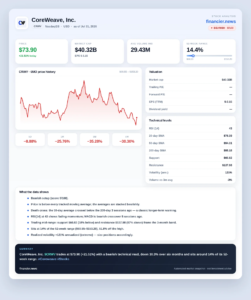
For TMTG, the API could provide a new revenue stream, but the financial impact is likely modest initially. Analysts estimate that data licensing fees could generate a few million dollars annually if adoption is strong—far from the company’s valuation of over $6 billion, which is largely driven by retail investor enthusiasm. The company’s stock, trading under the ticker DJT, has been highly volatile, with a 52-week range of $12.43 to $77.50, reflecting its meme-stock status.
Regulatory And Reputational Risks Loom Large
The API also exposes TMTG to potential legal liabilities. If the data includes personally identifiable information (PII) without proper consent, the company could face violations of privacy laws, such as the California Consumer Privacy Act (CCPA) or the General Data Protection Regulation (GDPR) if any users are in the EU. Additionally, the Federal Trade Commission (FTC) has been active in policing data misuse, and any enforcement action could be costly.
Reputationally, the move aligns TMTG with the data-brokerage industry, which is often viewed skeptically by consumers. This could alienate the platform’s user base, many of whom are privacy-conscious conservatives who distrust big tech. If users perceive the API as a betrayal of trust, it could lead to user churn, undermining the very value proposition of the data being sold.
What Would Change The Investment Thesis
For investors, the key metric to watch is the adoption rate of the Truth API. If TMTG can secure contracts with major financial institutions and generate recurring revenue, it could signal a viable business model beyond advertising. However, the company faces stiff competition from established data providers like Bloomberg and Refinitiv, which already offer comprehensive social media analytics.
Another critical factor is regulatory action. Any SEC inquiry into whether the API facilitates securities fraud or market manipulation could derail the offering. The company’s next earnings report, expected in November 2024, will provide the first hard data on API revenue. If the API fails to contribute meaningfully to the top line, the stock’s high valuation could be unsustainable. Conversely, a surge in institutional subscriptions could validate the strategy and attract more risk-tolerant investors.










Comments are closed.