
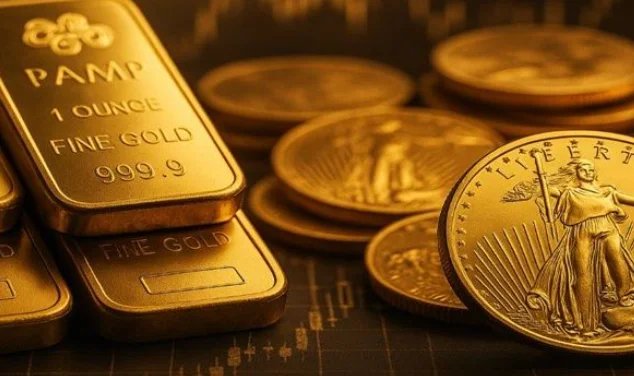
Gold Holds Gains as Oil Slump Cools Inflation Bets
Spot gold and silver prices edged higher in late U.S. trading Monday, with gold steadying near $2,350 an ounce as a sharp drop in crude oil and lower Treasury yields tempered reduced safe-haven demand tied to tentative U.S.-Iran diplomacy. The metal’s resilience reflects a market recalibrating its inflation expectations: cheaper energy implies softer consumer price pressures, which in turn lowers the opportunity cost of holding non-yielding bullion.
West Texas Intermediate crude fell over 3% intraday on reports of potential diplomatic progress between Washington and Tehran, easing supply disruption fears. Concurrently, the 10-year Treasury yield slipped to around 4.2%, reinforcing gold’s appeal relative to fixed-income assets. This combination—falling oil and yields—offset the typical safe-haven bid that geopolitical tensions usually provide, allowing gold to hold its ground.
Why Lower Yields Outweigh Geopolitical Risk Premiums
The session’s price action illustrates a key mechanism: when geopolitical risk fades, gold’s safe-haven premium erodes, but declining real yields can support prices independently. With U.S. inflation expectations anchored near 2.3% and the Federal Reserve signaling patience on rate cuts, gold’s opportunity cost has dropped. A 10-year yield at 4.2% still offers competition, but the trend has been supportive—gold is up roughly 12% year-to-date, buoyed by central bank buying and persistent geopolitical uncertainty.
Silver, meanwhile, outperformed, rising 1.5% to $28.40 an ounce, as industrial demand and a weaker dollar provided extra tailwinds. The gold-to-silver ratio, near 83, suggests silver remains undervalued relative to gold on a historical basis, though volatility in tech-heavy sectors could weigh on near-term momentum.
What Breaks If Inflation Data Surprises Again
The critical variable for bullion is whether the oil-led disinflationary impulse persists. A sustained drop in crude could pull headline CPI closer to the Fed’s 2% target, potentially accelerating the timeline for rate cuts—a scenario that would likely lift gold. Conversely, if energy prices rebound or geopolitical tensions flare anew, inflation expectations could re-couple, forcing the Fed to keep rates higher for longer and pressuring gold.
Market-implied probabilities currently show about a 60% chance of a rate cut by September, according to CME FedWatch data. Should that figure climb above 80%, gold could break out to new highs; a fall below 40% would likely trigger a correction. Traders should also monitor the upcoming U.S. PCE inflation report, due later this month, as a deviation from forecasts would be the next major catalyst.
Where the Next Catalyst Lies
Gold’s immediate direction hinges on the next set of U.S. economic data, particularly the core PCE price index—the Fed’s preferred inflation gauge. A surprise upside print would undermine the case for rate cuts and could see gold test support near $2,300, while a downside surprise might propel it toward $2,400. Watch the 10-year Treasury yield as a real-time barometer: a sustained break below 4.1% would signal renewed bullish momentum for bullion.










Comments are closed.