

Japan’s Refiners Build Three-Month Crude Cushion
Japan’s refiners have secured enough crude oil to keep processing through November, the Petroleum Association of Japan (PAJ) said on Friday, 18 September 2026. The industry body’s head confirmed the procurement buffer as a fresh disruption rippled through Middle East supply routes. The announcement offers a rare note of certainty for a market that has been whipsawed by geopolitical risk in recent weeks.
The cushion buys Japan’s refiners roughly ten weeks of operational cover, according to the PAJ. That timeline matters because it overlaps with peak winter-fuel stockpiling season, when Japanese utilities and refiners typically ramp up purchases of crude and refined products. A supply gap during that window would have forced spot-market buying at potentially elevated prices.
Saudi Pipeline Shutdown Adds Fresh Middle East Risk
The supply anxiety stems from an attack that forced the temporary shutdown of Saudi Arabia’s East-West oil pipeline. The pipeline is a critical artery that allows the Kingdom to move crude from its eastern fields to the Red Sea, bypassing the Strait of Hormuz. Following the attack, Saudi Arabia halted loadings at the Red Sea port of Yanbu, according to the PAJ.
That halt injected immediate uncertainty into oil cargo movements from the region. The East-West pipeline, also known as Petroline, has a nameplate capacity of roughly 5 million barrels per day, though it typically runs below that level. Even a temporary closure of a link that size can force buyers to re-route cargoes or scramble for alternative grades.
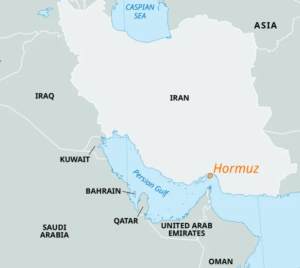
Saudi Arabia has responded by boosting shuttle-shipping through the Strait of Hormuz, the PAJ said. That workaround helps offset some of the lost Red Sea flows, but it also concentrates more tanker traffic through a chokepoint that is itself a perennial security concern. The net effect is a supply chain that is more flexible on paper but more exposed to a single point of failure in practice.
Why Japan’s Buffer Is Not a Blanket of Safety
Japan imports nearly all of its crude oil, with the bulk historically sourced from the Middle East. The PAJ’s assurance that refiners are covered through November is therefore a statement about procurement, not about price. If the pipeline outage persists or escalates, Japanese refiners could still face higher replacement costs when they return to the spot market in late 2026.
For now, the buffer reduces the risk of an immediate supply crunch in Japan. It also gives the government and refiners time to assess whether the Yanbu halt is a short-term logistical snarl or the start of a longer disruption. The distinction matters for how aggressively Japan needs to pursue alternative suppliers, including the United States, West Africa and Latin America.
What Traders Are Watching in Crude Markets
Oil traders are focused on two signals. First, whether Saudi Arabia restores loadings at Yanbu and reopens the East-West pipeline. A resumption would likely ease the risk premium that has crept into Brent and WTI benchmarks. Second, whether shuttle-shipping through the Strait of Hormuz can sustain the volumes needed to keep Asian buyers whole.
Any sign that the disruption is extending beyond a few weeks would put pressure on refiners in Japan, South Korea and China to bid up alternative cargoes. That, in turn, could widen the spread between Brent and Middle East grades, and lift the cost of refined products for consumers. For now, the PAJ’s November cover is a stabilizer, not a solution.
Investors can track the oil ETF $USO for WTI exposure and $BNO for Brent. A sustained move higher in either, combined with further delays at Yanbu, would confirm that the market is pricing a longer outage. Conversely, a quick resumption of Saudi loadings would likely cap the rally and validate the PAJ’s confidence.









Comments are closed.