
Fed’s Barr Backs 2026 Rate Hike as Polymarket Odds Hit 72%: Inflation Stays Hot
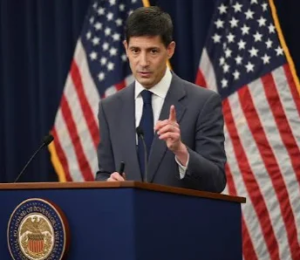
Federal Reserve Governor Michael Barr has thrown his weight behind a decisive interest rate increase if inflation fails to ease, according to remarks reported on Wednesday. Polymarket traders now place the probability of a 2026 rate hike at 72%, a sharp jump from just a month ago.
Barr’s comments come as the central bank grapples with stubborn price pressures that have defied earlier forecasts of a slowdown. The shift in tone from a key Fed official has rippled through markets, with rate-sensitive assets like Bitcoin and Ethereum showing increased volatility.
Barr’s Hawkish Stance: A Direct Threat to Crypto Valuations
Barr’s explicit support for a hike if inflation remains elevated signals a more aggressive tightening path than previously priced in. For crypto markets, which have thrived in low-rate environments, this is a bearish signal. Higher rates typically reduce liquidity and push investors toward yield-bearing assets, away from riskier plays like digital currencies.
On Wednesday, Bitcoin was trading around $58,000, down 2.3% from Tuesday’s close, while Ethereum slipped 1.8% to $2,450. The moves reflect growing concerns that a 2026 hike could drain capital from the crypto ecosystem, which has seen a 12% rally over the past month on hopes of a dovish pivot.
Polymarket’s 72% Probability: What the Betting Market Sees
Polymarket’s prediction market, which allows users to wager on economic outcomes, has become a popular gauge for Fed policy expectations. The 72% odds for a 2026 rate hike represent a 20-point increase since mid-August, when traders saw only a 52% chance. This suggests that Barr’s comments, combined with recent inflation data, have fundamentally shifted market sentiment.
The betting market now anticipates at least one 25-basis-point hike before year-end, with a 30% chance of a larger 50-basis-point move. Such a scenario would mark the first rate increase since July 2023, when the Fed last raised rates to a range of 5.25%-5.50%.
Why Inflation Persists: Key Drivers and Fed’s Dilemma
Inflation has remained above the Fed’s 2% target, with the latest Consumer Price Index (CPI) reading for July coming in at 3.2% year-over-year, down from 3.3% in June but still elevated. Core inflation, excluding food and energy, stood at 3.4%, highlighting persistent price pressures in services and housing.
Barr’s hawkish tilt reflects a growing concern that the Fed’s current stance is insufficient to bring inflation back to target. However, tightening further risks slowing the labor market, which has shown signs of cooling. The unemployment rate ticked up to 4.1% in August, up from 3.9% in July, complicating the Fed’s dual mandate.
Market Reaction: Rate-Sensitive Assets Under Pressure
Beyond crypto, the potential for a 2026 hike has weighed on other rate-sensitive assets. The S&P 500 fell 0.8% on Wednesday, while the 10-year Treasury yield rose to 4.35%, its highest level since June. Gold, often seen as a hedge against inflation, slipped 0.5% to $2,410 per ounce, as the dollar strengthened on rate hike expectations.
For crypto investors, the key risk is a sustained period of higher rates, which could dampen speculative demand. However, some analysts argue that Bitcoin’s narrative as a store of value could attract buyers if inflation remains sticky, decoupling it from traditional risk assets.
What to Watch: September CPI and Fed’s Next Move
The next critical data point is the September CPI report, scheduled for release on September 13. If inflation comes in hotter than expected, the odds of a 2026 hike could rise further, potentially pushing Polymarket probabilities to 85% or higher. Conversely, a cooler reading could ease pressure on the Fed and reverse some of the recent market moves.
Traders should also monitor Barr’s upcoming speeches and the Fed’s September meeting on September 16-17, where policymakers will release updated economic projections. A change in the dot plot showing more members favoring a hike would confirm the hawkish shift, while any dovish comments could trigger a relief rally in risk assets.







Comments are closed.