
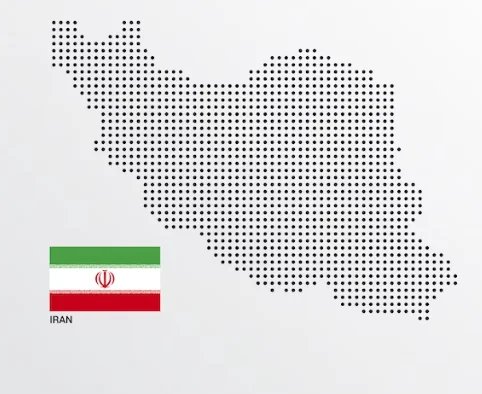
Tehran’s Escalation Threat Meets Ailing Economy
Iran has warned of faster, heavier retaliation against U.S. attacks, even as its leadership concedes the deepening toll of conflict on an already strained economy. The statement, made public on Friday, September 4, 2026, signals a dangerous escalation just days after the latest round of U.S. airstrikes on Iranian-linked facilities in Syria and Iraq.
The warning comes at a precarious moment. Iran’s rial has plunged to record lows against the dollar, inflation is running at an estimated 40% annually, and unemployment among youth exceeds 20%. The acknowledgment of economic pain—rare in official rhetoric—underscores the regime’s vulnerability.
How Sanctions and Strikes Squeeze Iran’s Oil Revenue
Iran’s oil exports, its economic lifeline, have fallen to roughly 1.2 million barrels per day in August 2026, down from 1.8 million in early 2025, according to tanker tracking data. The U.S. has intensified enforcement of sanctions, targeting Chinese refineries that process Iranian crude. That has cut hard currency inflows, making it harder for Tehran to finance imports of food and medicine.
The military escalation adds a new cost layer. Each U.S. strike on Iranian proxy forces—three in the past two weeks—has triggered retaliatory attacks on U.S. bases, but also risks hitting Iran’s own infrastructure if conflict widens. Analysts at Eurasia Group estimate that a full-blown war could slash Iran’s GDP by 15% within a year, pushing inflation above 60%.
Market Signals: Oil Spikes, Gold Gains, and the Rial’s Plunge
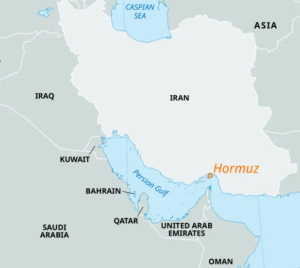
Global markets have begun pricing in the risk. Brent crude jumped 4.2% on Friday to $89.50 a barrel, its highest since April, on fears of supply disruption through the Strait of Hormuz. Gold, a traditional haven, rose 1.8% to $2,540 an ounce, while the rial touched 1.2 million per dollar on the unofficial market, down from 950,000 in June.
Equities in the Gulf fell sharply, with the Tadawul index dropping 2.1% on Sunday, September 6, 2026. U.S. crude futures (WTI) closed at $86.90, up 3.9%. The moves reflect a market that is increasingly hedging against a wider regional conflict, but with no clear trigger for de-escalation, volatility is likely to persist.
What Tehran’s ‘More Painful’ Response Could Target
Iran’s threat of faster, heavier retaliation is not vague. Military analysts point to three likely targets: U.S. naval assets in the Persian Gulf, Israeli territory, or energy infrastructure in Saudi Arabia and the UAE. In past conflicts, Iran has used ballistic missiles and drones against Saudi oil facilities—as in 2019—but a coordinated response could involve cyberattacks on Gulf desalination plants or shipping lanes.
However, Tehran’s options are constrained by its own economy. A major strike on U.S. forces would invite catastrophic retaliation, potentially crippling its oil export capacity. That explains why the regime’s statement balanced belligerence with an explicit acknowledgment of economic fragility—a sign that deterrence may be eroding on both sides.
Why the Economic Pain Is a Double-Edged Sword
The Islamic Republic has survived sanctions for decades by relying on informal trade networks and Chinese demand. But the current crisis is different: global oil prices remain below $90, insufficient to offset the volume losses from sanctions. Meanwhile, domestic protests over bread prices in July 2026, suppressed by force, highlight the regime’s weakened legitimacy.
Economic pressure could push Tehran to the negotiating table—but it could also make the leadership more unpredictable. The U.S. election cycle adds another variable: Washington may seek a dramatic win against Iran to bolster domestic support, while Tehran may gamble on a new administration easing sanctions.
Watch the Next Moves
Investors should monitor the response from Iran’s Supreme National Security Council, expected within 48 hours, and any U.S. deployment of additional carrier strike groups. The critical threshold is whether oil breaks above $95 a barrel—a level that would force central banks to rethink inflation trajectories. Also watch the rial’s exchange rate: a move past 1.5 million per dollar would signal the regime is losing control.





Comments are closed.