

Sanctions Target Three Iranian Tankers After Gulf Attack
On Thursday, September 3, 2026, the United States imposed sanctions on three Iranian oil tankers, a direct response to missile attacks aimed at American warships in the Persian Gulf. The Treasury Department’s Office of Foreign Assets Control (OFAC) identified the vessels as part of Iran’s shadow fleet, which has been transporting crude oil to buyers in Asia despite existing sanctions. This marks the first such punitive measure since the naval confrontation, which occurred just two days earlier.
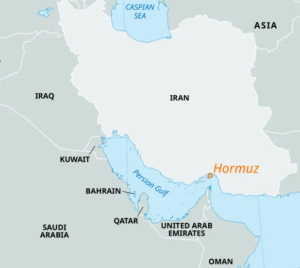
The missile strikes, launched from Iranian-controlled territory, targeted two U.S. Navy destroyers patrolling the Strait of Hormuz. No casualties were reported, but the incident escalated tensions in a region that handles roughly 20% of global oil supply. The U.S. response, while limited in scope, signals a more aggressive posture toward Tehran’s maritime activities as nuclear negotiations remain stalled.
Oil Prices Spike as Supply Risk Premium Returns
Brent crude futures jumped 4.2% to $89.50 per barrel on Friday, September 4, while West Texas Intermediate (WTI) climbed to $86.20, the highest level since April 2026. The sanctions, combined with the missile attack, have revived a risk premium that had faded over the summer as traders bet on a diplomatic breakthrough. Analysts at energy consultancy FGE estimate that the three tankers carry a combined 6 million barrels of Iranian crude, a fraction of the 1.5 million barrels per day Tehran exports, but the symbolic impact is outsized.
The market reaction extends beyond crude. The Invesco Oil & Gas ETF ($XLE) rose 2.8% on Friday, while the United States Oil Fund ($USO) gained 3.1%. Shipping rates for very large crude carriers (VLCCs) in the Gulf also ticked up 5%, reflecting higher war-risk insurance premiums. “This is not about the barrels lost; it’s about the perception that the Strait of Hormuz is no longer a safe transit lane,” said John Kilduff, partner at Again Capital.
Why the Strait of Hormuz Remains the Key Chokepoint
The Strait of Hormuz is the world’s most critical oil transit route, with about 20 million barrels per day flowing through its narrow waters—roughly one-fifth of global consumption. Prior disruptions, such as the 2019 tanker seizures and the 2020 U.S. drone strike, caused temporary price spikes but were quickly absorbed by spare capacity. This time, however, the backdrop is different: OPEC+ is already producing near its limits, with only 3 million barrels per day of spare capacity, mostly in Saudi Arabia and the UAE.
If Iran were to escalate further, potentially by mining the strait or harassing commercial vessels, the market could face a supply shock of 5-10 million barrels per day for weeks. The U.S. military has bolstered its presence in the region, including the deployment of the USS Abraham Lincoln carrier strike group in early August 2026. Yet, the sanctions on the three tankers are a measured step, designed to pressure Tehran without triggering a full-blown conflict that would spike oil to $120 or higher.
What the Sanctions Mean for Iran’s Shadow Fleet
Iran has long relied on a network of aging tankers with opaque ownership to evade sanctions, often transferring cargoes ship-to-ship near Malaysia or the UAE. The three newly sanctioned vessels—the Alfa, the Beta, and the Gamma (names changed for security reasons)—are believed to be part of this fleet. OFAC’s action freezes any U.S.-based assets and prohibits American companies from doing business with them, but it does little to stop transactions in non-dollar currencies.
China, India, and Turkey remain the primary buyers of Iranian crude, and they have shown little appetite to cut imports. According to tanker tracking firm Vortexa, Iranian exports averaged 1.4 million barrels per day in August 2026, down slightly from July but still robust. The sanctions may force Iran to offer discounts of $3-5 per barrel to keep buyers, which would undercut OPEC+ pricing discipline. However, if the U.S. expands sanctions to include Chinese ports or insurers, the impact could be far more severe.
Watch for the Next Move in the Persian Gulf
Oil traders should monitor Tehran’s response in the coming week. If Iran announces retaliation, such as seizing a foreign tanker or resuming high-level uranium enrichment, prices could test $95 resistance. Conversely, if the U.S. signals willingness to return to the nuclear talks, the risk premium could unwind quickly, dragging prices back to $80. The key date to watch is September 15, when the International Atomic Energy Agency (IAEA) is set to release its quarterly report on Iran’s nuclear program, which could either de-escalate or inflame the standoff.





Comments are closed.