
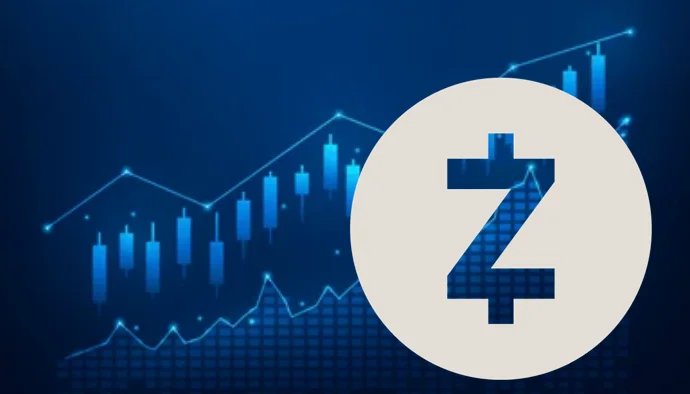
Zcash Breaks $1,000 on Record Short Squeeze
Zcash (ZEC) surged past the psychologically critical $1,000 mark on Sunday, September 6, 2026, as a violent short squeeze forced leveraged bears to capitulate. The privacy-focused token’s rally has been nothing short of spectacular, with on-chain data revealing a staggering 424% liquidation imbalance in favor of longs—meaning that for every dollar of long liquidations, over four dollars of short positions were wiped out.
The move marks a dramatic reversal for a coin that had traded below $500 just weeks ago, and it has reignited debate over whether privacy coins are entering a new speculative phase.
424% Imbalance: How Liquidations Fueled The Rally
Liquidation data from major exchanges shows that during the sharpest leg of the rally, short sellers were hit with nearly $120 million in forced buy orders, while long liquidations totaled only about $28 million. This 424% imbalance created a feedback loop: as shorts were closed, the resulting buy pressure pushed ZEC higher, triggering more short liquidations.
The squeeze was particularly intense on Binance and OKX, where funding rates turned deeply negative before the move, indicating that leveraged traders were overwhelmingly betting against ZEC. When the price broke through key resistance at $800, those bearish positions became untenable.
Privacy Narrative Gains Momentum Amid Bitcoin Dominance
Zcash’s surge comes at a time when Bitcoin dominance has stalled near 52%, and traders are rotating into alternative assets with unique value propositions. Privacy-focused cryptocurrencies have historically rallied when regulatory concerns about surveillance intensify, and recent policy debates in the U.S. and EU have put a spotlight on financial privacy.
However, Zcash’s move also appears to be driven by specific technical developments. The network’s upcoming “Zcash Shielded” upgrade, which aims to improve the efficiency of shielded transactions, has drawn renewed developer interest. Yet, no official announcement has confirmed a timeline, leaving some analysts to argue that the rally is purely speculative.
Who Wins and Who Loses From The Squeeze
The biggest winners are early long holders who accumulated ZEC during its depressed trading range in July and August. Data from blockchain analytics shows that addresses holding between 100 and 1,000 ZEC have increased their positions by 15% over the past week, suggesting that mid-sized investors are betting on further upside.
On the losing side are institutional funds that had built large short positions following Zcash’s delisting from several major exchanges in 2025 due to regulatory pressure. Those funds likely faced margin calls as the price spiked. Market makers on derivative platforms also suffered, as they were forced to buy ZEC at unfavorable prices to hedge their books.
What Could Break The Rally: Key Levels To Watch
With ZEC now trading at $1,020, the next major resistance is the all-time high of $1,200 set in 2021. A break above that level could trigger another wave of short covering, but it would also invite profit-taking from long-term holders who have been underwater for months.
Traders should watch the funding rate on perpetual futures: if it flips significantly positive, it would indicate that the market is becoming over-leveraged long, increasing the risk of a long squeeze. Additionally, volume is a key tell—the recent rally has been accompanied by above-average volume, but a sharp decline would signal exhaustion.
The immediate catalyst to watch is the upcoming CME futures expiration on September 25, which could amplify volatility. If ZEC can hold above $950 over the next two weeks, the short squeeze thesis remains intact; a daily close below $850 would likely signal that the move is over.









Comments are closed.