

Hormuz Disruption Deepens as Tanker Attacks Surge
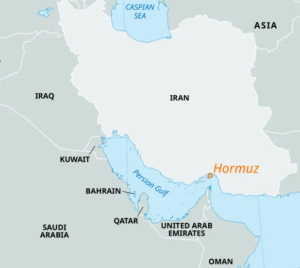
On Sunday, September 6, 2026, the U.S.-Iran tanker war escalated sharply, with new attacks reported in the Strait of Hormuz, exacerbating what is now the most severe disruption to oil shipping routes since 2019. The escalation follows a series of incidents over the past week that have raised fears of a full closure of the strait, through which roughly 20% of global oil supply transits daily. Oil prices have spiked to $92 per barrel, up 15% since August 30, as shippers reroute or halt operations in the region.
According to maritime security firm Dryad Global, at least six tankers have been targeted in the past 10 days, including two crude carriers flagged under the Marshall Islands and Panama. The attacks, which involved drones and fast-attack boats, have led to a sharp increase in war-risk insurance premiums, which have quadrupled since the start of September. The U.S. Navy’s Fifth Fleet has announced increased patrols, but analysts say the threat remains high, with Iran’s Islamic Revolutionary Guard Corps (IRGC) showing no signs of de-escalation.
Oil Price Spike: $92 per Barrel and Climbing
Brent crude futures settled at $92.30 on Friday, September 4, marking the highest level since November 2022, while West Texas Intermediate (WTI) closed at $89.10, up 12% week-over-week. The rally has been driven by supply concerns, as tanker traffic through Hormuz has dropped by an estimated 30% since the escalation began. The International Energy Agency (IEA) warned on September 3 that sustained disruptions could push prices above $100 per barrel, a level not seen since August 2023.
The price surge has been amplified by low global inventories, with OECD commercial stocks sitting at 2.7 billion barrels, nearly 120 million barrels below the five-year average. This tightness means that even a short-term disruption could have outsized effects on prices, as seen in the rapid move over the past week. Traders are now pricing in a risk premium of roughly $15 per barrel, according to options data from CME Group, indicating that the market expects continued volatility.
Shipping Rates and Insurance Premiums Quadruple
The cost of shipping crude through the region has skyrocketed, with freight rates for very large crude carriers (VLCCs) on the Persian Gulf-to-China route jumping from $18,000 per day on August 28 to $65,000 per day by September 5. This represents a 260% increase in just over a week, making it one of the sharpest moves in tanker market history. Simultaneously, war-risk insurance premiums for vessels entering the strait have risen from 0.2% of hull value to 0.8%, adding an estimated $2.5 million to the cost of a typical VLCC voyage.
Shipowners are responding by diverting vessels around the Cape of Good Hope, adding roughly 14 days to transit times and increasing fuel costs by $1.2 million per trip. This rerouting is tightening vessel availability globally, pushing up rates on other routes as well. According to Clarksons Research, the effective global tanker supply has shrunk by 5% due to these diversions, which is likely to keep freight rates elevated even if the strait reopens.
Who Bears the Brunt: Asian Importers and Refiners
Asian economies, particularly China, India, Japan, and South Korea, are most exposed to the Hormuz disruption, as they rely on the strait for over 60% of their crude imports. China, the world’s largest oil importer, imports about 65% of its crude via Hormuz, and any sustained disruption would force it to tap strategic reserves or seek alternative suppliers, likely at higher costs. India’s refiners, including Reliance Industries and Indian Oil Corp, have already begun seeking cargoes from West Africa and the Americas, but spot availability is tight.
Japanese and South Korean utilities, which also depend heavily on Middle Eastern crude, face similar challenges. The Japanese government announced on September 5 that it would release 1.5 million barrels from its strategic reserves to mitigate potential supply shortfalls, while South Korea is considering similar measures. For these countries, the cost of energy imports is set to rise significantly, potentially feeding into consumer inflation and economic growth forecasts.
What Breaks If the Strait Closes Fully
A full closure of the Strait of Hormuz—however unlikely—would have catastrophic effects on global oil supply, as approximately 21 million barrels per day (bpd) of crude and condensate transited the strait in 2025, according to the U.S. Energy Information Administration (EIA). This represents about 21% of global liquid fuels consumption. In such a scenario, oil prices could exceed $150 per barrel, reminiscent of the 1970s oil shocks, and would likely trigger a global recession.
Alternative pipelines, such as the Saudi East-West Pipeline (capacity 5 million bpd) and the UAE’s Habshan-Fujairah pipeline (capacity 1.8 million bpd), provide limited relief, but they are already running near capacity. The only viable alternative is the Red Sea route via the Bab el-Mandeb strait, but that also faces security risks from Houthi attacks. The market is watching the political arena closely: diplomatic efforts led by the United Nations to de-escalate tensions have stalled, and the U.S. has imposed new sanctions on Iranian oil exports on September 4, which could further provoke Tehran.
For now, the situation remains fluid, and the immediate risk is that tit-for-tat attacks continue, keeping the market on edge. Traders should watch the weekly U.S. Energy Information Administration (EIA) inventory report, due Wednesday September 9, for signs of supply drawdowns, as a draw of more than 5 million barrels would confirm the market is tightening. Also, any announcement of a diplomatic breakthrough, such as a renewed nuclear deal, would likely cause prices to fall sharply, but until then, the risk premium remains justified.








Comments are closed.