
Oil Crises Reshape Power: Who Wins Next?
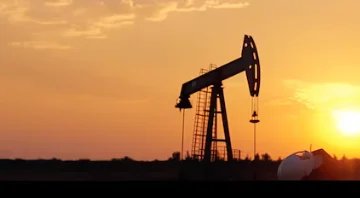
Every major oil shock has redrawn the map of global energy leverage. The 1973-74 Arab oil embargo shifted dominance from the West’s ‘Seven Sisters’ to Middle East producers. The 2014-2016 price war forced U.S. shale to consolidate into a leaner, lower-cost machine, cementing American resilience.
Why Taiwan Could Be The New Leverage
As Washington and Beijing clash over the Inflation Reduction Act’s (IRA) clean energy supply chains, Taiwan emerges as a potential bargaining chip. The IRA, signed in August 2022, offers $369 billion in subsidies for U.S. clean tech, but its strict local content rules—requiring EV batteries assembled in North America and critical minerals sourced from friendly countries—directly challenge China’s dominance in those sectors.
China controls over 80% of global refining capacity for key battery minerals like lithium and cobalt. The IRA’s provisions aim to reduce that dependence, but Beijing sees it as economic containment. Taiwan, a crucial semiconductor hub producing over 60% of global chips and 90% of advanced ones, could be used as leverage in negotiations—not through military action, but through trade restrictions or export controls.
Shale’s Playbook: Adapting To IRA Rules
The U.S. shale industry survived the 2014-2016 crash by cutting costs and boosting efficiency. That same playbook is now applied to clean energy. U.S. companies are retooling supply chains to meet IRA local content thresholds, but the transition is slow. For example, only 10% of EV battery components are currently sourced from North America, far below the IRA’s 50% requirement by 2029.
This gap gives China leverage. If Beijing restricts rare earth exports—which are vital for EV motors and wind turbines—U.S. manufacturers face production delays. The 2010 China-Japan rare earth dispute showed how quickly such dependencies can bite: prices soared 500% in months, forcing Japan to diversify. The IRA aims to avoid that scenario, but the timeline is tight.
Market Signals: What Crude And Energy Stocks Say
Oil prices remain volatile. Brent crude hovered near $85 per barrel on 31 August 2026, up from $70 a year ago, reflecting supply concerns and geopolitical risk. Energy stocks, particularly shale producers, have outperformed the S&P 500, with the XLE up 15% year-to-date. But the IRA’s subsidies are shifting capital toward renewables, creating a two-speed market.
Investors are watching for signs of a deal. A resolution on Taiwan—whether through diplomatic channels or trade concessions—could ease supply chain fears and boost clean energy stocks. Conversely, escalation could send oil prices above $100, benefiting producers but hurting consumers.
What To Watch: The 2026 Midterms And IRA Deadlines
The next critical date is the November 2026 U.S. midterm elections, which could shift congressional power and alter IRA enforcement. Also, the Treasury Department’s guidance on critical mineral sourcing, expected by Q1 2027, will clarify rules and could trigger a reaction from China. Watch for any Chinese export controls on rare earths or Taiwan-related rhetoric—those would confirm the thesis that Taiwan is the key leverage. A delay in IRA guidance, however, would signal a softer stance, potentially easing tensions.







Comments are closed.