

US Strikes on IRGC Sites Intensify Gulf Tensions
Washington, D.C. – The United States carried out another wave of airstrikes against Iran on Tuesday, September 1, 2026, targeting multiple Islamic Revolutionary Guard Corps (IRGC) facilities across the country, according to a statement from U.S. Central Command. The strikes mark the latest escalation in a conflict that has simmered for weeks, following earlier U.S. military actions in late August. President Donald Trump, speaking to reporters on Wednesday, September 2, emphasized that Washington is not forcing Tehran into negotiations, despite the ongoing military pressure.
“We are not forcing them to negotiate,” Trump said, reiterating his administration’s stance that the strikes are defensive responses to Iranian provocations, not a prelude to diplomatic coercion. The fresh wave of attacks hit IRGC command centers, logistics hubs, and weapons storage sites, with initial reports indicating significant damage, though no casualty figures have been released.
Oil Prices Spike on Supply Fears, Brent Crosses $95
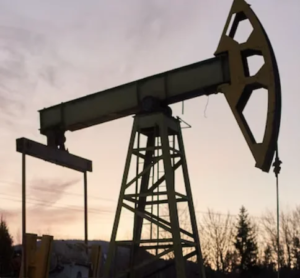
The escalation has immediately reverberated through energy markets. Brent crude futures surged 4.2% on Tuesday, closing above $95 per barrel for the first time since April 2025, while WTI crude jumped to $92.30, up 3.8%. The Strait of Hormuz, through which about 20% of global oil passes, remains a flashpoint; Iran has previously threatened to disrupt shipping in response to attacks on its territory. Analysts at Goldman Sachs noted in a client brief on Wednesday that a sustained conflict could push Brent to $110 within a month, citing risks of supply disruption.
Energy equities followed suit, with the Energy Select Sector SPDR Fund (XLE) gaining 2.1% on Tuesday, as oil majors like Exxon Mobil (XOM) and Chevron (CVX) posted solid gains. Conversely, airline stocks such as Delta Air Lines (DAL) fell 1.5% on rising fuel costs. The geopolitical risk premium is now squarely reflected in crude futures, and traders are watching for any Iranian retaliation that could close shipping lanes.
Defense Stocks Rally as Pentagon Contracts Loom
Defense contractors are the clearest beneficiaries of the heightened conflict. Lockheed Martin (LMT) shares jumped 3.2% on Tuesday, while Raytheon Technologies (RTX) gained 2.8%, as investors anticipate increased Pentagon procurement of precision-guided munitions and air-defense systems. The U.S. Department of Defense has already approved emergency resupply packages for the region, according to a defense official quoted by Reuters, though specific contract values were not disclosed.
Historical precedent supports this rally: during the 2020 U.S.-Iran tensions following the killing of Qassem Soleimani, the S&P 500 Aerospace & Defense Index gained 5.4% in the following month. However, some analysts caution that extended conflicts can strain defense supply chains, potentially delaying revenue recognition. “The initial pop is real, but investors should watch for order backlogs,” said Michael K. Smith, defense analyst at Vertical Research Partners, in a note on Wednesday.
Market Volatility Rises, Safe Havens Bid
Beyond energy and defense, broader markets showed jitters. The Cboe Volatility Index (VIX) spiked 12% to 22.4 by Tuesday’s close, the highest level since March 2026. Gold futures climbed 1.1% to $2,540 per ounce, while U.S. Treasuries saw a bid, with the 10-year yield falling 6 basis points to 3.42%. The U.S. dollar index (DXY) firmed 0.3%, as investors sought refuge in dollar-denominated assets.
Equity indices were mixed: the S&P 500 slipped 0.2%, while the Nasdaq Composite managed a 0.1% gain, buoyed by tech stocks that are less exposed to oil price swings. “The market is pricing in a higher probability of a prolonged standoff, which historically has been negative for risk assets beyond the energy sector,” noted Emily Chen, chief market strategist at Horizon Investments.
Diplomatic Signals and the Oil Price Ceiling
Despite the military escalation, diplomatic channels remain open, albeit strained. Trump’s comment on Wednesday comes amid reports that Omani mediators have attempted to arrange back-channel talks. However, the administration has maintained that any negotiation must follow a cessation of Iranian proxy attacks on U.S. forces in Iraq and Syria, which have increased since mid-August. On Wednesday, Iran’s foreign ministry condemned the strikes as “flagrant aggression” and vowed retaliation, but did not specify a timeline.
The key number to watch is Brent’s daily close relative to $95. If crude sustains above that level for a week, it could trigger higher gasoline prices in the U.S., creating political pressure on the administration to de-escalate. Conversely, if Iran refrains from immediate retaliation and oil slips back below $90, the market may view the strikes as a one-off, easing risk premiums.
Investors should monitor the next OPEC+ meeting scheduled for October 3, where production quotas could be adjusted to offset any supply losses. Additionally, any Iranian move against shipping in the Hormuz Strait—even a symbolic one—would likely push oil past $100, further amplifying volatility.
For now, the situation remains fluid, with markets caught between geopolitical risk and hopes of de-escalation. The immediate focus will be on Tehran’s response and whether the U.S. announces additional strikes, as both sides appear entrenched in their positions.








Comments are closed.