
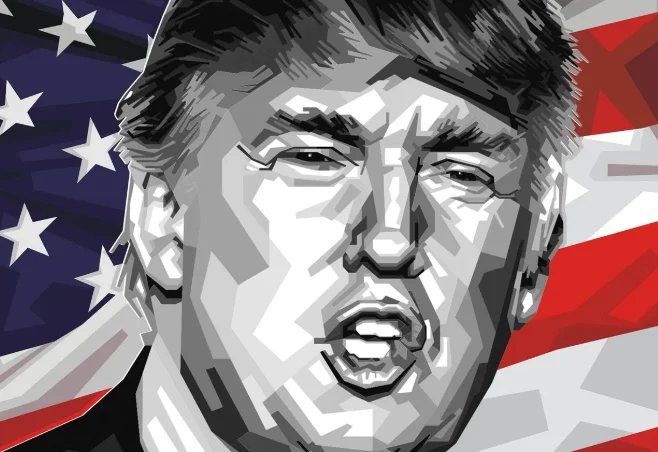
- Trump and Xi held a state visit that observers say produced no breakthrough in the US-China trade stand-off.
- Both sides reportedly maintained good communications, with further meetings between the two leaders expected.
- Markets have repeatedly swung on trade headlines, leaving investors focused on tariff timelines and any signs of a deal.
- No joint agreement or detailed concessions were announced, so the core disputes remain unresolved.
The state visit between President Donald Trump and Chinese President Xi Jinping ended without a breakthrough in the long-running US-China trade stand-off, according to observers cited in the original report. The two sides were said to have maintained good communications during the visit, and the leaders are expected to meet twice more. That framing matters for markets: it signals that the diplomatic channel is open, but it also confirms that the core disagreements over tariffs, technology restrictions, and industrial policy have not been settled.
For investors, the distinction between “talking” and “resolving” is the whole story. Trade headlines have been one of the most reliable drivers of short-term volatility in US equities, emerging-market assets, and currencies. When talks appear to be progressing, cyclical sectors and China-exposed names tend to rally; when they stall, defensive positioning returns. A summit that preserves communication but delivers no agreement fits the second pattern more than the first, which is why the market reaction to such events is often muted or mixed rather than decisively directional.
Why the Lack of a Breakthrough Matters
The unresolved issues are not minor. Tariffs imposed during the trade conflict continue to shape the cost structure for importers, retailers, and manufacturers. Export controls on advanced semiconductors and related equipment have reshaped supply chains and capital-spending plans across the technology sector. Chinese industrial policy and subsidies remain a central US complaint, while Beijing has its own grievances over restrictions on its companies. None of these can be settled by a single meeting, and the absence of a joint framework means businesses must continue planning around uncertainty rather than a known set of rules.
That uncertainty carries a real economic cost. Firms delay investment, hold larger inventories, and build redundant supply chains when the policy environment is unclear. Those decisions are less efficient than a stable trading regime, and the drag shows up gradually in productivity and margins rather than in a single data release. For equity investors, the practical implication is that trade-sensitive sectors may continue to trade on headlines rather than fundamentals until a durable agreement emerges.
What to Watch Next
The most important signal is whether the additional meetings produce anything concrete: a tariff rollback, a purchase commitment, an enforcement mechanism, or a framework for technology disputes. Without at least one of those, the pattern of communication without resolution is likely to continue. Investors should also watch for secondary effects, including currency moves, shifts in Chinese stimulus expectations, and any change in the pace of export-control announcements, since those often move markets more than the summits themselves.
It is also worth noting what the report does not say. There is no confirmed date for the next meetings, no list of agreed deliverables, and no indication that either side has shifted its core position. Observers describe good communications, which is a modest positive, but good communications are not the same as a deal. Until specifics emerge, the prudent read is that the trade stand-off remains intact, and that markets will keep pricing in both the possibility of escalation and the possibility of eventual compromise.
For now, the takeaway is continuity rather than change. The diplomatic channel is open, the leaders are expected to meet again, and the underlying disputes are unresolved. That combination supports a cautious stance toward trade-sensitive exposure and reinforces the case for diversification, since the next headline could move prices in either direction.











Comments are closed.