

Netanyahu Defies UN Walkout With Election 32 Days Away
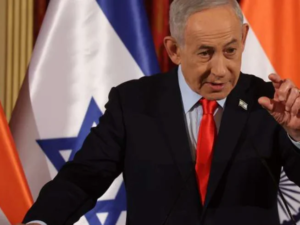
On Friday, 25 September 2026, Israeli Prime Minister Benjamin Netanyahu addressed the UN General Assembly in New York and vowed to press ahead with Israel’s wars, even as a large bloc of delegates walked out before he took the podium. The walkout, a visible diplomatic rebuke, overshadowed the speech and handed his opponents a global stage for criticism.
The timing is not incidental. Israel’s general election is set for 27 October 2026, just 32 days after the UN address, and Netanyahu used the moment to target his domestic critics as much as foreign governments. The appearance was, in effect, a campaign event broadcast to a global audience.
Why The Walkout Matters For Israeli Markets And Shekel
Diplomatic isolation rarely moves markets on its own, but it feeds into two channels that matter for Israeli assets: risk premia on sovereign debt and foreign-exchange volatility in the shekel. The walkout gives international investors a fresh headline risk to price into Israeli exposure as the election approaches.
For US-listed investors, the cleanest proxies are broad equity beta through $SPY and small-cap Israel exposure through $EIS. Both are sensitive to Middle East escalation headlines, though neither is a pure play. The iShares MSCI Israel ETF ($EIS) has historically traded with a wider risk premium around Israeli political and security events, and the 2026 election cycle is now a live variable for that fund.
What would confirm a market reaction? Watch the shekel’s moves against the dollar and the spread between Israeli and US government debt in the days after the UN session. A sustained widening would suggest investors are treating the walkout as more than theater. If spreads hold steady, the diplomatic story stays a political one rather than a financial one.
Inside The October 27 Vote: Netanyahu’s Coalition Math
Netanyahu’s defiance at the UN is calibrated for a domestic audience heading to the polls on 27 October 2026. His coalition has been under pressure over the conduct of the wars, and a UN walkout allows him to frame international criticism as proof that he will not bend to outside pressure — a message aimed at his base rather than at foreign capitals.
The risk for markets is a fragmented result. If the vote produces a narrow or unstable coalition, budget and security policy could stall, which historically weighs on Israeli equities and the shekel. A clear outcome, by contrast, would remove one layer of political uncertainty even if the wars continue.
No polling data from the 2026 race is included in the source material, so the outcome remains genuinely uncertain. Investors should treat any pre-election positioning as a bet on process, not on a predicted result.
What The UN Snub Signals About Israel’s Diplomatic Buffer
The walkout is the latest sign that Israel’s diplomatic buffer is thinner than in previous cycles. For financial markets, the practical question is whether that translates into tangible costs — sanctions risk, reduced foreign investment, or higher borrowing costs — or remains symbolic.
So far, the evidence points to symbolism with a tail risk. There is no confirmed sanctions action tied to the 25 September 2026 walkout, and no verified market data showing an immediate repricing. That means the burden of proof sits with the bears: they need to show the walkout changing capital flows, not just headlines.
For crypto investors, the relevant read-through is limited. Bitcoin ($BTC) has occasionally traded as a geopolitical hedge, but there is no verified 2026 data in this context linking the UN session to crypto flows. Treat any such narrative as unproven unless on-chain or exchange data confirms it.
The Numbers That Will Confirm Or Break The Thesis
Three data points matter from here. First, the shekel-dollar rate in the sessions following 25 September 2026 — a sharp depreciation would confirm investors are pricing political risk. Second, the yield spread between Israeli and US government debt, which would signal whether sovereign risk is being repriced. Third, the 27 October 2026 election result itself, which determines whether Netanyahu’s defiant posture is validated or rejected at the ballot box.
If the shekel and spreads stay calm through the vote, the UN walkout will go down as a diplomatic episode with no market footprint. If either moves decisively, the story shifts from politics to portfolio risk — and $EIS holders will feel it first.







Comments are closed.