
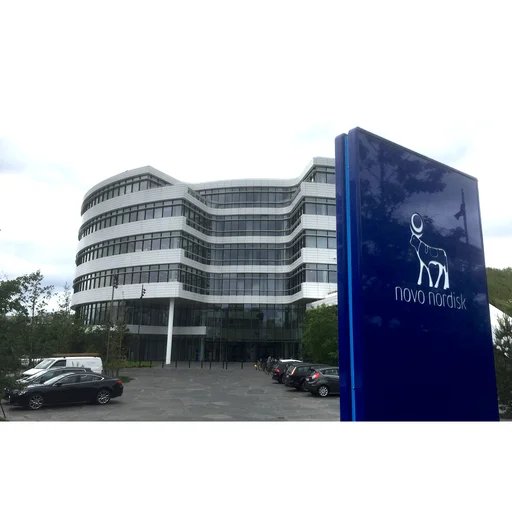
Doustdar Admits Gaps, Signals Openness to Deals
Novo Nordisk CEO Mike Doustdar told Bloomberg Television on Tuesday that the Danish drugmaker must look beyond its own labs to maintain its edge in obesity and diabetes. “We should also have a mindset that we don’t have a patent or a monopoly on all the good ideas,” he said. “When there is a gap, strategically or scientifically, we’re looking outside to see how we can fill the gaps.” The comments come as Novo faces intensifying competition from Eli Lilly and a wave of biotech entrants chasing the next generation of weight-loss drugs.
Doustdar’s remarks signal a shift toward external innovation, a strategy that could involve licensing deals or acquisitions. Novo’s pipeline already includes oral semaglutide and combination therapies, but the company has lagged in early-stage research for next-gen assets like amylin analogs. Lilly’s retatrutide, a triple agonist, has shown up to 24% weight loss in mid-stage trials, according to data published in 2023, raising the bar for Novo.
Investor Confidence Hinges on Pipeline Delivery
Novo’s shares have fallen about 15% year-to-date through September 21, 2026, as investors fret over slowing growth for Ozempic and Wegovy. The stock trades at roughly 22 times forward earnings, a discount to Lilly’s 45 times, reflecting doubts about Novo’s ability to defend its obesity franchise. Doustdar acknowledged that rebuilding confidence requires more than cost cuts; it demands tangible pipeline progress.
Analysts polled by Bloomberg expect Novo’s 2026 revenue to rise 18% to $58 billion, but that growth is heavily weighted to existing products. The company’s market share in the U.S. GLP-1 market has slipped to 52% from 68% in 2024, according to IQVIA data. To reverse that, Novo needs new mechanisms of action, and Doustdar’s openness to outside ideas could accelerate that search.
What a Licensing Spree Would Mean for Novo’s Multiple
If Novo announces a major in-licensing deal or acquisition in the next two quarters, the market could re-rate the stock toward Lilly’s multiple. A 10-point expansion on 2027 earnings would imply a 20% upside from current levels. Conversely, continued pipeline setbacks—like the disappointing CagriSema data in 2025—would keep the discount wide. Doustdar’s comments suggest he understands the urgency.
The Obesity Market’s $150 Billion Decade
Goldman Sachs projects the global obesity drug market will reach $150 billion by 2030, up from $24 billion in 2025. Novo and Lilly currently control 95% of that market, but new entrants like Amgen, Pfizer, and Structure Therapeutics are advancing candidates. Amgen’s MariTide, a monthly injectable, is in Phase 3 and could launch in 2027. Pfizer’s danuglipron, an oral pill, is also in late-stage testing.
For Novo, the threat is not just market share but pricing. With more competitors, U.S. net prices for GLP-1s have already fallen 30% since 2024, according to SSR Health. Novo’s operating margin, once above 45%, is expected to compress to 38% by 2027. Doustdar’s external search for innovation is partly a race to find higher-margin assets before the core franchise erodes.
What to Watch: Third-Quarter Earnings and Deal Flow
Novo reports third-quarter results on November 5, 2026. Investors will scrutinize Wegovy’s U.S. prescription trend and any update on the oral obesity drug, which is under FDA review with a decision expected by December 2026. A positive approval and a credible licensing announcement would be the two catalysts needed to rebuild confidence. Absent those, the stock could retest its 2026 low of $78, hit in June.
Doustdar’s acknowledgment of gaps is a tacit admission that Novo cannot rely solely on its own R&D. The market will judge him on whether he can fill those gaps quickly—and whether that translates into a higher multiple. Watch the November 5 earnings call for specifics on deal strategy and pipeline timelines.






Comments are closed.