
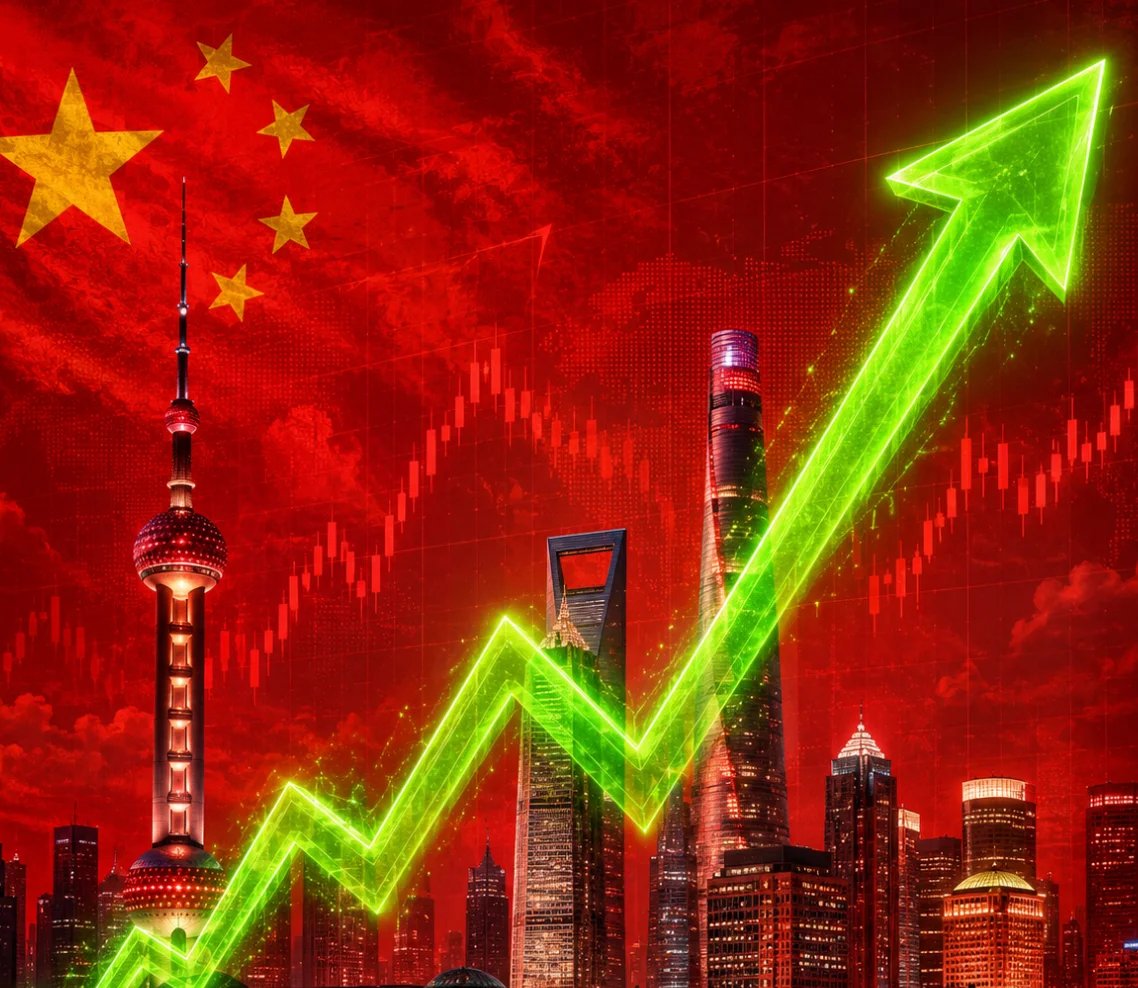
- Asian and European equities advanced as investors grew optimistic about US-China talks on trade and artificial intelligence.
- Officials met in New York ahead of a planned summit between Donald Trump and Xi Jinping later in the week.
- Europe’s major benchmarks all closed higher: FTSE 100 +0.36% at 10,697, Dax +0.7%, CAC +0.6%, FTSE MiB +0.74%, Ibex +0.5%.
- Government borrowing costs retreated while oil prices slid on reports that more supply is moving through the Gulf than expected.
- Middle East oil flows held up despite disruption to Saudi Arabia’s East-West pipeline.
Global equity markets moved higher on Monday as investors positioned for a potential thaw in US-China relations, with trade and artificial intelligence topping the agenda. Talks between officials in New York set the stage for a summit between US President Donald Trump and Chinese President Xi Jinping later in the week, a meeting that markets have treated as the most consequential diplomatic event on the near-term calendar.
The optimism was visible across asset classes. European stock markets bounced higher, government borrowing costs retreated, and oil prices slid, a combination that typically signals investors are rotating toward risk while marking down the geopolitical premium embedded in energy. The UK’s FTSE 100 rose 0.36% to 10,697, up nearly 40 points, while Germany’s Dax gained nearly 0.7%. France’s CAC rose 0.6%, Italy’s FTSE MiB advanced 0.74%, and Spain’s Ibex added 0.5%. The breadth of the rally, spanning export-heavy Germany and domestically geared Spain alike, suggests the move was driven by macro sentiment rather than any single sector story.
Why the Talks Matter for Markets
Washington and Beijing have spent years sparring over tariffs, export controls, and access to advanced semiconductors, and the technology file has become inseparable from the trade file. Any signal that the two capitals can negotiate rather than escalate tends to lift semiconductor, industrial, and commodity-linked shares first, because those are the corners of the market most exposed to cross-border supply chains. The inclusion of AI on the agenda raises the stakes further: chip export rules and restrictions on advanced computing have been among the sharpest points of friction, and even a partial understanding there would ripple through the entire technology complex.
Investors should be careful about extrapolating too much from a single round of talks. Diplomatic meetings of this kind frequently produce warm atmospherics without binding commitments, and previous rounds of US-China engagement have raised expectations only to stall on enforcement and verification. The market reaction so far looks like positioning ahead of the summit rather than a verdict on its outcome, which means the risk of a sharp reversal remains if the meeting produces rhetoric without substance.
Oil Slips as Gulf Flows Hold Up
The energy picture offered a second, more tangible reason for the risk-on tone. Oil prices fell on reports that more supplies are passing through the Gulf than had been assumed. Middle East oil flows have remained surprisingly strong despite disruption to Saudi Arabia’s East-West pipeline, a critical artery that allows crude to bypass the Strait of Hormuz. When a chokepoint or pipeline is impaired, traders typically build a premium into front-month futures on the assumption that barrels will be lost. The evidence that alternative routes and existing flows are covering the shortfall has instead forced that premium lower.
Falling crude is a double-edged input for equities. It relieves cost pressure on airlines, chemicals, and consumer-facing companies, and it eases headline inflation, which in turn supports the retreat in government borrowing costs seen on Monday. For energy producers, however, softer prices compress cash flow and can weigh on dividends and buybacks. The fact that European indices rose even as oil declined suggests the market is currently weighting the disinflationary benefit more heavily than the hit to the energy sector.
What to Watch Next
The near-term direction of equities rests on two variables: whether the Trump-Xi summit yields concrete deliverables on trade and AI, and whether Gulf supply continues to offset the pipeline disruption. A constructive summit outcome would likely extend gains in cyclical and technology shares, while any breakdown in talks would quickly revive the safe-haven bid that has faded during this session. For now, markets are trading the hope rather than the result, and that distinction is worth keeping in mind as the week unfolds.











Comments are closed.