
Huang Dismisses AI Extinction Risk as ‘Irresponsible’
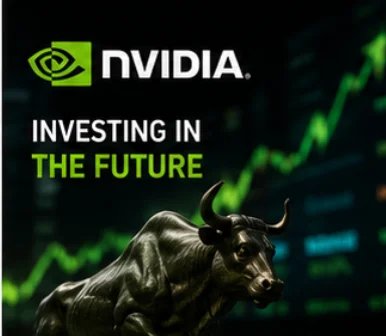
Nvidia CEO Jensen Huang on Monday, 21 September 2026, pushed back hard against warnings that artificial intelligence could wipe out humanity within the decade, calling such claims “irresponsible” and “doomsday narratives.” Speaking in response to recent social media posts by former Anthropic researcher Jacob Coxon, Huang said there is a “0% chance” that AI destroys the world by 2030.
Huang, who co-founded the $5 trillion chipmaker, argued that the technology is progressing in a controlled, beneficial direction. His comments come as Nvidia continues to dominate the AI hardware market, with its GPUs powering most large language models and generative AI platforms.
Coxon’s Warning and the Anthropic Connection
The dispute follows a series of posts by Jacob Coxon, a former researcher at AI safety company Anthropic, who claimed that AI could become “superhuman” and lead to human extinction by 2030. Coxon’s warnings, first reported by The Guardian on 9 September 2026, have amplified a broader debate about existential risks from advanced AI.
Anthropic, known for its safety-focused approach to AI development, has not publicly endorsed Coxon’s views. Still, the episode highlights growing tension between AI safety advocates and industry leaders like Huang who emphasize the technology’s economic and societal benefits.
Nvidia’s $5 Trillion Market Cap and AI’s Economic Stake
Nvidia’s market valuation recently crossed the $5 trillion mark, reflecting investor confidence in AI’s commercial trajectory. The company’s chips are critical to training and running models from OpenAI, Google, and Meta, among others.
Huang’s dismissal of doomsday scenarios aligns with his longstanding view that AI will augment human capability rather than replace it. In previous public appearances, he has compared AI to electricity—a general-purpose technology that will lift productivity across industries.
Still, the debate over AI safety is not going away. Regulators in the US and EU are drafting rules to govern high-risk AI systems, and some researchers argue that unchecked development could lead to catastrophic outcomes. Huang’s remarks are likely to intensify that discussion.
Market Reaction and Investor Sentiment
Nvidia shares ($NVDA) showed little immediate reaction to Huang’s comments, trading roughly flat in pre-market activity on Monday. The stock has more than tripled over the past two years, driven by insatiable demand for AI accelerators.
Investors seem to be pricing in continued growth rather than existential risk. Analysts at several major banks have raised their price targets for Nvidia, citing a multi-year capex cycle in AI infrastructure.
However, some fund managers have begun to question whether the AI trade is overcrowded. Any sign that safety concerns could lead to stricter regulation or slower adoption might weigh on sentiment.
What to Watch: Regulatory Signals and AI Safety Research
The next major catalyst will be the US Senate’s scheduled hearing on AI oversight in October 2026, where lawmakers may question tech CEOs about safety commitments. Additionally, Anthropic’s next safety report, expected in November, could reignite the debate if it presents new evidence of risk.
For Nvidia, the key number to watch is its data center revenue, which is forecast to exceed $30 billion in the current quarter. Any slowdown there would matter more to the stock than philosophical sparring over doomsday scenarios.
Huang’s “0%” claim is a bold bet. If AI development continues without major incidents, he will be vindicated. But if a high-profile AI-related disaster occurs before 2030, his words could come back to haunt him.









Comments are closed.