
Oman’s Net-Zero Pivot Accelerates With New 2050 Strategy
Oman, historically one of the Gulf’s most oil-dependent economies, is now charting a high-stakes course toward renewable energy dominance. On 06 September 2026, the Ministry of Energy and Minerals confirmed that the sultanate’s revised net-zero emissions strategy, launched earlier this year, will anchor a sweeping green transition aimed at cutting carbon to zero by mid-century. The new policy framework also introduces a carbon markets regulatory regime designed to attract private capital into cleantech ventures.
The move signals a dramatic shift for a nation that derives over 60% of its GDP from hydrocarbons. With global pressure mounting on fossil fuel producers, Oman is betting that early diversification will secure its economic future. The strategy targets a renewable energy share of 30% of domestic electricity generation by 2030, up from a negligible base today, according to government statements.
Hydrogen and Solar Lead Oman’s $50 Billion Green Pipeline
Oman’s renewable push is not just about solar panels—it is a full-spectrum industrial plan. The government has earmarked at least $50 billion in public and private investment for green hydrogen, solar, and wind projects over the next decade. This includes the massive Duqm green hydrogen project, which aims to produce 1 million tonnes of hydrogen annually by 2030, and the Ibri II solar plant, which began operations in 2022 and delivers 500 MW.
The revised strategy also sets interim milestones: a 10% reduction in emissions from 2020 levels by 2030, and a 50% cut by 2040. These targets are steeper than those of many regional peers, reflecting Oman’s urgency to monetize its solar irradiance—among the highest in the world—and its vast empty land for wind farms.
Carbon Market Framework Opens New Revenue Streams
A centerpiece of the new policy is the carbon markets regulatory framework, which allows companies to trade verified emission reductions. This mechanism is designed to monetize Oman’s carbon sinks, such as its mangroves and desert soils, and to incentivize emitters to decarbonize. Analysts at the Gulf Carbon Exchange estimate that Oman could generate up to $2 billion annually by 2030 from carbon credit sales, a figure that would diversify state income away from oil.
Private investors are already responding. In August 2026, Oman’s state-owned energy firm OQ signed a joint venture with a European renewables major to develop a 2 GW solar and storage complex in Al Wusta governorate. The project is slated to break ground in Q1 2027, pending final permits, and will be among the largest in the Middle East.
Market Impact: Oil Revenues Still Dominate, But Green Shift Gains Traction
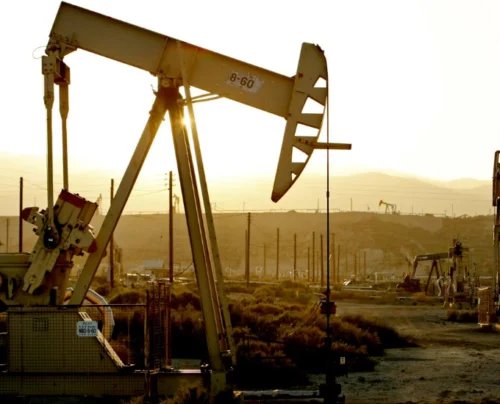
Despite the green push, Oman’s economy remains tethered to oil. Crude exports accounted for nearly 70% of fiscal revenues in 2025, according to the IMF, leaving the budget vulnerable to price swings. However, the renewable strategy is already influencing market dynamics. The Oman Oil Price Index, tracked by the Muscat Securities Market, has shown increased volatility as investors weigh long-term demand risks, while green bond issuances from Omani entities have tripled in the past year, reaching $4.5 billion.
Global energy markets are watching closely. If Oman succeeds in scaling green hydrogen, it could emerge as a key supplier to Europe, which is seeking alternatives to Russian gas. European energy giants like Shell and TotalEnergies have already expressed interest, with feasibility studies underway for export pipelines and shipping infrastructure.
What to Watch: Carbon Credit Auctions and 2030 Milestone
The next trigger for Oman’s transition will be the first government-run carbon credit auction, scheduled for December 2026. A successful auction that clears at or above $20 per tonne would signal robust demand and validate the regulatory framework. Additionally, watch for the 2030 renewable electricity target—if Oman reaches 30% early, it would force a re-rating of its sovereign risk profile and attract further ESG capital.
Any delay in project permitting or a drop in global carbon prices below $10 could stall momentum, making near-term policy execution the key variable to track.





Comments are closed.