
Current Situation in the Strait of Hormuz
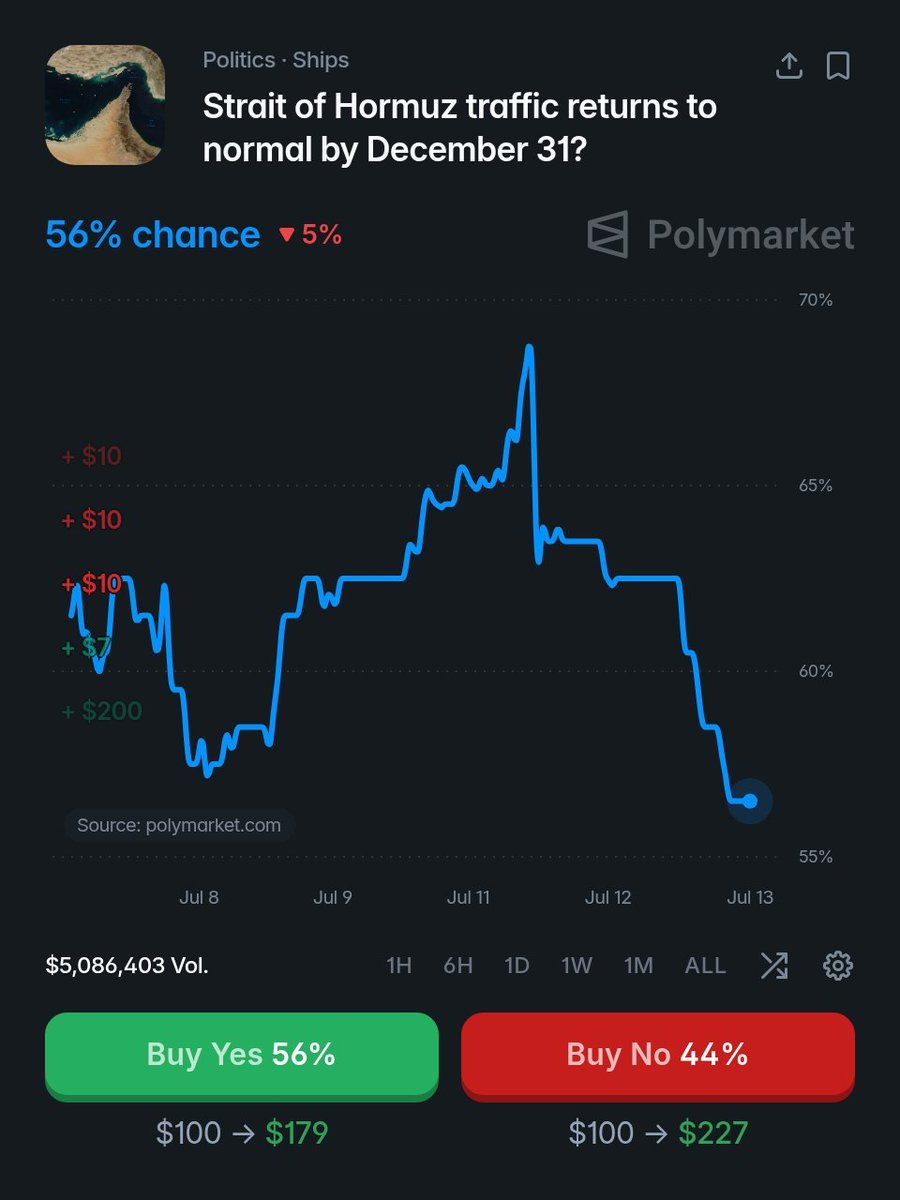
The Strait of Hormuz, a vital maritime passage for global oil shipments, is currently under scrutiny as market analysts assess the likelihood of traffic normalization by December 31. According to recent data from Polymarket, there is a 56% probability that shipping traffic in this critical waterway will return to its pre-disruption levels within the next few months.
This strait, which connects the Persian Gulf to the Arabian Sea, is a significant chokepoint for oil exports, with approximately 20% of the world’s petroleum passing through it. Disruptions in this area can lead to substantial fluctuations in oil prices and impact global markets.
Factors Influencing Traffic Resumption
Several factors could contribute to the restoration of normal traffic in the Strait of Hormuz. One major element is the geopolitical climate in the region. Ongoing tensions among Middle Eastern countries have historically affected shipping routes and oil prices. Should diplomatic efforts succeed in easing these tensions, the likelihood of traffic normalization could increase.
Additionally, the global demand for oil plays a crucial role. As economies recover from the impacts of the pandemic, demand for crude oil has surged. If this trend continues, it may incentivize stakeholders to ensure safe passage through the Strait, leading to a quicker return to normal operations.
Market Implications
The potential stabilization of traffic in the Strait of Hormuz has significant implications for global markets. A return to normalcy could mitigate concerns over supply shortages, which have been a driving force behind recent volatility in oil prices. Currently, Brent crude oil prices hover around $80 per barrel, reflecting the market’s sensitivity to geopolitical developments.
Moreover, the U.S. dollar ($USD) and the U.S. Dollar Index ($DXY) often respond to fluctuations in oil prices due to the dollar’s status as the primary currency for oil transactions. A stabilization in oil supply could strengthen the dollar, influencing various financial markets and investment strategies.
Looking Ahead
As we approach the end of the year, market participants will closely monitor developments in the Strait of Hormuz. The 56% probability indicated by Polymarket suggests a cautious optimism among traders and investors regarding the resumption of normal traffic.
In conclusion, while uncertainties remain regarding geopolitical tensions and global oil demand, the current outlook points toward a potential stabilization in this crucial maritime route. Stakeholders should prepare for possible fluctuations in oil prices and currency values as conditions evolve.
With the end of the year approaching, the situation in the Strait of Hormuz will be pivotal for market dynamics, making it essential for investors and analysts to stay informed about ongoing developments.








Comments are closed.