
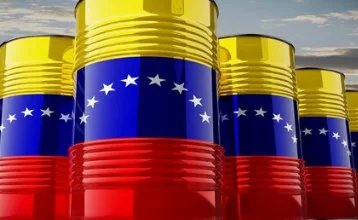
Eni Expands Offshore Footprint Amid Political Thaw
Italian energy giant Eni (NYSE: E) is deepening its bet on Venezuela, a move that hinges on the country’s slow but tangible political opening. On Monday, September 7, 2026, Eni announced an expanded partnership with state-owned PDVSA to develop offshore natural gas fields in Venezuelan waters, according to sources familiar with the deal.
This is not a new foray—Eni has operated in Venezuela for decades—but the scale of the new commitment signals a calculated wager on the Maduro government’s willingness to pay down its debts. The company is one of several international oil firms that saw billions in receivables frozen as U.S. sanctions tightened after 2019.
Why the $3 Billion Debt Question Is Central
At the heart of Eni’s strategy is the roughly $3 billion in unpaid debts and dividends that PDVSA owes the Italian firm, accumulated over years of economic collapse and sanctions. The company’s renewed investment is widely interpreted as a bet that recoveries will accelerate as Washington eases restrictions in exchange for democratic progress.
Analysts point to a licensing framework introduced by the U.S. Treasury in late 2023 that allowed Chevron to resume limited operations, and later expansions that opened the door for other firms. “Eni’s move is not about new production alone; it’s about getting paid on old obligations,” said energy analyst Maria Fernanda Rodriguez of Caracas-based consultancy Petroleo y Geopolítica.
The debt figure is not officially confirmed by Eni or PDVSA, but it aligns with past disclosures and industry tracking. In its 2025 annual report, Eni listed Venezuela-related receivables of approximately $2.8 billion, a number that has grown slightly since.
Offshore Gas Play Targets Europe’s LNG Demand
The new agreement focuses on the Perla field, one of the largest natural gas deposits in Latin America, located in the Gulf of Venezuela. Eni and PDVSA plan to increase output from the current 400 million cubic feet per day to nearly 800 million by 2028, with the gas destined for export as liquefied natural gas (LNG) to European buyers.
Europe’s search for alternatives to Russian pipeline gas has made Venezuelan reserves more strategically valuable. For Eni, this is a dual win: it locks in a low-cost supply source while boosting its leverage in debt negotiations. “The more critical Eni becomes to Venezuela’s export revenue, the harder it is for PDVSA to ignore its liabilities,” said James Hartley, an oil markets analyst at London-based Energy Aspects.
However, infrastructure is a bottleneck. The existing offshore platforms are aging, and PDVSA’s operational record is poor after years of underinvestment. Eni will shoulder most of the capital expenditure, estimated at $1.2 billion over the next three years, with payback dependent on both output and political stability.
Sanctions Relief: The Tipping Point for Investment
Eni’s expansion follows a pattern set by other Western majors. In 2024, Repsol signed similar gas agreements, and in 2025, Maurel & Prom acquired assets from a bankrupt competitor. Each deal has been conditioned on the easing of U.S. sanctions, which remain the single biggest risk factor.
The current U.S. administration has maintained a dual-track policy: allowing limited energy deals while pressing for free elections and the release of political prisoners. The most recent license, issued in March 2026, permits Eni and other firms to export gas and receive payments in non-dollar currencies, a workaround that has facilitated partial payments.
But the political situation is fragile. The opposition’s primary election in June 2026 was marred by irregularities, and international observers remain cautious. If Washington reimposes full sanctions, Eni’s new investment could become stranded, and the debt recovery timeline would stretch indefinitely.
What Could Break the Debt Impasse
Eni’s balance sheet is strong enough to absorb a worst-case scenario—its market cap stands at $52 billion, and its operating cash flow in 2025 was $14 billion—but shareholders are watching closely. The company’s stock has gained 18% year-to-date, partly on optimism over this venture.
The key number to watch is the next quarterly earnings report in late October, where Eni will disclose any new cash receipts from PDVSA. A payment of more than $500 million would signal that the debt recovery is gaining momentum. Conversely, a zero payment would raise doubts about the entire strategy.
Also critical is the next U.S. license review, expected by December 2026. Any tightening in response to political setbacks would halt new investment and could force Eni to write down its Venezuelan assets.
For now, Eni is betting that the combination of Europe’s energy needs and Venezuela’s desperate need for cash will keep the door open. The next 90 days will reveal whether that bet pays off or turns into another chapter of the country’s long economic tragedy.






Comments are closed.