
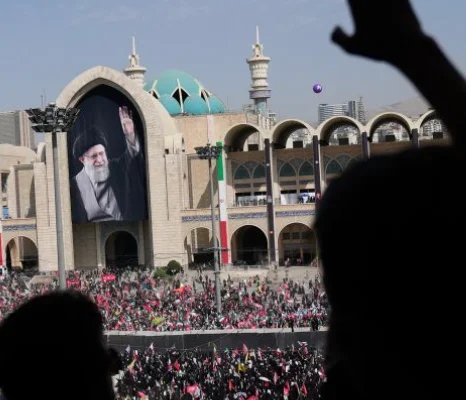
- The U.S.-Israel-Iran conflict has severely disrupted Persian Gulf oil and gas flows, driving a $330 billion surge in global energy import costs between March and August, per the Centre for Research on Energy and Clean Air.
- Energy-importing nations are accelerating investment in alternative pipeline and port infrastructure to bypass the Strait of Hormuz, with billions in new projects announced across the Middle East and beyond.
- Key routes include expanded Red Sea terminals, Iraq-Turkey pipeline upgrades, and new Gulf of Oman loading facilities, though construction timelines remain uncertain amid active hostilities.
- Crude benchmarks have remained volatile, with Brent hovering near multi-month highs as traders price in prolonged supply risk, while U.S. shale and Canadian exports gain strategic prominence.
- Analysts caution that new infrastructure will not fully offset near-term supply losses, but long-term diversification could reshape global energy trade flows by 2027.
Conflict-Driven Energy Shock Reshapes Trade Routes
The ongoing war between the United States, Israel, and Iran has fundamentally altered the geography of global energy supply. With the Strait of Hormuz—through which roughly 20 million barrels per day of crude and condensate transit—now a high-risk chokepoint, tanker insurance premiums have spiked and several major shipping firms have suspended sailings into the Persian Gulf. The result has been a cascading cost burden on importers, particularly in Asia and Europe, which have scrambled to secure alternative cargoes from the Atlantic Basin, West Africa, and the Americas.
Billions Poured into Alternative Pipelines and Ports
In response, a wave of infrastructure investment is underway to reduce reliance on the strait. Saudi Arabia and the United Arab Emirates have accelerated expansions of their east-west pipelines—the Petroline and the Habshan-Fujairah system—which together can move over 7 million barrels per day to Red Sea and Gulf of Oman terminals. Iraq, meanwhile, has revived plans to upgrade its Kirkuk-Ceyhan pipeline to Turkey, aiming to add 1.5 million barrels per day of export capacity, though security concerns along the route have delayed contractor mobilization.
Port-side developments are equally significant. Oman’s Duqm port, already a key logistics hub, is receiving new crude storage and loading berths funded by a consortium of Gulf and Asian investors, with a targeted capacity of 2 million barrels per day by late 2027. In the Red Sea, Egypt’s SUMED pipeline—which bypasses the Suez Canal—is being evaluated for a capacity boost, while Jordan’s Aqaba terminal has seen a surge in requests for temporary storage leases. These projects, collectively valued at over $12 billion in announced commitments, aim to provide a buffer against future disruptions, but industry executives concede that most will take 18 to 36 months to become operational.
Market Implications and Strategic Shifts
For investors, the immediate takeaway is sustained volatility in energy-linked assets. The United States Oil Fund ($USO) has tracked the rally in crude futures, while the Energy Select Sector SPDR Fund ($XLE) has outperformed the broader S&P 500 as integrated majors and midstream firms benefit from higher realized prices. Canadian pipeline operator Enbridge ($ENB) has also drawn attention, given its role in moving growing U.S. and Canadian production to export hubs—a trend that has accelerated as buyers seek non-Gulf supply.
Yet the longer-term picture is more complex. New pipeline and port capacity will not resolve the immediate shortfall; CREA estimates that even with accelerated construction, alternative routes can replace only about 60% of Hormuz throughput by 2028. Moreover, the geopolitical landscape remains fluid—a ceasefire or further escalation could alter the calculus for project financing. Still, the current crisis has permanently shifted the risk perception of Gulf exports, prompting both state-owned and private entities to diversify their logistics footprints. As one energy analyst noted, the war has effectively forced a decade of infrastructure planning into a two-year window, with billions in capital now committed to ensuring that no single chokepoint can again hold global markets hostage.




Comments are closed.