

Azerbaijan’s Post-COP29 Pivot to Renewables
Baku, the capital of oil-rich Azerbaijan, is doubling down on clean energy. The country, which hosted the COP29 climate summit in November 2024, is now deploying significant renewable capacity to diversify its energy mix. Natural gas still supplied 67% of Azerbaijan’s energy in 2023, with oil and oil products at 31.1%, but new solar and wind projects are set to change that balance.
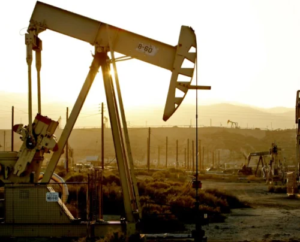
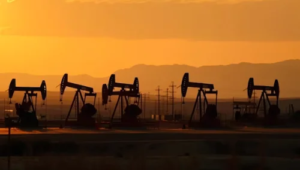
The government has signed agreements with foreign investors to build over 10 gigawatts of solar and wind capacity by 2030. This marks a strategic shift for a nation that has pumped crude since the mid-19th century, aiming to reduce domestic reliance on fossil fuels while freeing up more oil and gas for export.
Why Baku Sees Renewables as an Export Play
Azerbaijan’s pivot is not just about climate—it’s about economics. By replacing domestic gas consumption with renewables, the country can redirect more of its natural gas to lucrative European markets. The Southern Gas Corridor, which began delivering Azerbaijani gas to Europe in 2020, has expanded capacity to 16 billion cubic meters per year, and Baku plans to increase that further.
This strategy mirrors a broader trend in fossil-fuel-dependent economies: using renewables to free up hydrocarbons for export. For Azerbaijan, every megawatt of solar or wind that powers domestic consumption theoretically adds to the exportable gas surplus. Analysts estimate that each gigawatt of new renewable capacity could free up roughly 0.5 billion cubic meters of gas annually, based on typical displacement rates.
Foreign Investment and the 2030 Target
The key driver is foreign capital. Masdar, the UAE’s renewable energy company, is building a 230 MW solar plant in the Garadagh district, which began operations in 2023. In 2024, Azerbaijan signed deals with ACWA Power of Saudi Arabia and BP for additional solar and wind projects, including a 1.5 GW onshore wind farm in the Absheron region.
These projects are expected to attract $2 billion in foreign investment by 2027, according to government statements. The target is to have renewables account for 30% of installed electricity capacity by 2030, up from about 8% today. This is a bold move for a country whose energy exports account for over 80% of its export revenues.
Risks That Could Derail the Green Push
Execution risk is high. Azerbaijan’s renewable projects have faced delays due to grid connection issues, land rights disputes, and the need for new transmission infrastructure. The country’s energy regulator has been slow to approve grid upgrades, which are critical for integrating intermittent solar and wind.
Moreover, the political will could wane if oil prices spike. If crude stays above $80 per barrel, the incentive to diversify diminishes, as oil revenues provide a fiscal cushion. Conversely, a sustained dip below $60 could accelerate the green transition, as Baku seeks to hedge against revenue volatility.
What to Watch in 2027
The next milestone is the completion of the 1.5 GW wind project in 2027. If it comes online on schedule, that will signal that Azerbaijan’s green bet is real. Watch also for the next COP stocktake in 2026, where Azerbaijan’s progress will be scrutinized. A specific number to track: the share of renewables in installed capacity, expected to hit 15% by the end of 2026. If that misses, the 2030 target of 30% looks in doubt.








Comments are closed.