
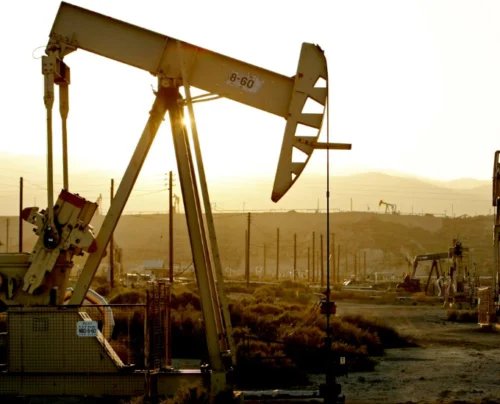
Trump Announces Venezuela Oil Reserve Deal
On Saturday, August 29, 2026, former President Donald Trump announced via social media that the United States has struck a deal with Venezuela to secure majority control of more than 65 billion barrels of oil reserves. The announcement marks a significant geopolitical shift in global energy markets, potentially reshaping supply dynamics and affecting oil prices worldwide.
How the Deal Reshapes Global Supply Dynamics
The agreement grants the U.S. majority control over Venezuela’s vast oil reserves, which are among the largest in the world. According to OPEC data, Venezuela holds approximately 303 billion barrels of proven crude reserves, so 65 billion barrels represents roughly 21% of that total. By gaining control, the U.S. could significantly increase its influence over global oil supply, potentially reducing reliance on other producers and stabilizing prices in the long term.
Market analysts note that this deal could tighten the global supply outlook, as Venezuela has been under U.S. sanctions that limited its oil exports. Should the deal lead to increased production, it could add an estimated 1-2 million barrels per day to global markets within a few years, according to industry estimates. However, infrastructure and investment hurdles remain, as Venezuela’s oil sector has suffered from years of underinvestment and mismanagement.
Oil Market Reaction and Price Implications
Oil prices have been volatile in recent weeks, with Brent crude trading around $85 per barrel and WTI near $80 as of late August. The news of the deal could push prices lower in the near term if markets interpret it as a signal of future supply increases. Conversely, uncertainty about the deal’s implementation might keep a risk premium in place.
The U.S. has been a net exporter of petroleum products since 2020, but still imports crude to feed its refineries. Increased access to Venezuelan heavy crude could benefit U.S. refiners, particularly those on the Gulf Coast, which are configured to process heavier grades. Companies like Chevron (CVX) and Valero (VLO) could see operational advantages if the deal facilitates easier access to Venezuelan crude.
Geopolitical and Regulatory Hurdles Ahead
The deal faces significant legal and political challenges. Venezuela’s current government, led by Nicolás Maduro, has been sanctioned by the U.S., and any agreement would require congressional approval and potentially the lifting of sanctions. Moreover, the deal’s legitimacy could be contested by Venezuela’s opposition, which controls some U.S.-recognized assets.
Legal experts point out that the U.S. government does not typically enter into commercial oil deals directly, so the structure of this agreement remains unclear. It may involve U.S. companies receiving preferential access, or it could be a government-to-government memorandum of understanding. The details will be critical in determining whether the deal is enforceable and how quickly it can translate into actual barrels.
Political risks are also high. The announcement may face opposition from Democrats in Congress who have criticized Trump’s approach to Venezuela, and from human rights groups concerned about legitimizing Maduro’s regime. Any changes in U.S. administration could also reverse the deal, adding uncertainty for investors.
What to Watch: Production Timelines and Sanctions
Investors should monitor the release of detailed terms, including timelines for production increases and any formal lifting of sanctions. The next OPEC+ meeting, scheduled for early September, may provide clues about how the cartel views this potential supply addition. Additionally, watch for statements from the Venezuelan government and the U.S. State Department to confirm the deal’s scope.
The key number to watch is the first million barrels of additional production. If Venezuela can ramp up output to 1 million barrels per day within 12 months, the deal would be a game-changer. Otherwise, it may be seen as symbolic, with limited market impact. The coming weeks will reveal whether this is a solid agreement or a political statement.








Comments are closed.