
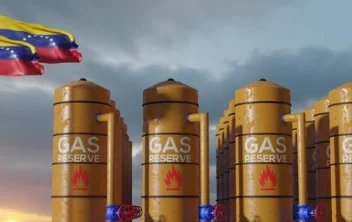
- The Trump administration has brokered a deal granting a US-led venture access to Venezuela’s substantial oil reserves, estimated at 65 billion barrels.
- Former Deputy National Security Advisor Victoria Coates, now with the Heritage Foundation, suggests the agreement could spur US investment and rehabilitate Venezuela’s energy infrastructure.
- Coates emphasizes that economic progress must be paired with political liberalization and respect for Venezuelan self-determination to be sustainable.
- The agreement’s long-term viability is uncertain, with questions looming over its political durability and potential domestic backlash within Venezuela.
- The deal has the potential to fundamentally reshape the economic relationship between Washington and Caracas.
A Strategic Shift in Energy Diplomacy
The Trump administration’s recent agreement to grant a US-led consortium access to Venezuela’s vast oil fields marks a significant departure from years of sanctions-driven policy. With an estimated 65 billion barrels of proven reserves at stake, the deal represents one of the most consequential energy arrangements in recent hemispheric history. For context, Venezuela sits atop the world’s largest proven oil reserves, yet its production has collapsed to historic lows due to underinvestment, mismanagement, and international sanctions. This new arrangement could inject much-needed capital and technical expertise into a sector that was once a global powerhouse.
Victoria Coates, who served as Deputy National Security Advisor for Middle East Affairs and now contributes to the Heritage Foundation, discussed the implications on Bloomberg This Weekend. She argued that the agreement could serve as a catalyst for renewed US investment, potentially reversing years of decline in Venezuela’s energy output. “The scale of opportunity here is enormous,” Coates noted, “but it requires a stable framework that both sides can trust.” Her comments underscore the delicate balance between commercial opportunity and geopolitical risk that defines this initiative.
Economic Potential Versus Political Reality
The economic upside is undeniable. Restoring Venezuela’s oil production to even a fraction of its historical peak—which exceeded 3 million barrels per day in the late 1990s—could generate billions in revenue for a country grappling with hyperinflation and widespread poverty. For US companies, the deal offers access to reserves that have been off-limits for nearly two decades, potentially diversifying supply chains away from more volatile regions. However, the path to realization is fraught with obstacles, including the need to repair dilapidated infrastructure, address workforce shortages, and navigate complex legal frameworks that have deterred foreign investment for years.
Coates emphasized that economic development cannot occur in a vacuum. “You cannot have sustainable economic growth without corresponding political reforms,” she stated during the interview. Her perspective reflects a broader debate within policy circles about whether engagement or isolation is more effective in fostering change in authoritarian regimes. The former official argued that while the deal could provide tangible benefits to the Venezuelan people, it must be accompanied by genuine steps toward political liberalization and respect for democratic institutions. This dual-track approach, she suggested, would ensure that economic gains translate into lasting improvements in governance and human rights.
Questions of Durability and Domestic Backlash
Despite the optimism, significant uncertainties remain. The political durability of the agreement is far from assured, particularly given the volatile nature of US-Venezuela relations over the past decade. Previous attempts at engagement have collapsed amid mutual accusations of bad faith, and there is no guarantee that this deal will avoid a similar fate. Moreover, the agreement could provoke a backlash inside Venezuela, where nationalist sentiments and anti-American rhetoric have historically been powerful political tools. The Maduro government, which has survived years of sanctions and diplomatic isolation, may face internal pressure from hardliners who view the deal as a concession to Washington.
Coates acknowledged these risks, noting that the success of the initiative will depend on careful implementation and sustained political will from both sides. “The window of opportunity is open now,” she said, “but it could close quickly if either party perceives the other as acting in bad faith.” Her remarks highlight the fragile nature of the arrangement, which must navigate not only bilateral tensions but also the broader geopolitical landscape, including competition from China and Russia, both of which have maintained significant economic footholds in Venezuela. The coming months will be critical in determining whether this bold experiment in energy diplomacy can deliver on its promise or become another chapter in the long history of failed US-Venezuela overtures.
For now, the deal stands as a testament to the Trump administration’s willingness to pursue unconventional approaches in foreign policy. Whether it ultimately reshapes the economic relationship between the two nations or succumbs to the political realities that have doomed previous efforts remains an open question. What is clear is that the stakes are exceptionally high—not just for the companies involved, but for the Venezuelan people, whose economic future hangs in the balance.








Comments are closed.