
Understanding the Current Volatility Landscape
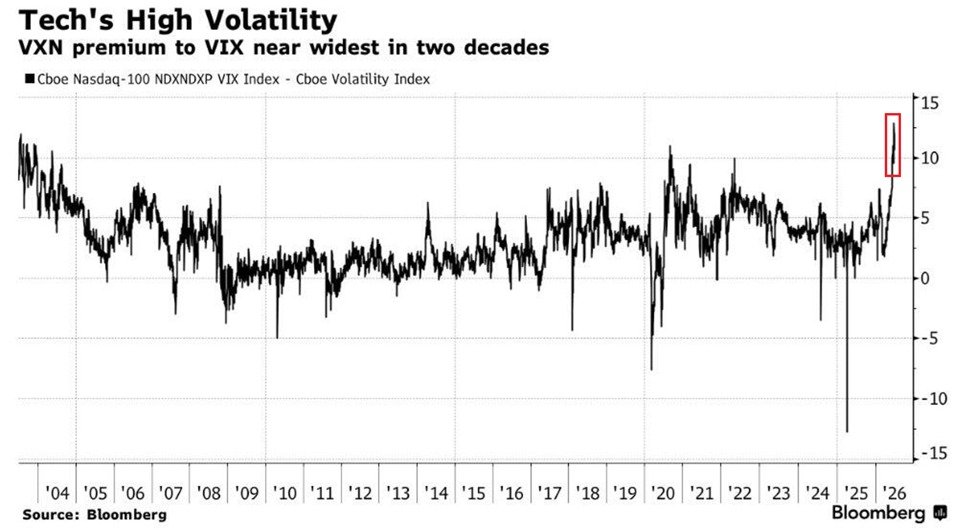
Recent data reveals that volatility among technology stocks has reached historically elevated levels. The gap between the Nasdaq 100 volatility index, known as $VXN, and the broader market volatility index, $VIX, has surged to 12 points. This marks the highest discrepancy recorded in over 23 years.
Since the beginning of May, this gap has more than tripled, highlighting a significant shift in investor sentiment. During this period, $VXN has increased by 9 points, or 43%, while $VIX has only risen by 2 points, equating to a 9% increase. Such a stark contrast indicates that investors are anticipating greater uncertainty specifically for technology stocks compared to the overall market.
Historical Context and Market Implications
To put this current volatility into perspective, we can compare it to previous market crises. During the 2008 Financial Crisis, the gap between $VXN and $VIX peaked at 7 points, while it reached 11 points during the pandemic in 2020. The current 12-point gap suggests that the market is pricing in a level of risk for tech stocks that is unprecedented in recent history.
Investors are increasingly cautious, reflecting concerns over various factors affecting the technology sector, including rising interest rates, regulatory scrutiny, and supply chain disruptions. As technology companies continue to navigate these challenges, the market’s reaction is likely to remain volatile.
What This Means for Investors
For investors, the elevated volatility in tech stocks presents both risks and opportunities. The higher $VXN indicates that options traders are expecting larger price swings in technology shares, which could lead to significant short-term gains or losses. This environment may attract more speculative trading strategies.
However, the heightened uncertainty also suggests a need for caution. Investors should be prepared for potential downturns and consider diversifying their portfolios to mitigate risks associated with tech stock volatility. Long-term investors may find value in companies that can demonstrate resilience amidst these turbulent market conditions.
Looking Ahead: The Future of Tech Volatility
As we move forward, it is essential to monitor how external factors will influence the volatility landscape. Economic indicators, such as inflation rates and employment figures, will play a crucial role in shaping market sentiment. Additionally, any shifts in Federal Reserve policy regarding interest rates could further impact tech stock performance.
In conclusion, the current volatility among technology stocks is a critical indicator of market sentiment and investor expectations. With the gap between $VXN and $VIX at a historic high, it is clear that uncertainty is a prevailing theme in the tech sector. Investors should remain vigilant and adaptable as they navigate this complex landscape.









Comments are closed.