
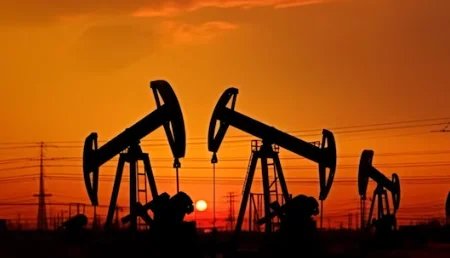
Oil Breaks $100 as U.S. Strikes Iranian Fleet
Oil prices pierced the $100-per-barrel threshold early Wednesday, September 9, 2026, after the United States destroyed five Iranian crude tankers in the Persian Gulf. The strikes, confirmed by the Pentagon, mark a sharp escalation in a confrontation that has been building since late August. Both benchmarks pulled back from their session peaks but remained nearly $2 higher, with West Texas Intermediate (WTI) trading at $94.54 a barrel and Brent at $99.89 shortly after the open.
From Three to Eight: Weekend Attacks Triggered Retaliation
The latest strikes came after a weekend that saw U.S. forces hit three other oil tankers in response to Iran’s Islamic Revolutionary Guard Corps (IRGC) targeting two U.S. warships near the Strait of Hormuz. That brought the total to eight Iranian tankers destroyed in less than 72 hours. Iran retaliated by launching attacks on U.S. forces in Jordan, although the Pentagon reported no casualties.
This tit-for-tat cycle has tightened the global oil market’s risk premium, with traders now pricing in a potential disruption to the Strait of Hormuz, through which roughly 20% of global oil supply passes. “The market has been complacent about Iran’s ability to disrupt exports, but these strikes change the calculus,” said a senior energy analyst at a New York-based brokerage.
Why $100 Is a Psychological Breakout, Not Just a Number
Crossing $100 is more than a milestone; it triggers algorithmic trading strategies and forces hedge funds to cover short positions, amplifying upward momentum. The last time Brent traded above $100 was in 2022, following Russia’s invasion of Ukraine, and it eventually peaked above $120. Today’s move suggests the market is bracing for a sustained supply shock, not a temporary blip.
Options markets are already pricing in further upside, with call options at $110 and $120 seeing increased volume. “The volatility skew has shifted dramatically, indicating that traders are hedging against a prolonged conflict,” noted a derivatives strategist.
Who Wins and Who Loses From the Tanker Destruction
The immediate winners are U.S. shale producers, who can ramp up exports at these prices, and non-OPEC suppliers like Canada and Brazil. Conversely, Asian importers—China, India, and Japan—are exposed to higher energy costs, which could fuel inflation and slow economic growth. The destruction of tankers also raises shipping insurance rates, adding a further premium to delivered crude.
Iran’s economy, already strained by sanctions, faces lower oil revenues, but Tehran may view this as an opportunity to escalate further, using its proxy forces in the region. Meanwhile, the U.S. military’s ability to sustain such strikes without triggering a wider war is questionable, especially with Iranian forces positioned near U.S. bases in Jordan and Syria.
What Breaks If the Strait of Hormuz Closes?
If Iran follows through on its long-standing threat to close the Strait of Hormuz, the impact would be immediate: nearly 21 million barrels per day of crude and condensate would be at risk. That would dwarf the current supply losses from the tanker strikes, which analysts estimate at around 2.5 million barrels per day. In such a scenario, oil prices could spike to $150 or higher, triggering a global economic recession.
However, such a move is unlikely, as it would invite overwhelming retaliation and cripple Iran’s own export capacity. More likely, Iran will continue asymmetrical attacks, targeting U.S. assets and oil infrastructure in the Gulf, as it did in Jordan on Wednesday.
Watch for the Next U.S. Move and OPEC’s Response
Oil traders will now focus on whether the U.S. expands its military campaign and whether OPEC+ steps in to fill the supply gap. OPEC+ is scheduled to meet on October 4, and any announcement of increased production could cool prices. Also watch for the weekly U.S. inventory report from the Energy Information Administration, due Thursday, September 10, which could show a drawdown as exports rise.
If the U.S. announces further strikes, expect another leg higher; if diplomatic channels reopen, prices could quickly retreat below $90. The next 48 hours will be critical in determining whether the oil market’s new $100 reality is temporary or the start of a sustained rally.










Comments are closed.