
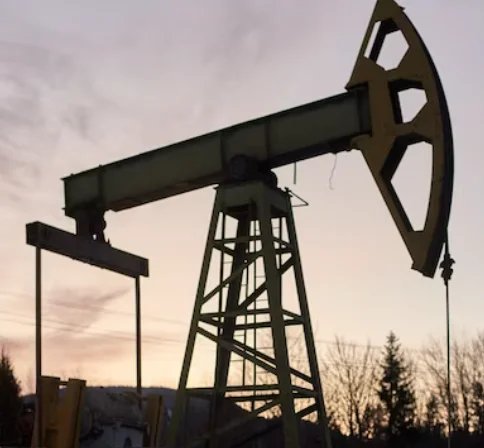
- WTI crude fell 2.16% to $85.18/barrel and Brent fell 2.19% to $92.32/barrel in early Asian trade Monday, as traders took profits after last week’s 5%+ gains.
- Markets are awaiting details of a new U.S. sanctions package against Iran, which Treasury Secretary Scott Bessent has framed as an “economic D-Day” for Iranian oil revenues.
- Iranian crude exports have dropped sharply and tanker traffic through the Strait of Hormuz has slowed to a trickle amid escalating U.S.-Iran threats.
- Both benchmarks remain elevated near multi-month highs, with geopolitical risk premium still embedded in prices despite Monday’s pullback.
- Analysts caution that the actual sanctions details, including enforcement mechanisms and potential waivers, will determine whether the pullback extends or reverses.
Profit-Taking and Geopolitical Jitters Drive the Pullback
Oil prices slid more than 2% in early Asian trading on Monday, as traders locked in profits following a torrid week of gains driven by escalating U.S.-Iran tensions. At the time of writing, WTI futures were trading at $85.18 per barrel, down 2.16%, while Brent futures were trading at $92.32 per barrel, down 2.19%. The pullback comes after both benchmarks surged more than 5% last week, their strongest weekly performance in months, as the market priced in a tightening supply outlook. The immediate catalyst for Monday’s decline appears to be position squaring ahead of a highly anticipated announcement from the U.S. Treasury. Treasury Secretary Scott Bessent has reportedly described the upcoming sanctions package against Iran as an “economic D-Day,” a phrase that has captured the market’s attention. Traders are now waiting to see the precise scope of the measures, including whether they will target Iranian financial institutions, shipping entities, or specific buyers of Iranian crude, most notably China.
Supply Disruptions and the Strait of Hormuz Factor
The underlying supply picture remains tight, which is why many analysts view Monday’s drop as a temporary correction rather than a trend reversal. Iranian crude exports have already fallen noticeably in recent weeks, and tanker traffic through the Strait of Hormuz—the world’s most important oil chokepoint—has slowed to a trickle. The strait handles roughly 20% of global oil consumption, and any sustained disruption there would have outsized effects on prices. Last week’s rally was fueled by a combination of factors: direct threats exchanged between Washington and Tehran, a visible reduction in Iranian loadings, and growing insurance and freight costs for tankers operating in the region. The market has been on edge since early August, when the U.S. began signaling a more aggressive posture toward Iranian oil exports as part of a broader strategy to curb Tehran’s regional influence and nuclear program.
What to Watch in the Sanctions Package
The key question for traders is whether the new sanctions package includes secondary sanctions on Chinese refiners and banks that facilitate Iranian crude purchases. Previous rounds of sanctions have included waivers or carve-outs, and the market will be watching closely for any signs of flexibility. If the package is as stringent as Bessent’s rhetoric suggests, analysts expect Brent to test the $95–$100 range in the near term. Conversely, if the package includes loopholes or delayed implementation, prices could retreat further toward the $80–$82 support zone for WTI. Another factor to monitor is the response from OPEC+. The group has been gradually unwinding its production cuts, but a sharp spike in prices could prompt a faster return of barrels. However, spare capacity remains concentrated in a few Gulf producers, and any decision to increase output would take time to materialize. For now, the market remains in a wait-and-see mode, with volatility expected to remain elevated until the sanctions details are fully disclosed.
Outlook: Geopolitical Premium Persists
Despite Monday’s decline, the geopolitical risk premium in oil prices remains substantial. The combination of reduced Iranian exports, slower Hormuz traffic, and the threat of further escalation suggests that prices are unlikely to return to pre-crisis levels anytime soon. Physical crude markets in Asia and Europe are already showing signs of tightness, with prompt spreads widening and refiners scrambling for alternative supplies. For investors, the immediate focus will be on the official announcement from the Treasury Department, expected within days. Until then, expect choppy trading and heightened sensitivity to headlines. The broader macro backdrop, including U.S. inventory data and global demand signals, will also play a role, but for now, geopolitics is firmly in the driver’s seat. As one trader put it, “The market is holding its breath—the next 48 hours will set the tone for the rest of the quarter.”








Comments are closed.