
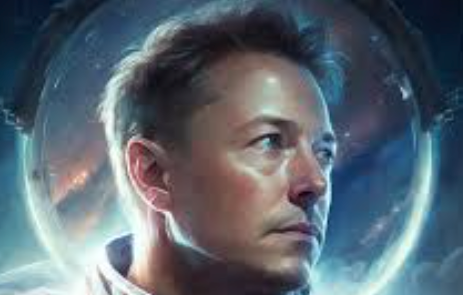
Musk vs. Altman court battle set to reshape AI
The high-profile legal clash between Elon Musk and Sam Altman is set to begin Monday with jury selection, as the two tech titans square off over the future of artificial intelligence. The case, which has drawn intense scrutiny from investors and policymakers, could redefine the governance of AI development and the balance between open-source and proprietary models.
Musk, the CEO of Tesla and owner of X, has accused Altman, the CEO of OpenAI, of abandoning the nonprofit’s original mission to benefit humanity in favor of profit-driven partnerships with Microsoft. The trial is expected to last several weeks, with both sides preparing to present evidence on breach of contract and fiduciary duty claims.
What’s at stake in the courtroom
At its core, the dispute centers on OpenAI’s transformation from a nonprofit research lab into a capped-profit entity valued at $86 billion in its latest funding round. Musk, who co-founded OpenAI in 2015, argues that Altman and the board violated the founding agreement by prioritizing commercial deals, including a $13 billion investment from Microsoft.
Legal experts say the outcome could set a precedent for how AI companies balance mission-driven goals with shareholder returns. If Musk prevails, OpenAI could be forced to restructure, potentially limiting Microsoft’s access to key AI technologies like GPT-4. Conversely, a win for Altman would validate the hybrid structure that many AI startups now emulate.
Market implications for tech giants
The case arrives amid a broader AI stock rally, with the Nasdaq 100 up 18% year-to-date, fueled by optimism around generative AI. Microsoft, which has integrated OpenAI models into its Azure cloud and Office products, could face significant disruption if the court orders changes to the partnership. Shares of Microsoft have risen 12% in 2024, reflecting investor confidence in the AI pipeline.
Tesla investors are also watching closely, as Musk has pivoted his company toward AI-driven autonomous driving and robotics. A legal victory could bolster Musk’s narrative that open development is safer, while a loss might distract from Tesla’s core business. The judge has ruled that the trial will be public, with key witnesses including former OpenAI board members and Microsoft executives.
Broader regulatory and competitive landscape
The trial unfolds against a backdrop of global AI regulation efforts. The European Union’s AI Act, set to take effect in 2025, imposes strict rules on high-risk AI systems, while the U.S. government has issued executive orders on AI safety. Both Musk and Altman have lobbied for different approaches: Musk has called for a pause on giant AI experiments, while Altman has advocated for industry-led standards.
Competition is also intensifying from other players like Google, which launched its Gemini model in February, and Anthropic, which raised $7.3 billion in early 2024. The case could influence how these companies structure their governance and partnerships, especially as venture capital pours into AI startups.
Financial analysts note that the legal fees alone could run into the millions, but the real cost lies in potential delays to AI deployment. J.P. Morgan estimates that generative AI could add $1.5 trillion to global GDP by 2030, making regulatory clarity a key priority for markets.
Summary and forward-looking takeaway
The Musk-Altman trial represents a pivotal moment for the AI industry, with outcomes that could reshape corporate governance, investor confidence, and regulatory frameworks. While the immediate focus is on the courtroom drama, the long-term implications for technology stocks and innovation are profound. Investors should brace for volatility in tech shares, particularly Microsoft and Tesla, as the case progresses. Regardless of the verdict, the trial underscores the growing tension between profit and purpose in the AI era.







Comments are closed.