
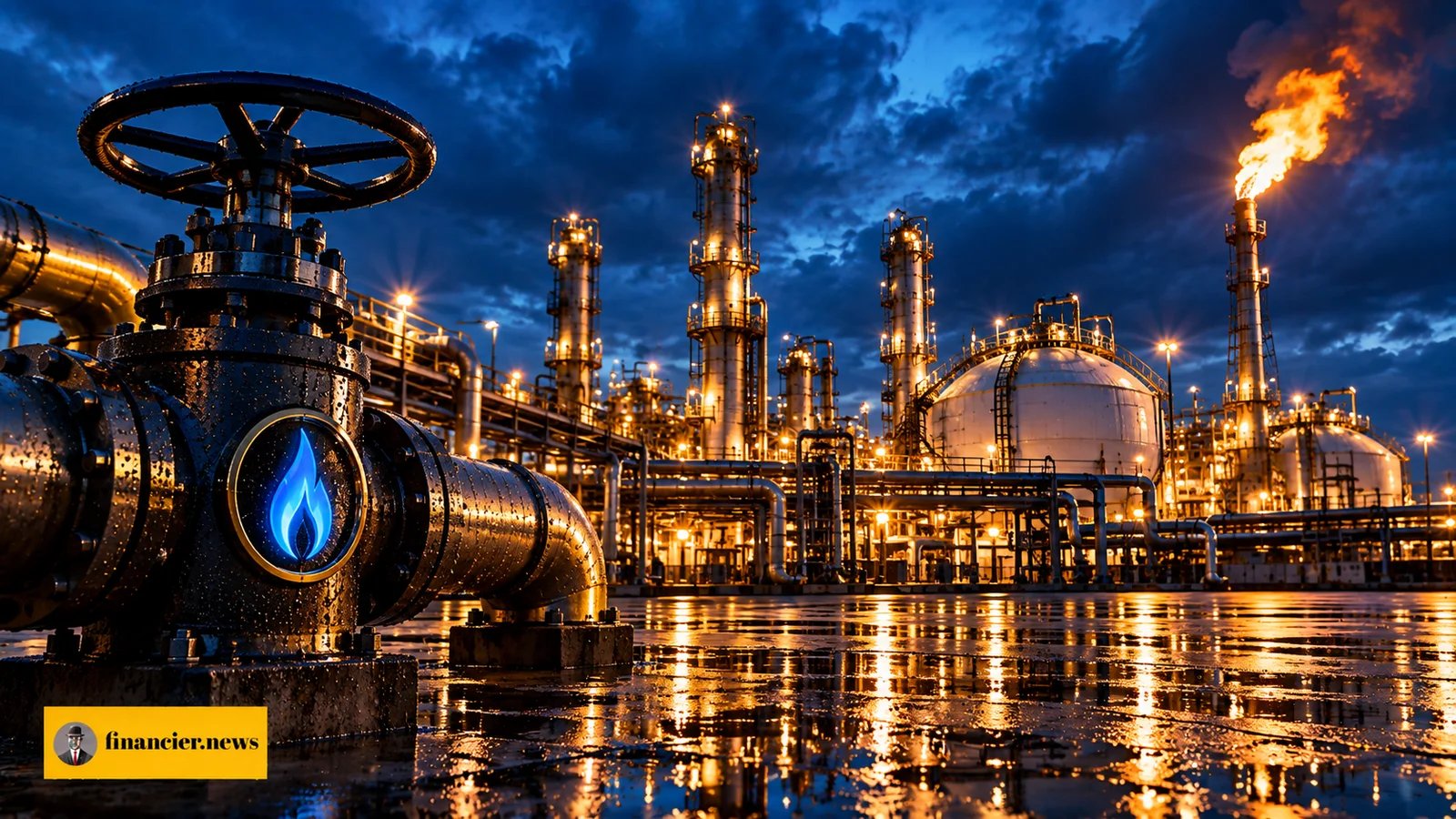
- European natural gas prices have surged sharply since conflict involving Iran disrupted LNG flows through the Strait of Hormuz.
- Roughly one-fifth of global liquefied natural gas supply has been affected by the disruption, tightening world markets.
- Higher gas, gasoline, and diesel costs are feeding through into European inflation.
- The European Central Bank has raised key interest rates twice since June, with markets watching for further moves.
- Households face rising energy bills while energy-intensive industry contends with spiking input costs.
The energy shock rippling through Europe has its origins in the Strait of Hormuz, the narrow chokepoint at the mouth of the Persian Gulf through which a substantial share of the world’s seaborne energy moves. With conflict involving Iran disrupting liquefied natural gas shipments, roughly a fifth of global LNG supply has effectively been trapped behind the strait. That single logistical bottleneck has been enough to reprice natural gas across the continent, turning what had been a manageable market into one defined by scarcity and volatility.
For European governments, the immediate problem is arithmetic. Natural gas is not simply a fuel for heating and power generation; it is an input into fertilizer, chemicals, glass, ceramics, and a long list of other energy-intensive industries. When the benchmark price climbs, the cost lands first on household utility bills and then on factory operating budgets. The result is a squeeze that is simultaneously a cost-of-living problem and a competitiveness problem, and it arrives at a moment when many European economies were already growing slowly.
Inflation Pressure Builds Across the Energy Complex
The price surge is not confined to natural gas. Gasoline and diesel prices have also climbed in recent months, and because petroleum products touch nearly every link in the supply chain, the effect spreads well beyond the pump. Freight, agriculture, construction, and retail distribution all carry fuel costs that eventually show up in consumer prices. This is the mechanism by which an energy shock becomes a broad inflation problem rather than a sector-specific one.
The European Central Bank has responded by raising key interest rates twice since June, and officials have signaled that further increases remain possible. That posture reflects the central bank’s concern that elevated energy costs could feed into wages and services prices, embedding inflation more durably than a one-off commodity spike would. The tension is familiar: tightening policy to contain inflation risks deepening the slowdown that high energy costs are already producing.
Why the Hormuz Chokepoint Matters So Much
LNG is only as reliable as the routes it travels. Unlike pipeline gas, which can be rerouted only with new infrastructure, seaborne LNG depends on shipping lanes, insurance markets, and the willingness of carriers to sail into risk. When a chokepoint like Hormuz becomes contested, the disruption is felt less through the physical loss of molecules than through the refusal of the market to move them at normal cost. Cargoes get diverted, insurance premiums rise, and buyers bid up whatever supply remains available on the spot market.
That dynamic explains why European prices have moved so violently even though the continent’s direct dependence on Hormuz cargoes varies by country. Global LNG is a connected market. When one region loses access, others compete for the same flexible cargoes, and prices clear at the margin. Europe, as a major importer, absorbs that competition directly.
Policy Options Are Narrow and Expensive
Governments confronting the spike have limited tools. Subsidizing bills protects households but widens fiscal deficits and blunts the price signal that would otherwise curb demand. Windfall levies on energy producers raise revenue but can deter investment. Accelerating renewable and efficiency projects helps over the medium term but does nothing for the coming winter. Storage levels, weather, and the pace of any diplomatic resolution to the conflict will matter more in the near term than any policy lever available to Brussels or national capitals.
For investors, the read-through is a market defined by energy-driven inflation, constrained central bank easing, and pressure on energy-intensive European industry. Until LNG flows through Hormuz normalize, the path of least resistance for European gas prices remains higher, and the inflation consequences will keep the ECB cautious.



Comments are closed.