

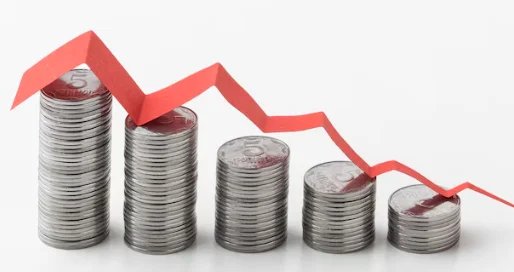
Core PCE Holds at 3.3% as Fed Weighs September Move
WASHINGTON – The Federal Reserve’s preferred inflation gauge, the core personal consumption expenditures (PCE) price index, rose 3.3% on a 12-month basis in July, according to data released Wednesday by the Bureau of Economic Analysis. The reading matched the previous month’s annual pace and came in below the 3.6% forecast from economists surveyed by Dow Jones, offering a mixed signal for policymakers ahead of their September meeting.
On a monthly basis, core PCE increased 0.1%, in line with expectations and down from the 0.2% gain seen in June. The headline PCE index, which includes volatile food and energy prices, rose 0.1% month-over-month and 3.3% year-over-year, also slightly below the 3.6% consensus. The data suggest inflation is cooling gradually, but not quickly enough to rule out another rate hike later this year.
Why the 0.3-Point Miss Matters for Rate-Sensitive Sectors
The 0.3-percentage-point undershoot relative to consensus is notable because it marks the second consecutive month that core PCE has come in softer than Wall Street expected. That pattern bolsters the case for the Fed to hold rates steady in September, a view that futures markets have already priced in with a 88% probability, according to CME FedWatch. However, the 3.3% annual rate remains well above the Fed’s 2% target, keeping the door open for additional tightening in November or December.
Rate-sensitive sectors, including technology and real estate, could benefit from a prolonged pause. The S&P 500 and Nasdaq Composite have rallied in recent weeks on hopes that the Fed is done hiking, with the S&P 500 up 1.2% over the past five sessions as of Tuesday’s close. A dovish interpretation of today’s data could extend those gains, while a hawkish surprise in the accompanying personal income and spending figures might trigger a pullback.
Services Inflation Proves Sticky, Goods Prices Ease
Digging into the components, services inflation remains the primary driver of the elevated core reading, with housing and transportation costs still rising at a clip above 4% annually. In contrast, goods prices have decelerated sharply, falling 0.4% on a year-over-year basis in July, as supply chain normalizations and softer consumer demand weigh on categories like used vehicles and furniture. This divergence suggests that the Fed’s battle is increasingly concentrated in the labor-intensive services sector, where wage growth – running at a 4.2% annual clip – continues to feed through to prices.
The persistence of services inflation is a key reason why some Fed officials, including Governor Michelle Bowman, have argued for maintaining a restrictive stance. In a speech last week, Bowman noted that “services inflation remains too elevated to be confident that we are on a sustainable path back to 2%.” Today’s data does little to change that calculus, even if the headline surprise was to the downside.
Market Pricing Implies a Soft Landing, but Risks Remain
Investors are increasingly pricing in a soft landing, where inflation cools without a severe recession. The 2-year Treasury yield, which is sensitive to Fed policy expectations, fell 4 basis points to 4.98% following the release, while the 10-year yield dipped to 4.20%. Yield curve inversion – with 2-year yields above 10-year – has narrowed to 78 basis points, down from a peak of 110 basis points in July, suggesting that recession fears are easing.
That optimism is supported by resilient consumer spending, which rose 0.3% in July, according to the same BEA report. However, the saving rate dipped to 3.5%, its lowest level since December 2022, indicating that households are tapping into savings to maintain consumption. If that trend continues, it could undermine future spending and complicate the inflation outlook, as weaker demand might eventually push prices down faster – but also raise recession risk.
For equity investors, the immediate takeaway is that the Fed is likely to remain on hold in September, but the path beyond that is uncertain. The November meeting, scheduled for Nov. 7-8, will be the next major decision point, and officials will have two more PCE reports and two jobs reports to digest before then. A strong rebound in inflation or a hot labor market could force a hike, while continued cooling would support a prolonged pause.
What to Watch: October PCE and the Fed’s Dot Plot
The next critical test comes on Oct. 1, when the August PCE report is released, followed by the September data on Nov. 1. Those prints, combined with the September jobs report due Oct. 6, will shape the Fed’s economic projections and dot plot, which will be updated at the Nov. meeting. A move below 3.0% in core PCE would likely cement a pause through year-end, while a rise back above 3.5% would revive hawkish bets.
Until then, markets will parse every data point for signs of a breakout. The dollar index, which has been rangebound near 103, could strengthen if inflation surprises to the upside, pressuring commodities and emerging-market assets. For now, the bias is toward further disinflation, but the sticky services component remains the wildcard that could break the trend.