

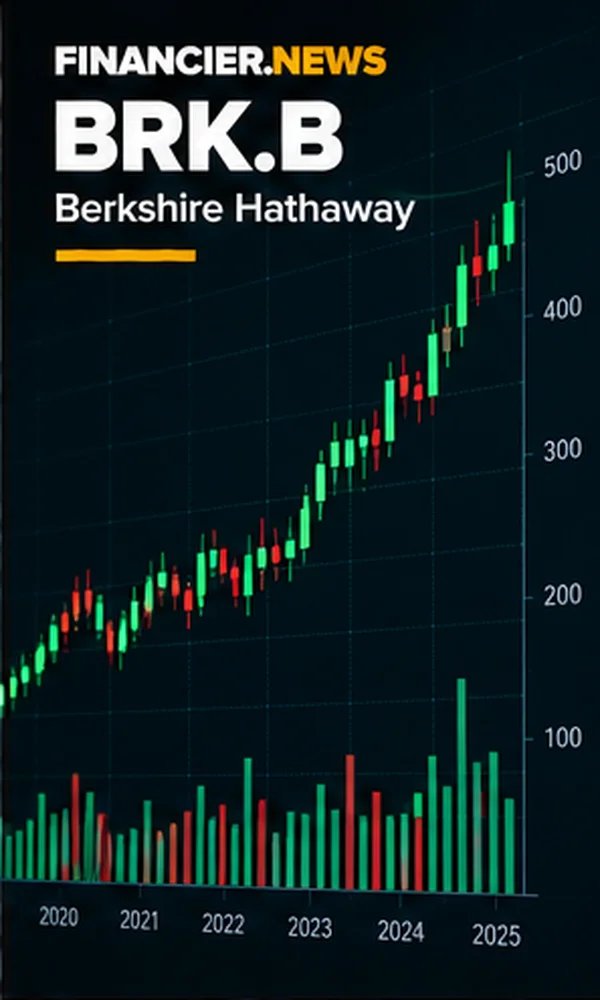
Berkshire Stock Hits Record High as Rally Stretches Valuation
Berkshire Hathaway shares touched a record high in late October 2026, extending a powerful rally that has lifted the conglomerate’s market value well above $1 trillion. The stock’s climb has been fueled by a broad rotation into defensive, cash-rich names as investors brace for slower economic growth and persistent volatility in the technology sector.
But the milestone comes with a warning from market strategists: chasing the stock at its peak may be a costly mistake. Barchart.com noted in a recent analysis that while Berkshire’s long-term track record remains unmatched, the current entry point offers little margin of safety for new capital.
Why the Rally Has Room to Stall Near-Term
Berkshire’s shares have gained roughly 25% since early April 2026, according to market data, outperforming the S&P 500 by a wide margin. The rally accelerated after the company reported stronger-than-expected second-quarter operating earnings and a record cash pile that now exceeds $180 billion.
That cash position, while a sign of financial strength, is also a drag on returns when short-term interest rates begin to fall. With the Federal Reserve signaling a slower pace of rate cuts in 2026, the yield on Berkshire’s Treasury holdings could compress, reducing a key earnings contributor.
Additionally, the stock’s price-to-book ratio has climbed to its highest level in more than a decade, raising questions about valuation. Historically, Berkshire has traded at a premium during periods of market stress, but that premium tends to fade as uncertainty recedes.
What the Record High Means for Portfolio Allocation
For long-term investors, Berkshire remains a core holding, but adding aggressively at current levels concentrates risk. The company’s insurance operations, including GEICO, have benefited from higher premiums, but those gains may moderate as competition intensifies.
Berkshire’s railroad and energy businesses are also sensitive to economic cycles. A slowdown in industrial activity could pressure earnings in the coming quarters, making the current valuation harder to justify.
Investors should also consider the lack of a major acquisition. Despite its cash hoard, Berkshire has not announced a transformative deal in 2026, and CEO Greg Abel, who succeeded Warren Buffett in 2024, has maintained a disciplined approach. Without a catalyst, the stock may struggle to sustain its momentum.
Key Levels to Watch as Berkshire Tests New Territory
Technical analysts point to the $500,000 per share level for Berkshire’s Class A stock as a psychological barrier. A decisive close above that mark could trigger further buying, but failure to hold could signal a short-term top.
For Class B shares, the $330 level is the immediate support zone. A break below could accelerate selling pressure, especially if broader market volatility rises.
Investors should also monitor Berkshire’s next quarterly earnings report, expected in early November 2026, for updates on cash deployment and insurance margins. Any sign of weakening underwriting results or a decline in investment income could weigh on the stock.
The record high is a testament to Berkshire’s enduring appeal, but the risk-reward for new money is less favorable than it was six months ago. As Barchart.com cautioned, backing up the truck at the top is rarely a winning strategy.
Sources: news.google.com · Yahoo Finance · Barron’s · Bloomberg.com · Yahoo! Finance Canada