
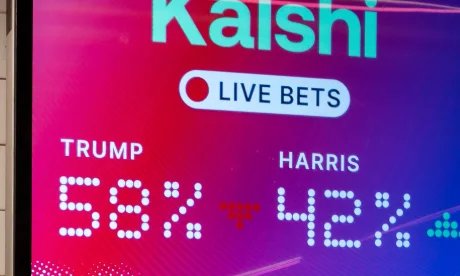
Democrats Push for Public Scrutiny of Prediction Markets
All 11 Democratic members of the U.S. Senate Banking Committee formally requested a public hearing on prediction markets in a letter dated September 23, 2026, addressed to Chairman Tim Scott. The request followed a private meeting between Republican committee members and Kalshi CEO Tarek Mansour, which Democrats argue should be balanced with open, bipartisan examination.
The lawmakers contend that securities-linked prediction products—such as contracts tied to corporate earnings or stock performance—could fall under the committee’s oversight, potentially requiring coordination with the Securities and Exchange Commission (SEC). The Commodity Futures Trading Commission (CFTC) has traditionally regulated event contracts, but the evolving nature of these products is blurring jurisdictional lines.
Kalshi’s Private Meeting Highlights Regulatory Ambiguity
Kalshi, a prominent prediction market platform, has been expanding its offerings beyond sports and politics into economic indicators and corporate events. The private meeting with Republican committee members on September 23, 2026, covered innovation, retail-investor protection, and regulatory questions surrounding securities-linked products, according to Chairman Scott. No public readout was provided, prompting Democrats to demand transparency.
The incident underscores a broader struggle in Washington: determining which agency—CFTC, SEC, or state regulators—should oversee prediction markets. While the CFTC has historically taken the lead, products that resemble options on securities could trigger SEC involvement. States, meanwhile, continue to challenge certain sports-related contracts, creating a fragmented regulatory landscape.
Why Securities-Linked Contracts Are a Regulatory Gray Area
Prediction markets allow users to bet on outcomes ranging from economic data releases to corporate earnings. When a contract’s payout depends on a company’s stock price or financial results, it may be classified as a security-based swap, which falls under SEC purview. This classification would subject platforms like Kalshi to additional registration and compliance requirements.
The Senate Banking Committee’s interest signals that Congress may need to clarify the legal framework. Unlike the CFTC, which oversees derivatives and event contracts, the Banking Committee has jurisdiction over securities and banking regulations. If prediction markets continue to encroach on traditional financial territory, more committees may claim oversight, leading to potential turf wars and slower regulatory clarity.
Market Implications and What to Watch
For prediction market platforms, increased congressional scrutiny could bring both legitimacy and heavier compliance burdens. A public hearing would likely feature testimony from regulators, industry executives, and consumer advocates, potentially shaping future legislation. The outcome could determine whether prediction markets remain a niche CFTC-regulated sector or become subject to a patchwork of federal and state rules.
Investors and industry participants should monitor Chairman Scott’s response to the Democratic request. If a hearing is scheduled, watch for signals on whether the SEC will assert authority over securities-linked contracts. Additionally, any legislative proposal that defines jurisdiction would be a key catalyst. For now, the standoff highlights the growing pains of a rapidly evolving market that sits at the intersection of finance, technology, and gambling.
This article was written by the News Desk and edited by Samuel Rae.










Comments are closed.