
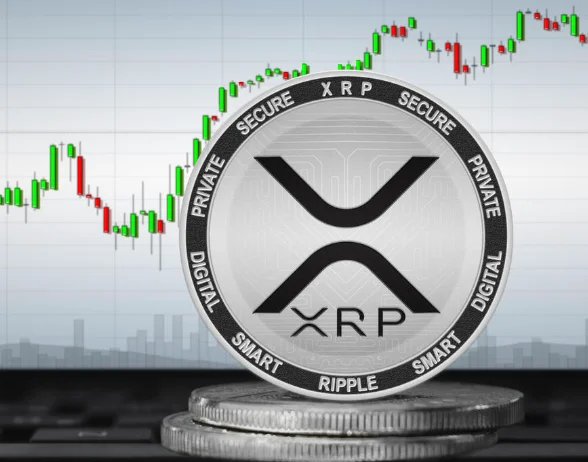
Ripple CEO: BIS XRPL Experiment Was No Shock
Bitcoinist — Sept. 6, 2026 — Brad Garlinghouse, CEO of Ripple, responded on Sept. 4 to the Bank for International Settlements (BIS) publishing a research paper that detailed testing on the XRP Ledger (XRPL). The BIS Innovation Hub’s experiment used XRPL to authenticate official statistical datasets, a move Garlinghouse said was “no surprise” given the ledger’s low fees, fast settlement, and strong track record.
The BIS, often called the “central bank of central banks,” is not a casual endorser. Its involvement signals that institutional players are looking beyond Bitcoin and Ethereum for enterprise-grade infrastructure. Garlinghouse noted that XRPL’s architecture—built for cross-border payments—makes it a natural fit for financial data integrity use cases.
Why the BIS Chose XRPL Over Other Networks
The BIS paper, dated Sept. 4, 2026, describes a proof-of-concept where XRPL was used to create an immutable timestamped record of statistical data, ensuring authenticity and preventing tampering. XRPL’s average transaction fee sits at fractions of a cent, and its block time is around 3-5 seconds—both factors that make it practical for high-volume authentication tasks.
In contrast, Bitcoin’s fees have ranged from $1 to $60 during congestion periods in recent years, and Ethereum’s gas fees have spiked above $50 at times. For a central bank network processing millions of data points, cost and speed are non-negotiable. Garlinghouse highlighted that XRPL has never suffered a major outage since its launch in 2012, a claim supported by public network status data.
Market Reaction: XRP Holds Steady as Traders Eye Institutional Validation
Following the BIS announcement, XRP traded at $2.35 on Sept. 5, up 3.2% from the prior day, according to CoinGecko data. The broader crypto market, led by Bitcoin at $67,000, saw modest gains, but XRP’s move was notable given the lack of a direct catalyst beyond the BIS news.
However, some analysts caution that the test was limited to data authentication—not settlement or payments—so the commercial impact on Ripple’s payment products may be indirect. “This is a proof-of-concept, not a production deployment,” noted crypto researcher Alice Chen in a Sept. 5 market note. “The real upside would come if central banks adopt XRPL for actual cross-border settlement.”
Ripple’s Legal Overhang Still Caps Enthusiasm
Despite the positive technical validation, Ripple remains in a legal battle with the U.S. Securities and Exchange Commission (SEC) over whether XRP is a security. The case, filed in December 2020, has dragged on for years, and a final ruling is still pending as of this writing. That uncertainty has kept institutional investors cautious about holding XRP in compliance-heavy portfolios.
Garlinghouse has repeatedly argued that the BIS’s interest proves XRP’s utility, but legal clarity is essential for broader adoption. A favorable ruling could trigger a rally, while an unfavorable one could push XRP below the $1.80 support level seen in August 2026.
What to Watch: BIS Follow-Up Reports and SEC Ruling Timing
Investors should monitor two key catalysts over the next quarter. First, whether the BIS publishes a follow-up report that expands the XRPL test to live data feeds—that would signal deeper institutional trust. Second, any movement in the SEC case, particularly a summary judgment or settlement announcement, which could arrive before year-end.
On the price side, watch XRP’s ability to hold above $2.30. A break above $2.50 would confirm bullish momentum, while a drop below $2.00 would negate the current uptrend. For now, the BIS nod adds credibility, but the market is waiting for the next substantive step.










Comments are closed.