
US Bars Russia Economic Relief Until Ukraine War Ends
Treasury Secretary Scott Bessent reportedly told Russian officials on Monday that Washington will offer no economic relief until Moscow ends its war in Ukraine, according to sources familiar with the talks. The message came during a closed-door meeting on the sidelines of the G20 finance summit in Rio de Janeiro, where European delegates pointedly snubbed their Russian counterparts.
The encounter underscores a sharp transatlantic split: the US is willing to reopen diplomatic channels with Moscow, while Europe continues to isolate Russia as long as the conflict grinds on. For markets, the standoff keeps a lid on any near-term easing of sanctions that have weighed on Russian assets and global energy flows.
Why Europe’s Snub at G20 Hardens the Standoff
European officials at the G20 refused to sit at the same table as the Russian delegation, a deliberate gesture that signals no relaxation of the bloc’s sanctions regime. That posture aligns with the EU’s repeated position that any economic engagement with Russia is conditional on a ceasefire and a full withdrawal of troops from Ukrainian territory.
The practical effect is a coordination gap: while the US floats the possibility of talks, Europe’s hardline stance means any actual relief—such as loosening oil price caps or unfreezing central bank assets—remains politically impossible. Investors watching Russian sovereign debt or the ruble see little upside until the diplomatic signals align.
Market Signals: Sanctions Relief Priced as Distant
In response, Russian assets have stayed under pressure, with the ruble trading near multi-month lows and the MOEX index flat to negative since the G20 began. Meanwhile, global commodity markets remain sensitive to any hint of resupply from Russia, particularly in natural gas and wheat, but traders are discounting a quick return given the entrenched positions.
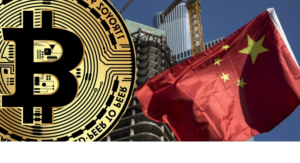
For crypto markets, the geopolitical freeze has a subtler effect. Bitcoin and Ethereum often attract flows when traditional sanctions channels tighten, as some investors seek alternatives to fiat systems. Yet the absence of a clear resolution means volatility remains elevated, with BTC hovering around $58,000 and ETH near $2,400 as of Tuesday.
What Would Change the Calculus for Markets
The key variable is whether the US and Europe can bridge their differences. If Washington secures a concrete concession from Moscow—such as a verifiable ceasefire—then the door to partial relief opens, likely boosting Russian assets and easing energy prices. Conversely, if Europe digs in, the status quo persists, and sanctions-driven distortions continue to favor alternative assets like gold and crypto.
Watch for the next G20 communiqué or any bilateral US-Russia meeting in the coming weeks. A specific date to circle is the September 15 UN General Assembly session, where Ukraine and Russia are set to address world leaders. Any shift in rhetoric there could be the first signal that the economic standoff is thawing—or hardening.





Comments are closed.