
What Happened
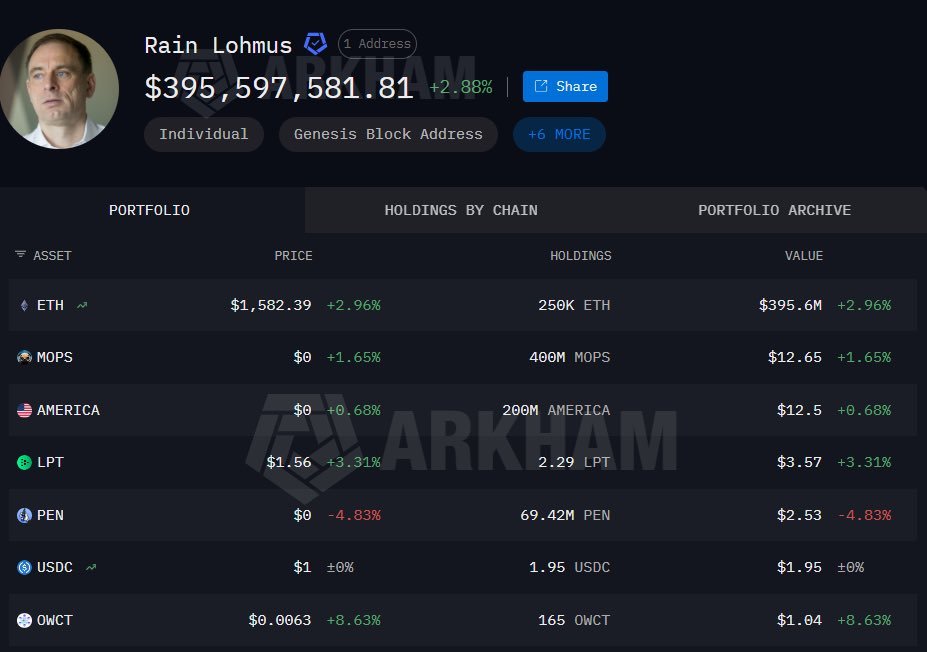
In a remarkable tale from the world of cryptocurrency, the founder of Estonian bank LHV, Rain Lõhmus, made headlines for purchasing 250,000 ETH during the Ethereum ICO in 2014 for just $75,000. Fast forward to today, that investment has ballooned to a staggering value of approximately $395 million. However, the story takes a twist: Lõhmus reportedly lost access to the wallet containing his Ethereum, rendering the vast sum inaccessible.
Why It Matters
The Ethereum ICO, which took place in 2014, was a pivotal moment in the cryptocurrency landscape, raising over $18 million and enabling the launch of the Ethereum network. Lõhmus’ investment exemplifies the potential for massive returns in the crypto market, but also highlights a significant risk factor: the importance of secure storage for digital assets. The loss of a password or private key can result in irreversible financial loss, a reality that many investors face in the volatile crypto environment.
As of June 29, 2026, Ethereum (ETH) has seen substantial growth since its inception, with its price fluctuating and gaining traction in mainstream finance. The current market dynamics indicate that Ethereum is valued significantly higher than it was during its ICO, further emphasizing the missed opportunity for Lõhmus. Investors today are reminded of the critical need for secure management of their digital assets.
Market Context and Analysis
Ethereum’s market performance has been characterized by periods of rapid growth and subsequent corrections. As of mid-2026, ETH is trading at levels that reflect a robust demand for decentralized finance (DeFi) applications and non-fungible tokens (NFTs), which are largely built on the Ethereum blockchain. This growth has been supported by increasing institutional interest and the expansion of the Ethereum ecosystem.
In contrast, Bitcoin (BTC), often viewed as the leading cryptocurrency, has also experienced significant price movements but remains distinct from Ethereum’s use cases. While Bitcoin’s primary function is as a store of value, Ethereum’s versatility allows it to serve various applications, including smart contracts and decentralized applications.
The story of Lõhmus serves as a cautionary tale for both new and seasoned investors in the cryptocurrency space. It underscores the necessity of adopting best practices for digital asset management, including the use of hardware wallets and secure backup procedures. As the crypto market continues to evolve, the lessons learned from past experiences will be crucial for future investors.
Looking Ahead
As we move further into 2026, the cryptocurrency market will likely continue to witness both innovation and volatility. Investors should remain vigilant and informed about the risks associated with digital assets. The case of Rain Lõhmus and his lost Ethereum serves as a reminder of the potential rewards and pitfalls present in this dynamic market.
In summary, the staggering value of Lõhmus’ lost Ethereum highlights the incredible growth potential within the crypto space, while also emphasizing the importance of security in managing digital assets. As the market continues to mature, the focus on secure practices will become increasingly vital for protecting investments.











Comments are closed.