
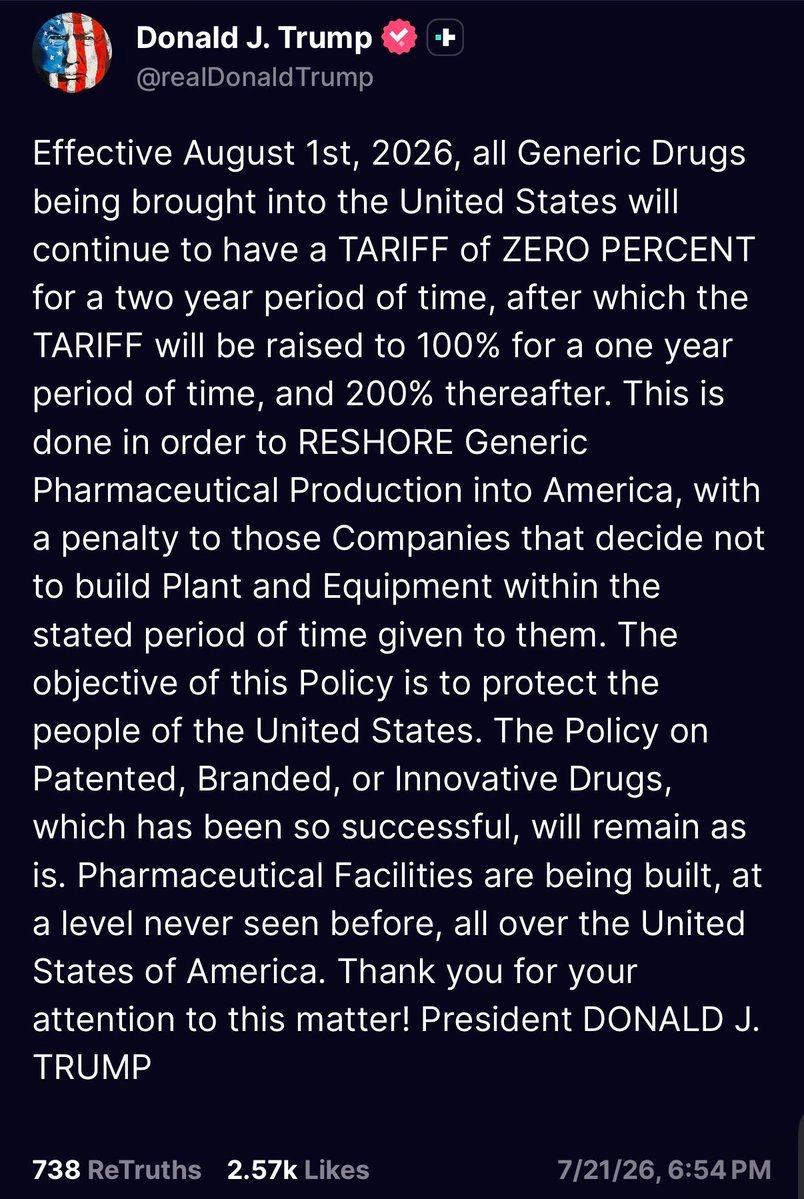
Trump’s Tariff Plan on Generic Drugs
In a significant move that could reshape the pharmaceutical landscape, President Trump announced via social media that a 100% tariff will be imposed on generic drugs imported into the United States, effective August 2028. This tariff is set to increase to 200% in August 2029, raising questions about the potential impact on drug prices and availability for American consumers.
Implications for the Pharmaceutical Industry
The proposed tariffs could have far-reaching consequences for the pharmaceutical industry, particularly for manufacturers of generic medications. Generic drugs are typically sold at a fraction of the price of their brand-name counterparts, making them a crucial part of the healthcare system for many patients. By imposing such high tariffs, the administration aims to encourage domestic production, but it may also lead to increased costs for consumers.
Generic drugs currently account for a significant portion of the U.S. pharmaceutical market, with estimates suggesting they represent around 90% of all prescriptions filled. The introduction of a 100% tariff could disrupt this market dynamic, leading to higher prices and potentially limiting access to essential medications for millions of Americans.
Market Reactions and Economic Context
Market analysts are closely monitoring the situation, as the announcement has already sparked discussions about the future of drug pricing and healthcare costs. The tariffs are part of a broader strategy by the Trump administration to prioritize American manufacturing and reduce dependence on foreign products. However, the effectiveness of such tariffs in achieving these goals remains to be seen.
In the context of the ongoing debate over healthcare reform in the U.S., this tariff could reignite discussions about the balance between encouraging domestic production and ensuring affordable access to medications. Industry experts warn that while tariffs might protect U.S. manufacturers, they could also lead to unintended consequences, such as reduced competition and higher prices for consumers.
Potential Responses from the Pharmaceutical Sector
Pharmaceutical companies may respond to these proposed tariffs in various ways. Some may choose to shift their production to the U.S. to avoid the tariffs, while others might increase prices to offset the costs associated with the tariffs. Additionally, there could be calls for legislative action to address the potential fallout from these tariffs, particularly from advocacy groups focused on healthcare access.
As the August 2028 implementation date approaches, stakeholders in the pharmaceutical industry will likely ramp up their lobbying efforts to influence the final decision on these tariffs. The outcome will depend on various factors, including public sentiment, economic conditions, and the political landscape leading up to the implementation date.
What to Watch as Implementation Nears
As the proposed tariffs draw closer, attention will turn to how pharmaceutical companies adapt and what measures they may take in response. Key indicators to watch include any shifts in drug pricing, changes in production strategies by manufacturers, and potential legislative actions aimed at mitigating the impact of these tariffs. The healthcare community will be particularly focused on how these tariffs might affect access to essential medications for consumers.
With the political climate in constant flux, the decisions made in the coming months will be critical in shaping the future of the pharmaceutical industry and healthcare access in the United States. Stakeholders will need to remain vigilant as they navigate this evolving landscape.










Comments are closed.