

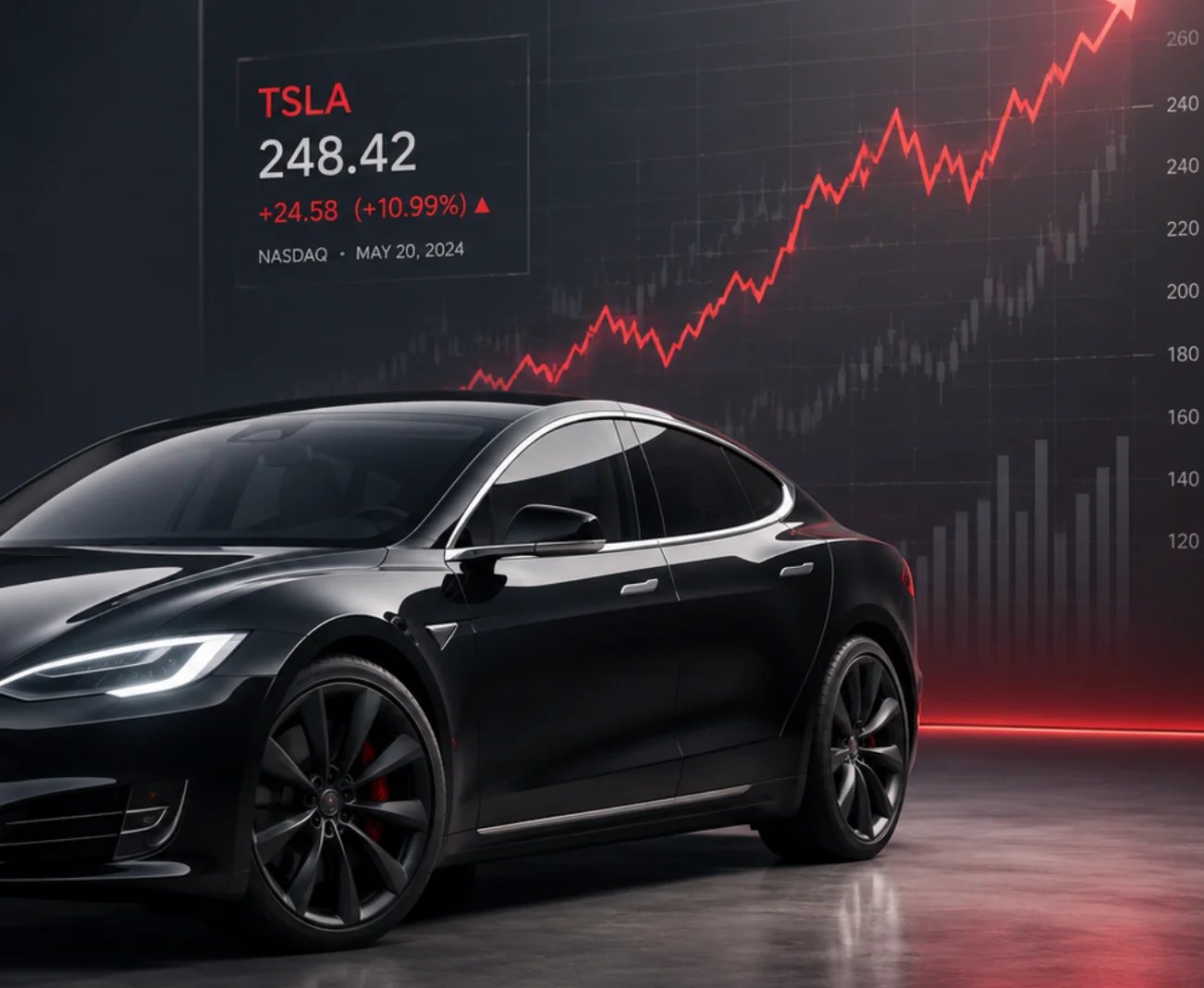
Tesla’s Merger Premium Is Doing The Heavy Lifting
Tesla shares have been trading with a valuation cushion that has little to do with car sales, energy storage, or the robotaxi narrative. The “merger premium” in the stock — the spread between Tesla’s market price and what its standalone fundamentals would justify — has become the dominant driver of returns, according to the source thesis. That is a warning, not a compliment.
The mechanics are straightforward. When a stock carries an embedded takeover or strategic-merger premium, part of every dollar of market cap is a bet on a corporate event, not on operating performance. If that event fails to materialize, the premium deflates and the stock gives back gains that never belonged to the business in the first place.
For Tesla, the premium has been sustained by speculation around strategic partnerships, AI licensing, and the possibility of a larger corporate transaction involving Elon Musk’s broader empire. None of those outcomes is confirmed. As of early November 2026, Tesla has not announced a merger, and no binding transaction has been disclosed.
Why A Borrowed Premium Is Fragile
The problem with a merger premium is that it is reflexive. It rises on headlines and falls on silence. Tesla’s stock has historically been one of the most headline-sensitive large caps in the S&P 500, and that sensitivity cuts both ways.
Consider the math. If even a modest slice of Tesla’s market capitalization is event-driven, a failure to deliver the event compresses the multiple. Analysts who model Tesla on 2027 delivery growth and energy margins would assign a materially lower fair value than the market price implies once the deal optionality is stripped out.
That does not mean Tesla is overvalued on every metric. It means the stock is carrying a component that operating results cannot defend. When the premium is doing the work, earnings beats get discounted and earnings misses get amplified.
The Arbitrage Crowd Is Watching The Spread
Merger arbitrage funds and event-driven desks are the natural holders of a premium like this. They are not long-term believers in the Tesla story; they are long the spread. When the spread widens, they add. When it narrows or the deal risk rises, they exit — often faster than fundamental holders.
That flow dynamic matters for retail shareholders. Event-driven ownership is flighty. It can make the stock look strong on the way in and fragile on the way out. The 2026 tape has already shown how quickly Tesla can move on a single headline.
What Tesla’s Operating Numbers Actually Say
Strip away the deal speculation and the operating picture is mixed. Tesla’s core automotive business faces intensifying competition in China and Europe, and price cuts have pressured gross margins. The energy storage segment has been a genuine bright spot, but it is not yet large enough to carry the entire valuation on its own.
The robotaxi and Optimus programs remain long-dated optionality. They are real, but they are not cash flows. Investors who buy Tesla for the merger premium are effectively paying for a catalyst that has not been scheduled.
This is why the merger-premium framing matters. It forces a separation between what Tesla is worth as a carmaker and energy company, and what the market is paying for a possible corporate event. Those are two different bets, and conflating them is how investors get hurt.
Who Gains And Who Is Exposed
The winners in a merger-premium trade are the early event-driven buyers and anyone who sells into the headline strength. The losers are the fundamental holders who bought at the top of the premium and did not realize they were underwriting a deal.
Index funds and passive holders are exposed indirectly. Tesla’s weight in major indices means the premium is embedded in portfolios whether investors want it or not. A premium deflation would be felt across broad market exposure, not just in concentrated Tesla positions.
Short sellers face the opposite risk. Betting against a merger premium can be expensive if the catalyst arrives. The trade is not one-sided; it is a timing bet on an event that may or may not happen.
The Catalyst Calendar Is The Real Test
What would confirm the thesis is a formal announcement — a merger agreement, a strategic partnership with binding terms, or a disclosed transaction that justifies the premium. Absent that, the premium has no anchor.
What would break it is silence. If Tesla goes through the next two quarterly earnings reports without a corporate catalyst, the event-driven money will likely rotate out, and the stock will have to stand on its operating numbers alone.
Watch Tesla’s next earnings date and any 8-K filings for signs of a strategic transaction. The specific number to track is the spread between Tesla’s market cap and analyst standalone fair-value estimates. If that gap widens without a deal, the premium is doing more work than ever — and the fall could be proportional.
Sources: rss_autopost