

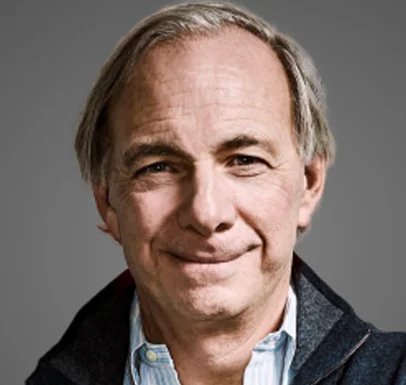
Ray Dalio, the billionaire founder of Bridgewater Associates, is warning that two of the largest forces in global finance are on a collision course. In his telling, a $4.4 trillion wall of debt that must be refinanced is arriving at the same moment that companies building out artificial intelligence infrastructure are trying to borrow roughly $1.4 trillion. Both need the same thing: buyers willing to lend at acceptable rates. The concern is not that either number is unmanageable in isolation. It is that they overlap. Governments and corporations have spent years issuing debt at low rates, and a meaningful share of that paper matures over the next several years. Refinancing it means paying today’s yields rather than the yields locked in when the debt was sold. That is a mechanical increase in interest expense, and it lands on borrowers already carrying heavy obligations.
Why the AI Borrowing Boom Matters
The AI buildout has moved well past the stage of being funded purely out of operating cash flow. Data centers require land, power generation, cooling, networking, and enormous quantities of advanced semiconductors. The largest technology companies can fund much of this internally, but the broader ecosystem — including neoclouds, developers, and utilities — has leaned heavily on credit markets. That borrowing is rational if the returns arrive as projected. It becomes dangerous if revenue from AI services ramps more slowly than the debt schedule requires. Dalio’s framing treats the AI capital cycle and the refinancing cycle as competing demands on the same finite savings pool. When demand for credit rises faster than the supply of willing lenders, the clearing price — the interest rate — moves higher.
The Rate Channel Is the Transmission Mechanism
Higher rates hit in two directions. First, they raise the cost of servicing new and refinanced debt, compressing margins for leveraged borrowers. Second, they raise the discount rate applied to future cash flows, which weighs on equity valuations — particularly for growth companies whose value is concentrated in profits expected years from now. That second channel is why the AI trade is sensitive to long-term yields even when near-term earnings are strong. A company can beat quarterly estimates and still see its multiple compress if the cost of capital rises. The same logic applies across the complex: chipmakers, server builders, power producers, and the data center REITs that house the hardware. Dalio has made similar arguments before, and he is not alone in flagging the scale of sovereign and corporate issuance. What gives this warning its edge is the timing. The AI capital cycle is at or near its most aggressive phase, and it is being financed in part with debt rather than equity or retained earnings.
What to Watch
The practical signals are straightforward. Watch long-dated Treasury yields, since they set the floor for corporate borrowing costs. Watch investment-grade and high-yield credit spreads, which show whether lenders are growing more selective. Watch the debt issuance calendars of the largest technology and utility borrowers. And watch whether AI revenue disclosures begin to justify the pace of capital spending. None of this guarantees a crisis. Debt-fueled investment cycles have powered long expansions before, and the AI buildout may generate returns that comfortably cover its financing costs. But Dalio’s point is about sequencing. If refinancing demand and AI borrowing demand peak together, the market has to absorb both at once — and markets have historically repriced sharply when forced to do so. For investors, the takeaway is not to abandon the AI theme but to recognize that it now trades alongside a macro variable it did not previously depend on. The cost of credit has become part of the AI story.
Sources: news.google.com · BTC Newsroom · Yahoo Finance · Business Insider · Barchart.com