- Oil prices jumped roughly 4% as Iran-linked attacks on tankers escalated and a hurricane threatened U.S. Gulf of Mexico production.
- Reports indicate President Donald Trump and his national security team have discussed possibly restarting large-scale U.S. military operations in Iran.
- The dual supply threats — Middle East shipping risk and a Gulf storm — hit both the seaborne crude trade and U.S. offshore output at once.
- Energy equities and crude benchmarks moved higher as traders priced in a higher geopolitical and weather risk premium.
Crude prices surged about 4% as two separate supply threats converged on the oil market: an escalation of tanker attacks tied to Iran and a hurricane churning toward the U.S. Gulf of Mexico, where a large share of American offshore production is concentrated. The combination pushed both international and U.S. benchmark grades sharply higher, as traders reassessed the risk of near-term disruptions to physical barrels rather than merely financial positioning.
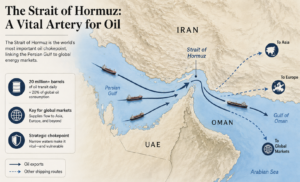
The geopolitical component centers on shipping. Attacks on tankers in and around the Middle East have raised the cost and difficulty of moving crude through key waterways, and reports that President Donald Trump and his national security team have discussed possibly restarting large-scale U.S. military operations in Iran added a further layer of uncertainty. Markets have long treated any hint of direct U.S.–Iran confrontation as a bullish signal for oil, because Iran sits astride the Strait of Hormuz, through which a substantial portion of the world’s seaborne crude passes. Even the threat of interruption there can widen insurance premiums, reroute cargoes, and lift freight rates — costs that ultimately feed into the price of delivered barrels.
Why the Gulf Storm Matters
The second driver is weather. A hurricane threatening the U.S. Gulf of Mexico puts offshore platforms, production hubs, and coastal refining and export infrastructure in the path of potential shutdowns. Operators typically evacuate crews and shut in output ahead of a major storm, removing barrels from the market quickly and sometimes for days or weeks depending on damage. Because the Gulf accounts for a meaningful slice of U.S. crude output and hosts critical export terminals, a storm threat can tighten domestic balances and, in turn, influence global prices. When a weather event and a geopolitical flashpoint arrive together, the risk premium compounds rather than simply adding up.
Market Reaction and What to Watch
Energy equities and crude-linked funds moved higher alongside futures, reflecting expectations that higher prices would flow through to producers’ cash flow. Integrated majors with global upstream exposure and domestic-focused producers both stand to benefit from stronger realizations, though the same price move raises input costs for refiners and consumers. For the broader market, a sustained oil spike is a double-edged sword: it supports the energy sector but acts as a tax on households and fuel-sensitive industries, and it can complicate the inflation outlook that central banks are already monitoring.
The key variables to watch are whether the tanker attacks continue or intensify, whether any U.S. military posture actually changes on the ground, and the storm’s track and intensity as it approaches the Gulf. Each of those is binary in nature — either the risk materializes into lost barrels or it fades — which is why options markets tend to price elevated volatility around such events. Traders will also monitor whether OPEC and its allies signal any response, and whether strategic reserves are tapped, since both can blunt a supply-driven rally.
For now, the market is doing what it typically does when supply security is questioned: it adds a premium and waits for clarity. If the storm weakens or shifts away from production zones and the Iran-related tensions de-escalate, much of the gain could unwind quickly. If either threat worsens — or if the two reinforce each other — the move higher may prove to be the beginning of a more durable repricing of crude.
Source: cnbc.com