

Fed Ends 1,148-Day Pause With Unanimous Quarter-Point Hike
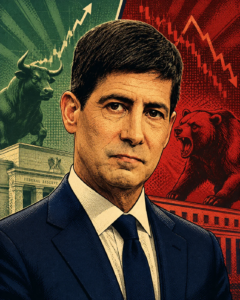
The Federal Reserve on Wednesday, September 16, 2026, raised its benchmark federal funds rate by 0.25 percentage points to a target range of 3.75% to 4%, marking the first increase since July 26, 2023. The Federal Open Market Committee (FOMC) voted 12-0 in favor of the move, ending a 1,148-day stretch of holding rates steady or cutting them.
The decision caught some traders off guard, as futures markets had priced in only a 30% chance of a hike just a week earlier, according to CME Group data. The unanimous vote signals a hawkish consensus that could reshape expectations for the rest of 2026.
Bitcoin Slips Below $62,000 As Dollar Surges
Bitcoin reacted immediately, falling 3.2% to $61,850 within an hour of the announcement, while Ethereum dropped 4.1% to $2,480. The U.S. Dollar Index (DXY) jumped 0.8% to 105.2, its highest level since March 2026, as yield-sensitive assets sold off.
According to CoinMarketCap data, the total crypto market cap shed $85 billion in the 60 minutes following the Fed statement. Bitcoin’s dominance rose to 52.3%, indicating a flight to relative safety within the asset class.
The move higher in rates increases the opportunity cost of holding non-yielding assets like gold and bitcoin. Gold fell 1.5% to $2,310 per ounce, while the 10-year Treasury yield climbed 12 basis points to 4.35%.
Why The Fed Flipped: Inflation Data and Labor Market Heat
The Fed’s shift comes after August’s core PCE inflation reading, released on September 11, 2026, came in at 3.1% year-over-year, above the 2.9% consensus estimate. Meanwhile, the August jobs report on September 4 showed 285,000 new positions added, far exceeding the 180,000 forecast.
Fed Chair Jerome Powell, in the post-meeting press conference, stated: “We are not on a preset course, but the data suggests we may need to tighten further to bring inflation sustainably back to 2%.” Powell did not rule out another hike at the November meeting.
The dot plot released alongside the decision showed a median projection of one more quarter-point hike by year-end 2026, bringing the target range to 4.00%-4.25%.
Crypto’s Correlation Problem Returns
Bitcoin’s 30-day correlation with the Nasdaq 100 has risen to 0.68, up from 0.45 in June, according to CoinMetrics. This re-coupling means crypto investors must now contend with the same macro headwinds pressuring tech stocks.
Ethereum’s correlation with bitcoin stands at 0.82, leaving little room for idiosyncratic rallies. The total value locked in DeFi protocols fell 2.8% to $92 billion in the hours after the Fed decision, per DefiLlama.
Analysts at Bitwise note that previous rate hike cycles have marked local bottoms for bitcoin within 30 days, but past performance does not guarantee future results. The 2022 hiking cycle saw bitcoin fall 55% from its pre-hike level before recovering.
What To Watch: November FOMC And $60K Support
The next FOMC meeting is scheduled for November 4-5, 2026. Traders will scrutinize the October jobs report on November 6 and the October CPI release on November 12 for clues on whether the Fed will hike again.
For crypto, the key technical level is bitcoin’s 200-day moving average at $59,800. A daily close below that level could accelerate selling toward $55,000. Conversely, a reclaim of $64,000 would suggest the market has digested the rate hike.
Ethereum’s critical support sits at $2,350, with resistance at $2,650. The U.S. Dollar Index breaking above 106 would likely intensify pressure on risk assets.
Investors should also monitor the UN Blockchain Week conference, currently running from September 10-19 in New York City, for any institutional adoption news that could offset macro headwinds.










Comments are closed.