
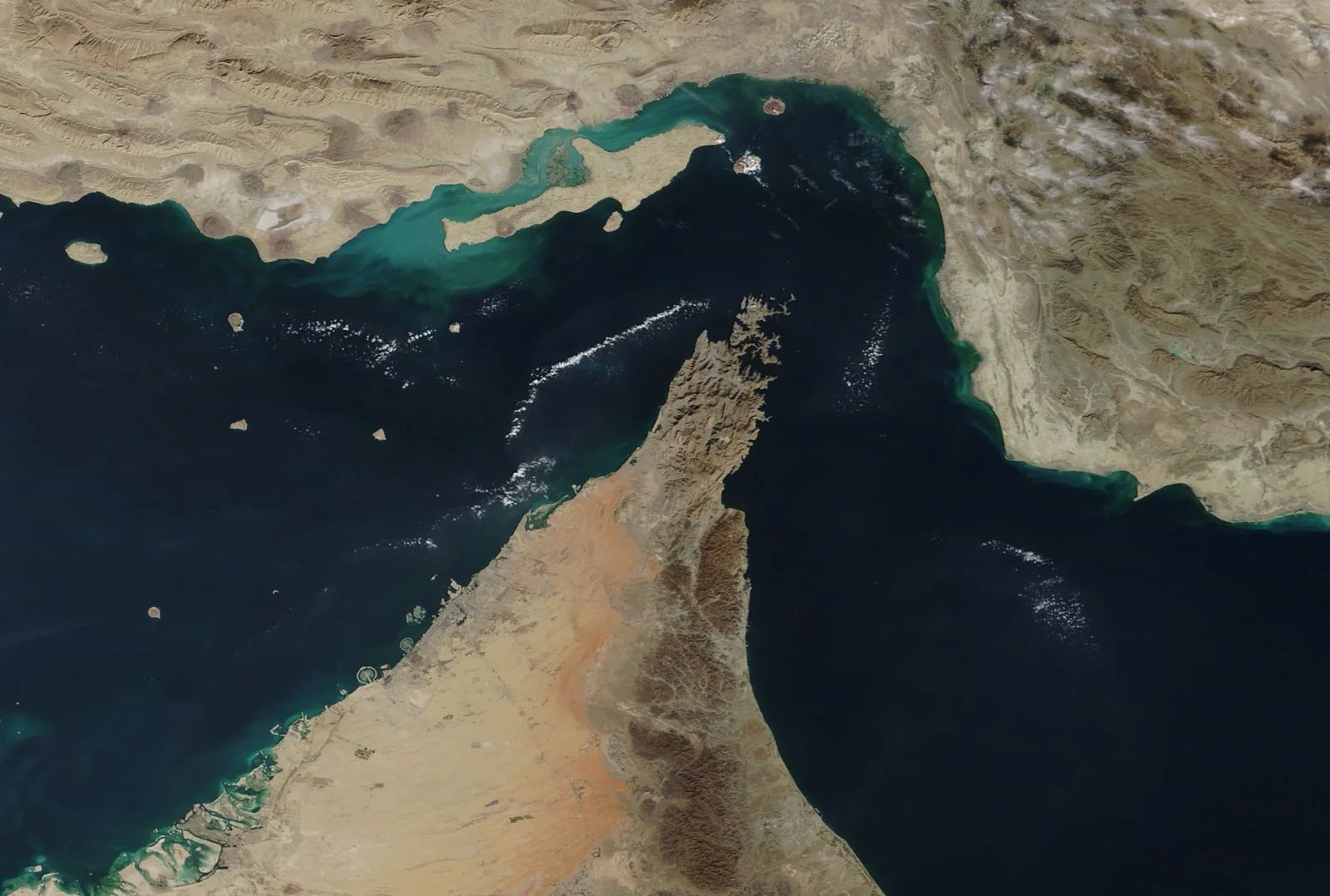
- Iran’s military said it destroyed a U.S. advanced drone over the Strait of Hormuz, according to Iranian state media.
- The claim comes amid escalating exchanges of warnings and strikes between Tehran and Washington.
- The Strait of Hormuz is the world’s most critical oil chokepoint, with roughly a fifth of global petroleum liquids consumption passing through it.
- Neither side has signaled willingness to de-escalate, keeping energy and defense markets on edge.
The Middle East conflict intensified again after Iran said its forces destroyed an advanced American drone over the Strait of Hormuz, the narrow waterway separating the Persian Gulf from the Gulf of Oman. Iranian state media reported the downing, framing it as a defensive response to what Tehran describes as continued U.S. military pressure. Washington has not confirmed the loss of an unmanned aircraft, and independent verification of the claim was not immediately available. The competing narratives are consistent with a pattern in which both sides release information selectively while the strategic stakes remain extraordinarily high.
Why the Strait of Hormuz Matters to Markets
The Strait of Hormuz is the single most important oil transit chokepoint on the planet. Roughly one-fifth of global petroleum liquids consumption moves through it by tanker each day, according to long-standing U.S. Energy Information Administration estimates. That concentration means any credible threat to shipping — a downed drone, a seized tanker, a mining incident, or a missile exchange — transmits almost instantly into crude prices, freight rates, and insurance premiums for vessels willing to make the passage. Even when physical flows are uninterrupted, the risk premium embedded in Brent and West Texas Intermediate benchmarks can widen sharply on headlines alone.
For energy traders, the immediate question is whether this incident represents a one-off tactical exchange or the opening of a broader campaign against commercial shipping. Iran has previously signaled that it could disrupt traffic through the strait if its own oil exports or security were threatened, a threat that carries enormous weight given the lack of easy alternative routes. Saudi Arabia and the United Arab Emirates operate pipelines that bypass Hormuz, but their spare capacity is limited relative to the volumes that normally transit the waterway. That asymmetry is precisely why markets treat Hormuz headlines as systemic rather than regional.
Broader Conflict Dynamics and Spillover Risk
The drone claim lands within a wider regional confrontation that has already drawn in multiple actors. Iran-aligned groups have traded fire with U.S. forces and their partners across several theaters, while Israel’s conflicts have added another layer of volatility. Each new incident raises the probability of miscalculation — a strike that kills personnel, a naval vessel damaged, or a civilian airliner misidentified — any of which could force a larger response than either capital intended. Diplomacy has shown few signs of gaining traction, and both Tehran and Washington continue to issue warnings rather than de-escalatory gestures.
What to Watch Next
Investors should monitor three things. First, whether the United States confirms or denies the drone loss, since an official acknowledgment would likely harden the U.S. posture. Second, whether tanker traffic and insurance rates through Hormuz show measurable stress; sustained increases in war-risk premiums are often the earliest market signal of genuine disruption. Third, whether crude benchmarks hold their gains or fade, which would indicate whether traders view the incident as contained. Defense contractors, oil majors, and tanker operators typically see the sharpest reactions to escalation headlines, while airlines and refiners face margin pressure from higher fuel costs.
Beyond energy, the conflict carries implications for broader risk sentiment. Safe-haven demand can lift gold, the U.S. dollar, and Treasuries while pressuring equities, particularly cyclical sectors. Cryptocurrencies have at times traded as a risk asset during geopolitical shocks, though their behavior has been inconsistent across episodes. For now, the situation remains fluid: Iran’s claim is a single data point in a fast-moving confrontation, and the absence of independent confirmation means markets are pricing uncertainty rather than a confirmed escalation. The next 48 hours of official statements and shipping data will do more to shape the trajectory than the initial headline itself.











Comments are closed.