
Taiwan Opposition Split Over Zhubei Mayor Threatens 2028 Alliance
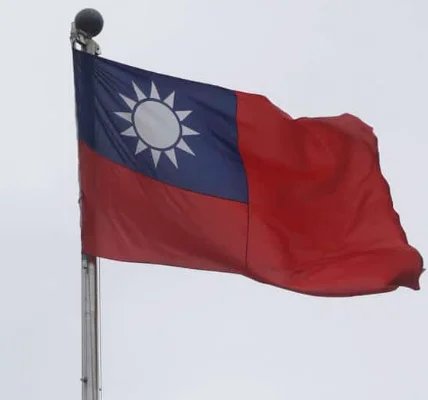
Taiwan’s two main opposition parties, the Kuomintang (KMT) and the Taiwan People’s Party (TPP), have failed to unite behind a single candidate for the mayoral race in Zhubei, the largest city in Hsinchu County. Both parties registered separate contenders on September 1, 2026, after weeks of negotiations broke down. This rift threatens to spill into November’s local elections and could undermine the fragile trust needed for a potential 2028 presidential alliance.
Why the Zhubei Race Became a Flashpoint
Zhubei, with a population of over 200,000, is a strategic prize in Hsinchu County, a KMT stronghold. The KMT nominated Hsinchu county councillor Wu Hsu-chih, while the TPP fielded Chiu Chen-yuan, a former Hsinchu County official. The failure to agree on a joint candidate exposes deep-seated rivalries: the KMT sees Zhubei as its own turf, while the TPP, led by former Taipei mayor Ko Wen-je, aims to expand its local footprint ahead of the 2028 presidential election.
Political analysts note that the two parties had cooperated in several by-elections since 2024, but this local race has highlighted the difficulty of power-sharing. A TPP insider, speaking on condition of anonymity, said the KMT’s insistence on controlling the nomination process alienated TPP negotiators. The KMT, for its part, argued that it had a stronger local organization and that the TPP should defer.
How the Split Could Reshape Voter Sentiment
With the KMT and TPP both running, the anti-DPP vote in Zhubei could splinter, potentially handing the election to the Democratic Progressive Party (DPP) candidate, even though the DPP has historically been weak in Hsinchu County. Polls from late August 2026 suggest Wu leads with 32% support, but Chiu trails closely at 27%, and the DPP’s Lin Chia-lung holds 24%. If the opposition remains divided, Lin could win with a plurality.
This scenario mirrors the 2024 presidential election, where the KMT and TPP split the opposition vote, allowing the DPP’s Lai Ching-te to win with only 40% of the vote. That memory looms large. Voters who want to oust the DPP are increasingly frustrated with the opposition’s inability to coordinate, and social media sentiment reflects growing disillusionment. A recent survey by the Taiwan Public Opinion Foundation, released on September 3, found that 58% of opposition supporters believe the two parties should have formed a joint ticket, up from 45% in March.
What a Failed Alliance Means for 2028
The Zhubei spat is more than a local squabble; it tests the mechanics of a future coalition. For the 2028 presidential election, the KMT and TPP would need to agree on a single candidate to defeat the DPP. But the Zhubei race reveals structural obstacles: the KMT’s hierarchical nomination system versus the TPP’s leader-centric, flexible approach. Trust, once broken, is hard to rebuild.
Ko Wen-je, who has been the TPP’s de facto leader, has publicly stated that the KMT treats the TPP as a junior partner, not an equal. On September 4, he told reporters that “the KMT must respect TPP’s autonomy if they want any future cooperation.” The KMT’s chairman, Eric Chu, responded by emphasizing the need for “unity based on mutual respect,” but he stopped short of offering concessions.
Electoral history shows that opposition alliances in Taiwan have rarely succeeded. In 2000, the split between the KMT and the People First Party led to the DPP’s Chen Shui-bian winning the presidency with just 39% of the vote. The current situation bears similarities, but with a crucial difference: the TPP is not a splinter of the KMT but a separate party with its own policy platform, including a stronger emphasis on social welfare and cross-strait engagement.
Market and Geopolitical Context
While this political uncertainty is primarily domestic, it has implications for Taiwan’s financial markets. The Taiwan Stock Exchange’s benchmark index (TWSE) has been volatile in recent weeks, partly due to political headlines. On September 4, the index fell 0.8% to 18,200, with investors wary of any policy paralysis. However, analysts note that the broader economic fundamentals remain strong, with GDP growth forecast at 3.2% for 2026.
Geopolitically, the United States and China are watching closely. A divided opposition could weaken Taiwan’s internal cohesion, which some international observers argue is a stabilizing factor for cross-strait relations. A DPP victory in Zhubei, despite a split opposition, would be interpreted as a reinforcement of the DPP’s mandate, potentially complicating U.S.-China-Taiwan dynamics.
What to Watch in the Coming Weeks
The November 8, 2026 election is the immediate deadline. Watch whether the KMT and TPP can patch things up before then—any last-minute withdrawal by either candidate would signal a possible alliance for 2028. The key number to monitor is the final vote share of the opposition candidates combined: if it exceeds 60%, it will show that voters still support a united opposition, but if it falls below 50%, the rift could be fatal for future cooperation.
Beyond the election, the next test will come in December, when both parties are expected to hold internal leadership elections. How they handle these will determine whether the 2028 alliance is a realistic prospect or just a political mirage.









Comments are closed.