
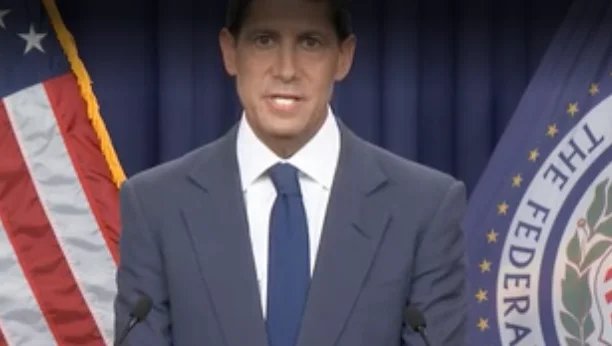
Fed Governor Waller’s Data-Dependent Pivot Lifts Treasury Prices
Treasury prices climbed on Thursday, September 3, 2026, after Federal Reserve Governor Christopher Waller signaled he would support leaving interest rates unchanged as long as inflation continues to slow. The benchmark 10-year Treasury yield fell roughly 5 basis points to 4.02% by midday in New York, while the 30-year long bond yield dipped to 4.35%.
Why Waller’s Comments Shifted Market Expectations for September
Waller, speaking at a conference in Washington, D.C., on Thursday emphasized that recent inflation data had been “encouraging” and that he saw no immediate need to hike rates further if the disinflationary trend persisted. His remarks, which were more dovish than his prior stance, prompted traders to reassess the odds of a rate cut at the Federal Open Market Committee (FOMC) meeting scheduled for September 16–17, 2026. According to CME FedWatch data, futures now price in a 68% probability of a 25-basis-point cut, up from 54% just a day earlier.
The shift is notable because Waller has often been a hawkish voice on the Federal Reserve Board. His willingness to align with the “patient” camp suggests that the internal debate at the Fed has tilted toward caution, even as some policymakers continue to worry about sticky services inflation.
Market Mechanics: How a Policy Pause Translates into Higher Bond Prices
When the Fed signals a prolonged pause in rate hikes—or an eventual cut—longer-duration bonds become more attractive because their fixed coupon payments gain relative value in a lower-rate environment. This dynamic played out clearly on Thursday: the iShares 20+ Year Treasury Bond ETF ($TLT) rose 1.2% to $92.30, its highest level in two weeks, while the 2-year Treasury yield, which is more sensitive to Fed policy expectations, slipped only 2 basis points to 3.85%.
The yield curve steepened slightly as a result, with the spread between 10-year and 2-year yields widening to 17 basis points from 14 basis points on Wednesday. Such steepening often signals that investors anticipate rate cuts ahead, a classic precursor to economic reflation.
Inflation Data in Focus: What Comes Next for the Fed’s Decision
Waller’s comments come ahead of two critical data releases: the August Consumer Price Index (CPI) due September 16, 2026, and the September jobs report on October 2, 2026. The Fed governor noted that recent monthly core inflation readings have averaged just 0.2% over the past three months, down from 0.4% in the first quarter. If that trend holds, Waller said, he would be “comfortable” holding rates steady.
However, he also cautioned that a surprise acceleration in wage growth or energy costs could force a rethink. This dual conditionality leaves room for volatility, especially with the FOMC meeting just two weeks away.
Investor Positioning and Risks: Who Gains from a Prolonged Pause
Fixed-income investors, particularly those holding long-duration assets, stand to benefit most from a prolonged pause. Conversely, banks and money market funds that have enjoyed elevated short-term yields may see their margins compress if the Fed moves toward cuts. Equity markets also responded positively on Thursday, with the S&P 500 edging up 0.3% to 5,610, as lower rate expectations support growth stocks.
Yet risks remain. The Fed’s own projections in June showed a median federal funds rate of 4.9% for end-2026, implying no cuts this year. Waller’s remarks challenge that baseline, but he stopped short of committing to a specific path. “If inflation continues to move down, I can see a scenario where we hold rates where they are for an extended period,” he said, according to prepared remarks.
Watch the August CPI Print for a Catalyst
The next major test for this bond rally will be the August CPI report, scheduled for September 16, 2026, at 8:30 a.m. ET. Economists expect a 0.2% monthly increase in core CPI, matching the recent trend. A reading at or below that level could push the 10-year yield below 4.00% and increase the odds of a September cut. Conversely, a hot print—say, 0.4% or higher—would likely revive hawkish voices and snap yields back above 4.10%.
Traders should also monitor Fed speakers in the coming days, particularly Chair Powell’s scheduled address on September 10, 2026, at the Brookings Institution. Any deviation from Waller’s tone could quickly reverse Thursday’s move.







Comments are closed.