
Distress Moderates but Refinancing Risks Persist
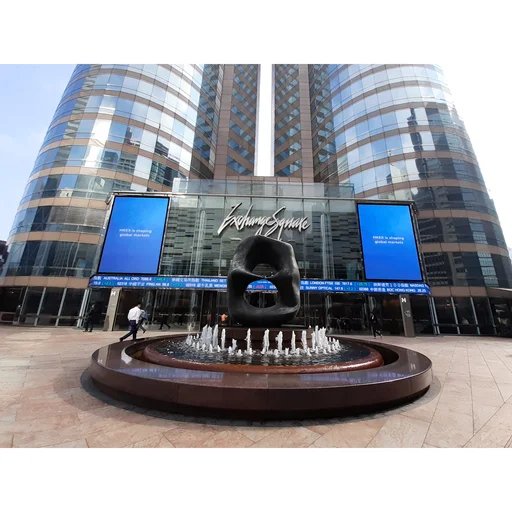
Hong Kong’s commercial property market is showing signs of stabilization in 2026, but analysts caution that the pain is far from over. According to a report released in late August, financial distress in the city’s office and retail segments has moderated, yet highly leveraged asset owners still face significant challenges in refinancing their loans.
The multi-year slump, driven by oversupply and a sharp rise in interest rates, triggered a wave of loan defaults. However, the pace of new defaults has slowed in recent months, suggesting that asset prices may be finding a floor. Still, the analysts note, “We do not expect defaults will increase noticeably from this time,” indicating a plateau rather than a full recovery.
Why Refinancing Remains a Hurdle for Leveraged Owners
The core issue is that many property owners acquired assets at peak valuations, relying on cheap debt. With interest rates now higher, their debt service costs have ballooned, and lenders are less willing to roll over loans at favorable terms. This is particularly acute for older office buildings and secondary retail spaces, where occupancy and rental income have not recovered to pre-slump levels.
According to market data from August 2026, vacancy rates in Hong Kong’s central business district remain elevated at around 12%, compared to a historical average of 5-6%. Rental rates have stabilized but are still 20-30% below their 2019 peaks. This means that even if asset prices stop falling, cash flows may not cover debt obligations, forcing owners to inject equity or sell at discounts.
Creditor-Led Sales May Slow but Not Disappear
The moderation in financial distress is partly due to banks’ willingness to extend and pretend—rolling over loans to avoid recognizing losses. However, this cannot last indefinitely. Analysts point to a growing number of “distressed asset” funds that are circling the market, ready to snap up properties at a discount if creditors force sales.
In the first half of 2026, creditor-led sales (foreclosures and receiverships) accounted for approximately 15% of all commercial property transactions in Hong Kong, down from a peak of 25% in 2025. This decline suggests that the market is stabilizing, but the absolute number remains elevated. If interest rates remain high or the economy slows further, those percentages could rise again.
What the Stabilization Means for Investors
For opportunistic investors, this is a double-edged sword. On one hand, stable asset prices reduce the risk of buying a falling knife. On the other, the lack of forced sales means fewer bargains. The analysts note that some institutional investors are already deploying capital into Hong Kong office assets, betting on a gradual recovery as supply growth slows.
However, the retail segment is more problematic. E-commerce penetration in Hong Kong has risen to 18% in 2026, up from 12% in 2020, reducing demand for physical retail space. This structural shift means that even if the economy improves, retail property values may not fully recover. As a result, lenders are more likely to write off loans on retail assets, potentially leading to more creditor-led sales in that subsector.
Key Watch: Interest Rates and the Second-Half Default Flow
The next few months will be critical. The Hong Kong Monetary Authority (HKMA) is expected to hold its base rate steady in its September 2026 meeting, but any surprise hike could tip leveraged owners over the edge. Investors should watch the quarterly default data from major banks, particularly for loans backed by retail properties.
A key indicator to monitor is the volume of new non-performing loans (NPLs) in the commercial real estate sector. If NPLs continue to decline in the third quarter of 2026, the thesis of stabilization holds. Conversely, a spike in NPLs would signal that the distress is far from over, and creditor-led sales could accelerate again. The next HKMA rate decision and the release of Q3 2026 NPL data will be the definitive tests.









Comments are closed.