
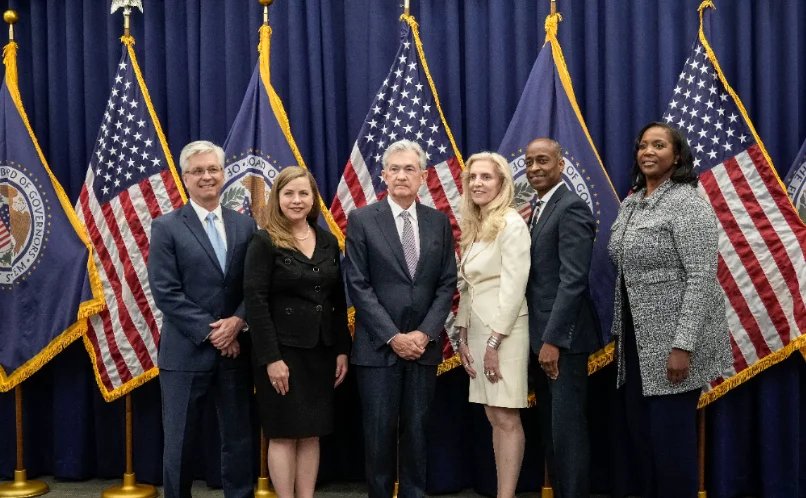
- Federal Reserve Chairman Kevin Warsh led a traditional lakeside walk at the Jackson Hole symposium with Bank of England Governor Andrew Bailey and Bank of Canada Governor Tiff Macklem.
- The informal walk precedes the formal policy discussions, where central bankers are expected to address divergent inflation paths and global growth risks.
- Markets are closely watching for any signals from Warsh on the pace of U.S. rate normalization, though no public remarks were made during the walk.
- The gathering comes as the Bank of England and Bank of Canada face distinct domestic pressures, including housing and labor market dynamics.
JACKSON HOLE, Wyo. — The annual central banking retreat in Jackson Hole opened with a familiar ritual: a morning walk along the rugged trails of the Grand Tetons. This year, Federal Reserve Chairman Kevin Warsh led the procession, flanked by Bank of England Governor Andrew Bailey and Bank of Canada Governor Tiff Macklem. The trio’s stroll, captured by Bloomberg photographers, offered a rare moment of informal camaraderie before the more structured policy panels that define the symposium.
The walk itself is a long-standing tradition at the Kansas City Fed’s gathering, designed to encourage candid exchange away from podiums and press conferences. While no substantive policy statements were made on the trail, the visual of the three leaders together underscores the coordinated, if not always synchronized, approach to monetary policy among the world’s largest advanced economies. For market participants, the imagery is a reminder that despite domestic divergences, the transatlantic central banking community remains in close dialogue.
Divergent Inflation Paths Dominate Agenda
The underlying economic backdrop for this year’s meeting is notably uneven. In the United States, recent data suggests inflation has cooled from its 2022-2023 peaks, but the labor market remains resilient, keeping the Fed’s policy stance in a holding pattern. Chairman Warsh, who has emphasized data dependence since taking the helm, faces a delicate balancing act: avoiding premature easing while guarding against an unnecessary slowdown. The market’s implied probability of a rate cut at the September FOMC meeting has fluctuated in recent weeks, reflecting the uncertainty surrounding the next move.
Across the Atlantic, Governor Bailey confronts a different puzzle. The Bank of England has wrestled with sticky services inflation and wage growth, even as the broader economy shows signs of stagnation. Bailey’s recent communications have struck a cautious tone, suggesting that the Monetary Policy Committee is in no rush to adjust rates. Meanwhile, Governor Macklem’s Bank of Canada has already begun a modest easing cycle, but a weakening housing market and elevated household debt levels complicate the path forward. The juxtaposition of these three policy stances provides fertile ground for the symposium’s working sessions.
Market Implications and the “Walk” Signal
For traders, the Jackson Hole walk is more than a photo opportunity. Historically, the informal interactions among central bank heads have occasionally leaked into market-moving commentary, though this year’s event has remained quiet on that front. The absence of a formal Warsh speech on the opening day has left investors parsing secondary signals, including the composition of the walk itself. The inclusion of Bailey and Macklem, rather than a broader global cohort, may hint at a focus on North Atlantic economic linkages.
Currency markets have shown muted reaction, with the U.S. dollar index holding steady against a basket of peers. Interest rate futures, however, remain sensitive to any hint of a policy pivot. The broader takeaway from the morning’s events is one of continuity: the Fed, BoE, and BoC are all in a “wait-and-see” mode, prioritizing credibility over reactivity. As the symposium progresses, the key deliverables will be the formal papers and panel discussions, which are expected to address the structural challenges of neutral rates and supply-side constraints.
What to Watch Next
Over the next two days, participants will delve into topics ranging from the fiscal-monetary policy interface to the implications of artificial intelligence on productivity. While the walk provided a symbolic start, the substance will come from the research presentations. For now, the consensus among economists is that global policy rates will remain restrictive for longer than previously anticipated, with any divergence driven by local data rather than coordinated action. The Jackson Hole gathering, as always, serves as a barometer for the collective mindset of the world’s most powerful economic policymakers.











Comments are closed.