
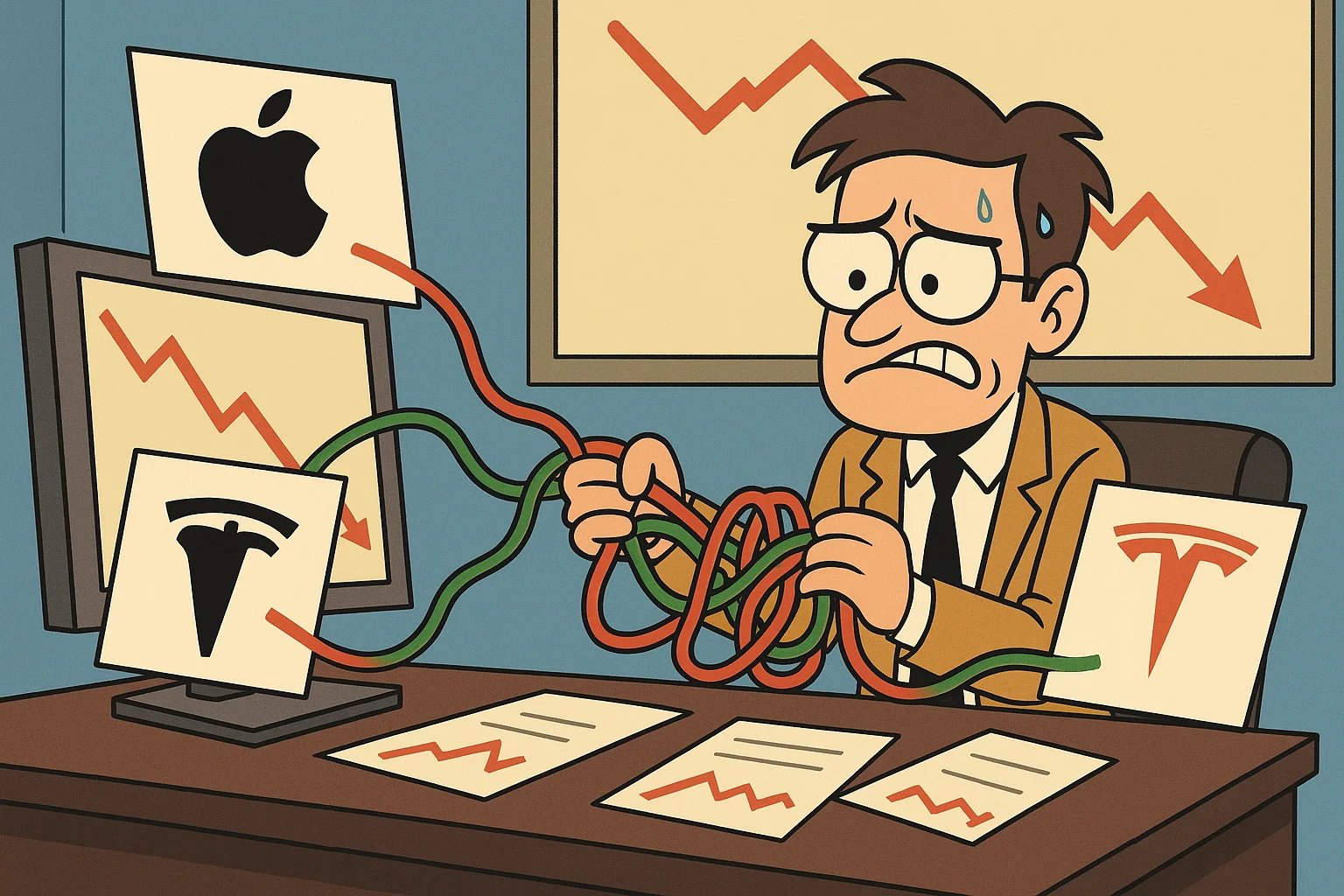
Leopold Aschenbrenner’s AI Investment Strategy
Leopold Aschenbrenner, known for his AI-driven investment approaches, has reportedly been forced to unwind all public stock positions following significant losses in 2023. Aschenbrenner’s investment strategy heavily relied on leveraging AI to predict market movements and identify high-potential stocks. However, this methodology has faced scrutiny as volatility in the markets intensified, affecting even the most sophisticated algorithms.
Recent Market Volatility and Its Impact
Aschenbrenner’s downfall coincides with a broader trend of turbulence in the stock market. Major indices have experienced sharp fluctuations, with the S&P 500 declining over 15% since January 2023. Factors such as rising interest rates, inflation concerns, and geopolitical tensions have contributed to this uncertainty. Notably, tech giants like Apple ($AAPL) and Tesla ($TSLA) have seen their stock prices decline significantly, impacting investors across the board.
The AI investor’s approach, once seen as revolutionary, now appears vulnerable in an unpredictable market. Investors have become increasingly cautious, leading to massive sell-offs in the tech sector, which Aschenbrenner heavily invested in. Reports indicate that his public positions were primarily in technology stocks, which have been hit hard in recent months.
What This Means for AI-Driven Investment Strategies
As Aschenbrenner’s public stock positions dissolve, the incident raises questions about the reliability of AI in investment contexts. Although AI tools offer innovative solutions for analyzing data and identifying trends, they may not adequately account for sudden market changes. Experts suggest that while AI can enhance decision-making processes, it should not replace fundamental analysis and market intuition.
Additionally, Aschenbrenner’s situation highlights the risks associated with over-reliance on technology in volatile environments. His experience serves as a cautionary tale for other investors and institutions looking to integrate AI into their investment strategies. The lesson here may be that a hybrid approach, combining AI analysis with human judgment, could prove more effective in mitigating risks.
Repercussions in the Investment Community
The fallout from Aschenbrenner’s losses has reverberated throughout the financial community. Many investors are reevaluating their strategies, particularly those who heavily invested in tech stocks. Some analysts predict a continued trend of reallocation toward more defensive assets, such as utilities and consumer staples, which are traditionally less volatile.
Moreover, this incident has sparked discussions about the future of AI in investment management. While AI and machine learning are undeniably transformative, their limitations in understanding human behavior and market psychology are becoming more evident. Investors are likely to remain skeptical of solely AI-driven strategies as they seek more balanced approaches.
Looking Ahead: What to Monitor
Looking forward, investors should watch for signs of stabilization in the markets. Key economic indicators, such as inflation rates and Federal Reserve policy decisions, will be critical in shaping market sentiment. Additionally, earnings reports from major companies like Apple and Tesla in the coming weeks will provide insights into their recovery potential and the broader market landscape.
As for Aschenbrenner, his next moves will be closely scrutinized. Will he pivot his strategy, or will this experience lead to a complete reassessment of his investment philosophy? The upcoming months will be pivotal in determining the future direction of both his career and the AI investment landscape.










Comments are closed.