
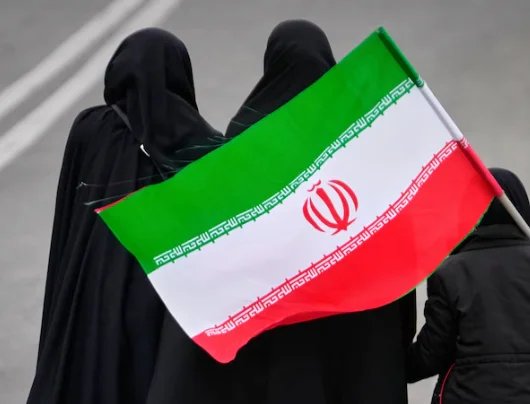
Sanctions Threat Met with Defiance in Tehran
- Iran’s foreign ministry dismissed the latest US sanctions threat as a “desperate” move that will ultimately fail.
- The statement comes amid heightened tensions over Iran’s advancing nuclear program and its regional military posture.
- Tehran signaled it retains leverage through its oil exports and its ability to disrupt shipping lanes in the Strait of Hormuz.
- Markets are watching for potential supply disruptions, with crude benchmarks holding recent gains.
Iran’s foreign ministry on Saturday rejected the latest round of US sanctions threats, characterizing Washington’s actions as a sign of weakness rather than strength. In an official statement, the ministry asserted that the new punitive measures, which have yet to be formally codified, are a “desperate” attempt to pressure Tehran into concessions. The response underscores the deepening impasse between the two capitals, with diplomatic channels largely frozen and both sides bracing for a prolonged confrontation. The US threat, reported by multiple outlets in recent days, is believed to target Iran’s remaining oil revenue streams and its access to international banking systems. Washington has sought to tighten the noose on Tehran’s economy since the collapse of the 2015 nuclear accord, but enforcement has been uneven. Iran has responded by accelerating its uranium enrichment program, now operating well beyond the limits set by the original agreement, and by deepening its military ties with Russia and China.
Economic Leverage and the Oil Factor
Despite years of sanctions, Iran has managed to sustain significant crude exports, primarily to Asian buyers, often through opaque shipping practices and the use of shadow fleets. The Islamic Republic’s ability to adapt has frustrated US policymakers, who have struggled to fully isolate the country’s energy sector. Tehran’s foreign ministry pointed to this resilience, arguing that previous sanctions campaigns have failed to alter its strategic calculus and that the new threats will meet the same fate. The standoff carries direct implications for global energy markets. The Strait of Hormuz, through which roughly one-fifth of the world’s oil passes, remains a key chokepoint. Iranian officials have repeatedly warned that they could disrupt traffic in the strait if pushed to the brink. While such a move remains a last resort, the mere possibility has kept a risk premium embedded in crude prices. Benchmark Brent has hovered in the mid-$70s range in recent weeks, with traders weighing the prospect of tighter supply against concerns over global demand.
Regional Dynamics and Diplomatic Stalemate
The latest exchange also plays into a broader regional chessboard. Iran’s influence extends across Iraq, Syria, Lebanon, and Yemen, where it backs allied militias and political factions. The US has sought to counter this footprint through a mix of sanctions, military deployments, and support for Israel, which has engaged in a shadow war with Iranian forces and their proxies. The failure of indirect talks in Vienna and Muscat to revive the nuclear deal has left both sides in a holding pattern, with no clear off-ramp. European mediators, who have tried to bridge the gap, have expressed growing frustration with the lack of progress. France, Germany, and the UK have warned that Iran’s nuclear advances are eroding the non-proliferation regime, but they have been reluctant to trigger the snapback mechanism that would reimpose UN sanctions. Tehran, for its part, has insisted that it will only return to full compliance if the US provides verifiable guarantees that it will not withdraw from any future agreement again.
Market Reaction and Outlook
For investors, the immediate takeaway is one of persistent geopolitical uncertainty. The dollar has remained firm against major peers, while gold has found support as a safe haven. Energy equities and oil-linked currencies could see volatility if the situation escalates. However, many analysts caution that the market has become somewhat desensitized to Iranian rhetoric, given the frequency of such standoffs over the past decade. The path forward remains murky. Iran’s leadership appears unified in its defiance, viewing concessions as a sign of vulnerability. The US, meanwhile, is constrained by domestic politics and the desire to avoid a new Middle East conflict. With no breakthrough in sight, the standoff is likely to persist, punctuated by periodic threats and counter-threats. For now, the “desperate” sanctions threat has become just another chapter in a long-running saga, with both sides digging in for the long haul.




Comments are closed.