
Stocks, Bonds, and Gold Surge on Treasury Intervention
Markets rallied broadly on Wednesday, August 19, 2026, after the U.S. Treasury signaled it would increase purchases of government bonds to stem a surge in yields. The announcement, which came as a surprise to many investors, triggered sharp gains across equities, fixed income, and precious metals.
The yield on the benchmark 10-year Treasury note fell by 15 basis points to 3.85% by midday, while the S&P 500 climbed 1.2% and gold futures jumped 2.3% to $2,450 per ounce. The move was widely interpreted as a direct intervention in the bond market, a step the Treasury has rarely taken in recent years.
“The market took this as a significant intervention,” said Jill Cetina, former vice president for bank supervision at the Dallas Fed, in an interview. “It signals that policymakers are willing to act decisively to prevent disorderly conditions in the Treasury market, which has been under pressure from rising supply and inflation concerns.”
Mechanics Behind the Yield Surge and the Treasury’s Response
The recent yield surge was driven by a combination of stronger-than-expected economic data, persistent inflation readings, and a heavy calendar of new Treasury issuance. Over the past month, the 10-year yield had risen from 3.50% to 4.00%, its highest level since November 2025, prompting fears of a repeat of the 2023 “bond turmoil” that disrupted markets.
In response, the Treasury announced plans to buy back up to $30 billion in longer-dated securities over the next quarter, effectively adding liquidity and absorbing supply. This move is separate from the Federal Reserve’s quantitative easing programs, as it is a fiscal operation aimed at stabilizing borrowing costs.
The intervention also had a ripple effect on corporate bonds, with investment-grade spreads tightening by 5 basis points, and on mortgage-backed securities, which saw yields drop as prepayment risk declined. “This is a clear signal that the administration is prioritizing financial stability over short-term fiscal constraints,” said Cetina.
Why Gold and Equities Benefits Differently
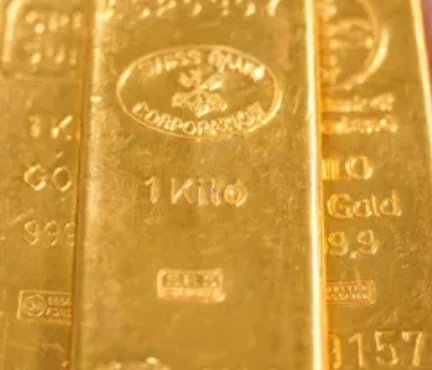
Gold’s rally was fueled by a weaker dollar and lower real yields, as the Treasury’s bond buying pushed down inflation-adjusted returns on government debt. The dollar index fell 0.8% against a basket of major currencies, making gold cheaper for overseas buyers and boosting demand for the metal as a store of value.
Equities, meanwhile, gained as lower yields reduced the discount rate on future earnings, particularly for growth and technology stocks. The Nasdaq Composite rose 1.8%, outperforming the Dow Jones Industrial Average, which gained 0.9%. “The market is treating this as a green light for risk assets,” noted Cetina, “but the sustainability of the rally depends on whether the Treasury can manage the delicate balance between supporting yields and controlling inflation.”
However, not all sectors rallied equally. Financial stocks, which typically benefit from higher yields, underperformed, with the S&P 500 financials sector up just 0.3%. This divergence highlights the sector-specific implications of the intervention, as banks face margin compression from lower long-term rates.
Risk of Overreliance and Market Distortion
The Treasury’s intervention carries significant risks. By stepping in as a buyer of last resort, it may encourage complacency and increase moral hazard, as investors could assume that the government will always act to limit yield spikes. This could lead to excessive risk-taking in fixed income markets, as seen in previous episodes of central bank support.
Moreover, the intervention complicates the Federal Reserve’s monetary policy stance. While the Fed has maintained its benchmark rate at 4.25%-4.50%, the Treasury’s bond buying effectively loosens financial conditions, potentially undermining the Fed’s efforts to tame inflation. The yield on the 2-year Treasury note, which is more sensitive to Fed policy, fell only 8 basis points, suggesting that the market sees this as a temporary measure rather than a shift in monetary policy.
Cetina warned that the intervention could be “a slippery slope” if it becomes a frequent tool. “The Treasury is not the Fed,” she said. “Its primary role is fiscal management, not market manipulation. Overusing this tool could blur the lines between fiscal and monetary policy, creating confusion about who is responsible for what.”
Watching the 10-Year Yield and Next Week’s Auction
The immediate focus for markets will be the Treasury’s next auction of 10-year notes, scheduled for August 26, 2026. If demand is strong and yields remain below 3.90%, the intervention may be seen as successful. However, if yields rise again above 4.00%, it would signal that the market requires more substantial action, potentially forcing the Treasury to expand its buyback program.
Investors should also monitor the Fed’s annual Jackson Hole symposium, set for August 28-30, where policymakers may comment on the Treasury’s move. Any indication that the Fed views the intervention as interfering with its independence could trigger a sharp reversal. The key number to watch is the 10-year yield: a sustained break below 3.70% would confirm the intervention’s effectiveness, while a move above 4.10% would suggest the market is unconvinced.











Comments are closed.