
Regulatory Paralysis Threatens Polish Crypto Sector
Poland’s cryptocurrency industry faces an uncertain future as legislative gridlock in the national parliament prevents the country from aligning its domestic laws with the European Union’s Markets in Crypto-Assets (MiCA) regulation. The failure to establish a clear regulatory framework is creating an environment of legal ambiguity, prompting concerns that domestic crypto businesses may relocate to more welcoming jurisdictions within the EU.
MiCA, established as a comprehensive regulatory package for the 27-nation bloc, aims to create a harmonized set of rules for crypto-asset service providers. The regulation is designed to protect investors, ensure market integrity, and foster innovation. Member states are required to transpose these rules into national law, but Poland’s political deadlock has stalled this critical process.
The situation leaves Polish crypto companies in a precarious position. Operating without the legal certainty provided by MiCA compliance exposes them to regulatory risk and limits their ability to passport services across the EU single market. This competitive disadvantage is the primary driver behind potential relocation plans.
The Stakes for Poland’s Digital Economy
The exodus of crypto firms would represent a significant setback for Poland’s ambitions in the digital economy. The country has cultivated a growing tech sector, often referred to as “Silicon Valley on the Vistula,” with a vibrant startup ecosystem. The blockchain and cryptocurrency segment has been a notable part of this growth.
Losing these companies means forfeiting high-skilled jobs, tax revenue, and future innovation. It also signals to the broader tech investment community that Poland may be an unreliable base for emerging, regulation-sensitive technologies. The timing is particularly poor given the global competition for talent and capital in the Web3 space.
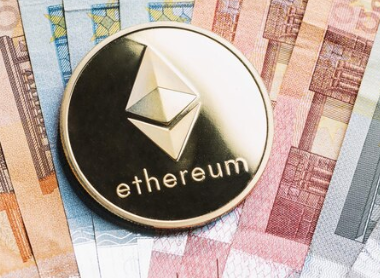
Market context underscores the sector’s importance. While the global crypto market capitalization fluctuates, it represents a multi-trillion-dollar asset class. Bitcoin ($BTC) and Ethereum ($ETH), as the leading assets, often set the tone for market sentiment and institutional adoption trends that smaller firms follow.
Political Deadlock at the Core
The legislative impasse stems from a fragmented Polish parliament, where no single party holds a commanding majority. Crypto regulation has become entangled in broader political disputes, with competing parties unable to reach consensus on the technical implementation of MiCA.
Key points of contention reportedly include the specific licensing requirements for crypto-asset service providers, the scope of supervisory powers for Poland’s Financial Supervision Authority (KNF), and the treatment of decentralized finance (DeFi) protocols. Without political compromise, the draft legislation cannot advance.
This paralysis contrasts with proactive steps taken by other EU members like Germany, France, and Ireland, which are moving to establish themselves as crypto hubs under the new MiCA framework. The longer Poland delays, the greater the first-mover advantage these countries secure.
Immediate Consequences for Businesses
For Polish crypto firms, the immediate consequence is operational limbo. They cannot fully prepare for a regulatory regime whose final national shape is unknown. This uncertainty complicates business planning, fundraising, and expansion efforts.
Some companies have already begun exploring relocation to jurisdictions with enacted or clearer transitional measures. Malta, Lithuania, and Portugal are frequently mentioned as potential destinations due to their established or emerging crypto-friendly regulations. The cost of moving, however, is substantial and not feasible for all startups.
The uncertainty also affects traditional financial institutions in Poland that are exploring digital asset services. Banks and investment firms are likely to pause their crypto-related initiatives until the regulatory picture clarifies, potentially ceding ground to foreign competitors.
Broader Market and Regulatory Implications
Poland’s situation highlights a broader challenge within the EU: the uneven pace of MiCA implementation. While the regulation provides a unified framework, its effectiveness depends on consistent and timely adoption by all member states. Gaps and delays create arbitrage opportunities and can fragment the single market the rule is meant to strengthen.
From a market perspective, regulatory clarity is a key driver of institutional adoption. Periods of uncertainty, like the one facing Poland, often correlate with increased volatility and risk aversion among professional investors. Clear rules are seen as necessary to legitimize the asset class and protect consumers.
The Polish złoty’s (PLN) exposure to crypto flows, while relatively small compared to major currencies, could still be impacted if a significant segment of the domestic industry departs, reducing associated foreign exchange and transaction activity.
The Path Forward and Industry Sentiment
The resolution depends on breaking the political deadlock. Industry associations are lobbying for urgency, emphasizing the economic cost of inaction. A potential solution could involve implementing an interim measure or a simplified transposition to provide basic legal certainty while detailed rules are finalized.
However, the political calendar and competing legislative priorities make a swift resolution uncertain. The window for Poland to retain its domestic crypto industry is closing as MiCA’s application date for most provisions approaches in December 2024.
Sentiment among Polish crypto entrepreneurs is reportedly a mix of frustration and resignation. Many who hoped to build their businesses at home are now making contingency plans, viewing the government’s inaction as a lack of commitment to the digital asset sector’s future.
Summary and Outlook
Poland’s crypto industry is at a crossroads due to political paralysis over MiCA implementation. The resulting regulatory vacuum is pushing local companies to consider moving abroad, threatening Poland’s position in the EU’s digital finance landscape. The deadlock underscores the importance of timely and coherent regulation for fostering innovation.
The immediate outlook hinges on political compromise. If achieved, Poland could still integrate its crypto sector into the EU’s new framework. If the delay persists, an exodus of talent and capital seems inevitable, benefiting other member states. The situation serves as a case study on how regulatory uncertainty can directly shape the geographic distribution of a high-growth industry.









Comments are closed.