
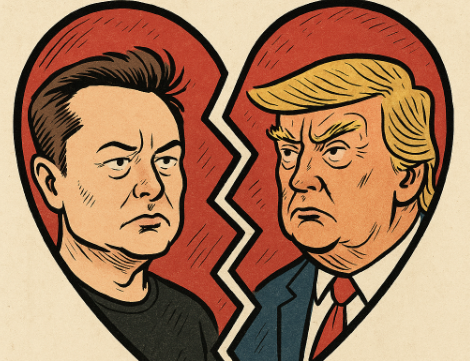
Trump’s Tariff Warning Rattles Investors
Former President Donald Trump’s recent comments vowing to “remember” companies that do not seek refunds for tariffs imposed during his administration have injected fresh uncertainty into financial markets. The remarks, made during a campaign event, signal a potential aggressive stance on trade policy should he return to office, reviving memories of the volatile trade wars that characterized his first term.
While the specific source text provided no details, the core message aligns with Trump’s long-standing approach to using tariffs as a primary tool of economic and foreign policy. Market participants are now weighing the implications of a possible second Trump term for global supply chains, corporate earnings, and inflation.
Market Context and Historical Precedent
The S&P 500, tracked by the SPDR S&P 500 ETF Trust ($SPY), has been trading near all-time highs but remains sensitive to geopolitical and trade headlines. The U.S. Dollar Index ($DXY), a measure of the dollar against a basket of major currencies, often strengthens on trade tension headlines as investors seek safe-haven assets.
During Trump’s presidency, the U.S. engaged in significant trade disputes, most notably with China. The U.S. imposed tariffs on hundreds of billions of dollars worth of Chinese goods, leading to retaliatory measures. Studies from institutions like the Federal Reserve and the IMF suggested these policies weighed on global growth and investment.
Corporate and Economic Implications
Trump’s “remember” warning is directed at corporate behavior, implying a reward-and-punishment system based on loyalty to his policy agenda. This creates a complex environment for multinational corporations that must navigate geopolitical risks alongside operational decisions.
For companies heavily reliant on global supply chains, particularly in sectors like technology, automotive, and industrial manufacturing, the threat of renewed tariff battles poses a direct risk to cost structures and profitability. Uncertainty alone can lead to delayed capital expenditure and hiring decisions.
Inflation and Federal Policy Crosscurrents
Tariffs are inherently inflationary, as they raise the cost of imported goods. With the Federal Reserve having aggressively raised interest rates to combat inflation, a new wave of trade barriers could complicate the path to the central bank’s 2% target.
This creates a potential policy conflict: restrictive monetary policy from the Fed could be undermined by inflationary fiscal and trade measures. Market pricing for interest rate cuts has been volatile, and trade policy uncertainty adds another layer of complexity to the outlook.
Investor Takeaways and Forward Look
Investors are likely to increase hedging activity and scrutinize companies with high international exposure. Sectors previously in the crosshairs, such as semiconductors, agriculture, and heavy machinery, may see elevated volatility as the election approaches.
The dollar’s role as a safe haven means the $DXY could see sustained strength in a scenario of escalating trade rhetoric, potentially pressuring emerging markets and commodities priced in USD. Conversely, a clear de-escalation in trade talk could trigger a risk-on rally.
Summary and Outlook
Trump’s tariff comments serve as an early marker of the significant economic policy stakes in the upcoming election. They reintroduce a source of volatility that markets had largely priced out. While concrete policy details are absent, the rhetoric is enough to shift sentiment and force a reassessment of geopolitical risk premiums.
The immediate market impact may be contained, but the threat of a more confrontational global trade environment is now a tangible tail risk for late 2024 and 2025. Investors should prepare for intermittent volatility spikes tied to trade policy headlines, with a focus on companies’ supply chain resilience and geographic revenue mix.










Comments are closed.