
Market Resilience Amid Geopolitical Tension
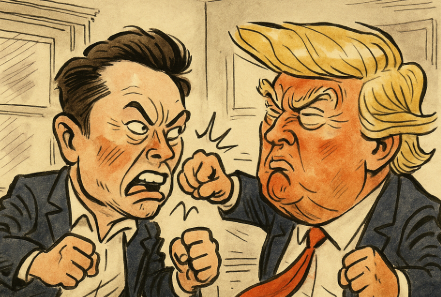
Former President Donald Trump recently expressed surprise at the U.S. stock market’s performance, stating he had anticipated a significant decline due to escalating tensions in the Middle East. In a public comment, Trump noted he thought the Dow Jones Industrial Average would be down 20% given the conflict involving Iran, yet major indices have shown notable resilience.
This sentiment highlights a recurring theme of market unpredictability, where investor psychology and fundamental economic factors often diverge from geopolitical headlines. The disconnect between anticipated market reactions based on political events and actual price action is a critical area of analysis for traders and long-term investors alike.
Recent Market Performance and Context
Contrary to expectations of a steep sell-off, U.S. equity markets have demonstrated strength in early 2024. The Dow Jones Industrial Average (DJIA) has traded near all-time highs, while the S&P 500 has also posted gains. This performance occurs against a backdrop of persistent inflation concerns and a Federal Reserve maintaining a restrictive monetary policy stance.
Market analysts point to several factors potentially insulating stocks from geopolitical shocks. Corporate earnings have largely exceeded lowered expectations, with particular strength in the technology and communication services sectors. Furthermore, the U.S. economy has continued to show robust job growth and consumer spending, providing a fundamental floor for equity valuations.
The Role of Geopolitical Risk Premium
Financial markets often price in a “geopolitical risk premium,” where asset values adjust for the perceived increase in global instability. However, the magnitude and duration of this premium can be highly variable. In the current instance, while oil prices have experienced volatility, the broader equity market’s reaction has been muted compared to historical precedents involving Middle East conflicts.
This tempered response may indicate that investors have become somewhat desensitized to regional tensions or are focusing more intently on domestic economic indicators and corporate fundamentals. The limited immediate impact on global supply chains, compared to more direct conflicts, has also likely played a role in containing market fear.
Analyzing the Divergence Between Expectation and Reality
The discrepancy between Trump’s forecast and market reality underscores a key principle of modern finance: markets are forward-looking discounting mechanisms. They incorporate a vast array of information, much of which may not be immediately apparent in headline news. Current prices reflect not just today’s geopolitical events, but expectations for corporate profits, interest rates, and economic growth months or years into the future.
Furthermore, the structure of the market itself has evolved. The rise of passive investing through index funds and ETFs means large flows are less reactive to daily news. The dominance of mega-cap technology stocks, which are less directly tied to oil prices or Middle East stability, also provides a buffer for the major indices.
Historical Precedents and Market Psychology
History is replete with examples where markets shrugged off dire political predictions. While geopolitical events can trigger short-term volatility, their long-term impact on market direction is often overwhelmed by monetary policy, earnings trends, and technological innovation. Investor memory of previous “crises” that did not lead to prolonged bear markets may also contribute to a more measured response.
The comment from a high-profile political figure serves as a reminder of the constant interplay between politics and finance. However, it also highlights the danger of making investment decisions based solely on geopolitical prognostication, a lesson for retail and institutional investors.
Forward-Looking Implications for Investors
The market’s current stance suggests a cautious but not fearful outlook. Key levels to watch include support for the S&P 500 around its 50-day moving average and the price of West Texas Intermediate crude oil as a barometer of regional risk. Any significant expansion of conflict that threatens global oil shipping lanes could alter the calculus quickly.
For now, the resilience indicates that the primary market narrative remains centered on the prospects for a “soft landing” for the U.S. economy, the path of interest rates, and AI-driven productivity gains. Geopolitical events are being treated as a secondary, though important, risk factor to be managed rather than a primary driver of portfolio allocation.
Summary and Takeaway
The stock market’s ability to withstand geopolitical shockwaves continues to defy some expectations. While former President Trump anticipated a major decline, the Dow and S&P 500 have held firm, supported by solid earnings and economic data. This episode reinforces that while political events capture headlines, market trajectories are determined by a complex mix of fundamentals, liquidity, and long-term expectations.
Investors are advised to maintain a disciplined, diversified approach rather than attempting to time the market based on political forecasts. The focus should remain on company-specific fundamentals, asset allocation, and risk management, as markets have repeatedly demonstrated their capacity to climb a wall of worry, including geopolitical ones.









Comments are closed.