
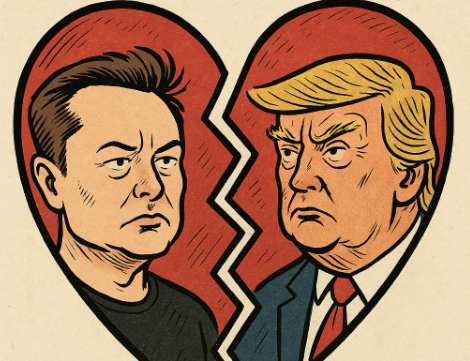
Trump’s Iran Comments Revive Geopolitical Market Calculus
Former President Donald Trump’s recent statement expressing expectation that the U.S. would make a ‘great deal’ with Iran has injected fresh uncertainty into energy and defense sector valuations. The comments, made without specific policy details, come amid a tense geopolitical backdrop in the Middle East and a U.S. presidential election cycle where foreign policy is a key issue.
Markets are parsing the potential implications for oil supply, defense spending, and regional stability. The ambiguity of the statement leaves analysts to weigh scenarios ranging from a renewed nuclear agreement to maintained or even heightened tensions, each carrying distinct consequences for asset prices.
Energy Sector Braces for Volatility
The immediate market reaction centered on crude oil prices and the Energy Select Sector SPDR Fund ($XLE). Historically, rhetoric or action suggesting a potential thaw with Iran, a major oil producer, has pressured prices due to expectations of increased global supply. Conversely, escalation fears have provided price support.
Brent crude futures were trading near $85 per barrel following the remarks, showing muted immediate reaction as traders await concrete developments. The energy sector has been a focal point, with the $XLE fund serving as a key benchmark. Its performance is closely tied to both oil price trajectories and the regulatory environment for domestic producers.
Defense Industry’s Dual Narrative
The aerospace and defense sector, tracked by the iShares U.S. Aerospace & Defense ETF ($ITA), faces a more complex narrative. A diplomatic breakthrough could theoretically reduce the perceived need for certain military assets in the region, potentially dampening sentiment.
However, analysts note that U.S. defense budgets are driven by a wide array of global threats and multi-year contracts, making them relatively resilient to single geopolitical shifts. The sector’s long-term growth thesis often hinges on broader great-power competition rather than Middle East dynamics alone.
Broader Market and Economic Implications
Beyond sector-specific moves, the prospect of altered U.S.-Iran relations carries weight for broader market indicators. A significant de-escalation and potential return of Iranian oil to formal markets could help ease global inflationary pressures, a key concern for central banks including the Federal Reserve.
This could influence the timing and pace of future interest rate cuts, impacting equity valuations across the board. Conversely, a collapse in diplomacy or a move toward confrontation could reignite risk-off sentiment, boosting traditional safe-haven assets while pressuring riskier equities.
Historical Context and Current Realities
The Trump administration previously withdrew from the Joint Comprehensive Plan of Action (JCPOA) in 2018, reinstating stringent sanctions on Iran. The current Biden administration has engaged in indirect talks, but a new agreement has remained elusive.
The market’s cautious response reflects this history and the uncertainty of translating campaign rhetoric into actionable policy, especially before an election. The ultimate impact on asset prices will depend on the credibility, scope, and implementation of any future diplomatic initiative.
Investor Takeaways and Forward Look
For now, investors are advised to monitor developments while recognizing that headline-driven volatility in related sectors is likely. The energy and defense sectors may see increased correlation to political news flow in the coming months.
The situation underscores the importance of geopolitical risk assessment in portfolio construction. A hedged approach, rather than directional bets based on uncertain political outcomes, may be prudent until a clearer policy path emerges from the U.S. electoral process.
Summary: Trump’s mention of a potential ‘great deal’ with Iran has refocused market attention on geopolitical risk premiums in oil and defense stocks. While immediate price action was limited, the statement signals that Iran policy will be a volatile theme through the election. The forward-looking takeaway is that investors should prepare for episodic volatility in $XLE and $ITA as political rhetoric fluctuates, with the fundamental impact contingent on actual policy shifts post-election.







Comments are closed.